

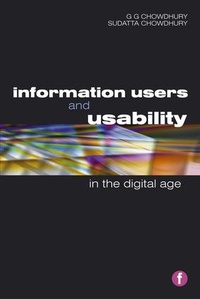
Information Users and Usability in the Digital Age
1st Edition
Will be published approx. on 23. September 2011
Book
Paperback/Softback
224 pages
978-1-85604-597-1 (ISBN)
Description
Information users and usability constitute the main building blocks of today's electronic information world. This important new text is the first to give a holistic overview of all of the necessary issues relating to information users and the usability of information services in the digital world, including user-centred design, and the characteristics and behaviour of information users.
This book helps readers understand why information users and the usability of information services are important and equips them to play a proper role in designing user-centred information systems and services and to properly exploit information services for the maximum benefit of users. It covers all of the major issues, the current situation and what the various research studies from around the world show. The chapters are:
An introduction to information users and usability
Information needs and user studies
Human information behaviour studies and models
Usability study basics
Usability study participants
Usability data analysis
Web usability
The usability of digital libraries
Digital divide, digital natives and usability
Issues and trends in usability research.
Readership: The is essential reading for researchers and practitioners interested in the design and evaluation of digital information systems and services, as well as for students on library, information, and digital library courses.
This book helps readers understand why information users and the usability of information services are important and equips them to play a proper role in designing user-centred information systems and services and to properly exploit information services for the maximum benefit of users. It covers all of the major issues, the current situation and what the various research studies from around the world show. The chapters are:
An introduction to information users and usability
Information needs and user studies
Human information behaviour studies and models
Usability study basics
Usability study participants
Usability data analysis
Web usability
The usability of digital libraries
Digital divide, digital natives and usability
Issues and trends in usability research.
Readership: The is essential reading for researchers and practitioners interested in the design and evaluation of digital information systems and services, as well as for students on library, information, and digital library courses.
Reviews / Votes
"Aiming to fill a need for books on usability written for professionals who design and provide online information services, this is a clear and accessible guide to examining information needs and developing effective user studies to assess online information services. G.G. and Sudatta Chowdhury approach their topic from a library and information science perspective, giving the reader basic skills that can be used to design, conduct, analyze, and apply usability research when developing online information services. VERDICT: Highly recommended for libraries and library professionals providing resources via the Internet." - Library Journal "Aiming to fill a need for books on usability written for professionals who design and provide online information services, this is a clear and accessible guide to examining information needs and developing effective user studies to assess online information services. G.G. and Sudatta Chowdhury approach their topic from a library and information science perspective, giving the reader basic skills that can be used to design, conduct, analyze, and apply usability research when developing online information services. VERDICT: Highly recommended for libraries and library professionals providing resources via the Internet." -- Library Journal "Chowdhury and Chowdhury's contribution is well-rounded and informed by extensive use of the research literature (all of which is listed at the end of every chapter). Information Users... is therefore a recommended for the postgraduate student and new usability practitioner alike." -- Library Review "The comprehensive coverage of the book, both in topics and citations to key publications, and simplicity in the presentation and visualisation of the issues makes the book a great source for information science researchers, practitioners, students and lecturers who want an overall view of usability and user studies or who want to build/expand knowledge in the field of design and evaluation of digital information systems and services." -- Online Information Review "The book by Gobinda and Sudata Chowdhury is a timely and necessary text for the students and teachers in several information and web-related disciplines combining the ideas from user studies with the design and implementation of usability studies. It is quite practically oriented to giving a coherent and fundamental introduction to designing a usability study based on understanding of user needs and behaviour... The book is rich in graphic material and figures illustrating a variety of discussed features. These illustrations provide additional insight into the details of usability studies and methodology. In addition, the text that is already written in clear and readable style becomes even more instructional. The editors of the book perceive the expanding number and variety of devices used to access digital content as a challenge to usability of resources. However, I think that this textbook can serve a wider purpose as the main content is related to the lasting information behaviour models and methodology. These are also applicable to design the usability studies for a variety of devices helping to access Websites, digital libraries or e-books." -- Information Research "Ranging from theory and background summaries to practical examples and techniques, the book progresses through a series of concepts, beginning with an overview of information-seeking models, following with an outline of usability research. In ten chapters, the authors concisely capture the core concepts of usability, emphasizing throughout the role of the information users and discussing who they are, what they want, and what they need." -- The Library QuarterlyMore details
Language
English
Place of publication
London
United Kingdom
Target group
College/higher education
Professional and scholarly
Professional Practice & Development
Dimensions
Height: 234 mm
Width: 156 mm
Thickness: 14 mm
Weight
155 gr
ISBN-13
978-1-85604-597-1 (9781856045971)
Copyright in bibliographic data and cover images is held by Nielsen Book Services Limited or by the publishers or by their respective licensors: all rights reserved.
Schweitzer Classification
Other editions
Additional editions
G. G. Chowdhury | Sudatta Chowdhury
Information Users and Usability in the Digital Age
E-Book
12/2013
1st Edition
Facet Publishing
from
€74.39
Available for download
Persons
Professor Gobinda Chowdhury BSc Hons, MSc, PhD, FCLIP is Professor in Information Science at iSchool@northumbria, and Head of the Department of Mathematics and Information Sciences at Northumbria University. Before joining Northumbria University he was a Professor and Director of the Centre for Information and Knowledge Management at the University of Technology Sydney, Australia. For over 25 years he has worked as an academic and researcher in information science in different parts of the world including Asia, Africa, Europe and Australia. For the past few years he has been actively involved in the iSchools activities. Professor Chowdhury has written or edited 15 books and over 150 research papers. Sudatta Chowdhury is Lecturer in Information and Knowledge Management, University of Technology, Sydney.
Content
1. Introduction
Information users
Users in the web environment
User studies
Human information behaviour
The usability and evaluation of information services
So, what's the problem?
About this book
Summary
References
2. Information needs and user studies
Introduction
Information needs
Analysis of information needs
User studies
Factors affecting information needs
User study methods
Qualitative vs quantitative research in user studies
Methods of data collection
Summary
References
3. Human information behaviour studies and models
Introduction
Human information behaviour
Information seeking and retrieval
Models in human information behaviour and information seeking and retrieval
Information seeking on the web
Some new information seeking behaviour models
Summary
References
4. Usability study basics
Introduction
Usability
How to conduct a usability study
Summary
References
5. Usability study participants
Introduction
Selection of study participants
Challenges when selecting study participants
Summary
References
6. Usability data analysis
Introduction
Data types
Independent vs dependent variables
Nominal vs ordinal data
Descriptive vs inferential statistics
Parametric vs non-parametric tests
Comparing means: t-tests vs ANOVA tests
Correlation analysis
Chi square tests
Qualitative analysis
Summary
References
7. Web usability
Introduction
What are the challenges?
Which method?
User-centred design and accessibility issues
Web usability and accessibility
Usability metrics and heuristic evaluation
Summary
References
8. The usability of digital libraries
Introduction
Approaches to digital library usability studies
Usability factors in digital libraries
Digital library usability study models and techniques
Usability studies conducted by members of the Digital Library
Federation
Usability studies of Europeana Digital Library
MEDLIS: a digital library usability model
Summary
References
9. The digital divide, digital natives and usability
Introduction
Connotations of the digital divide
Indicators of digital divide
Digital divide indicators and usability
The digital divide and digital natives
Information skills and usability
Context and the digital divide
Summary
References
10. Issues and trends in usability research
Introduction
Usability methods and techniques
External factors affecting usability
Emerging technologies for access to digital content
Usability of e-books
Emerging access and business models
Social challenges: the digital divide and information skills
Conclusion
References
Information users
Users in the web environment
User studies
Human information behaviour
The usability and evaluation of information services
So, what's the problem?
About this book
Summary
References
2. Information needs and user studies
Introduction
Information needs
Analysis of information needs
User studies
Factors affecting information needs
User study methods
Qualitative vs quantitative research in user studies
Methods of data collection
Summary
References
3. Human information behaviour studies and models
Introduction
Human information behaviour
Information seeking and retrieval
Models in human information behaviour and information seeking and retrieval
Information seeking on the web
Some new information seeking behaviour models
Summary
References
4. Usability study basics
Introduction
Usability
How to conduct a usability study
Summary
References
5. Usability study participants
Introduction
Selection of study participants
Challenges when selecting study participants
Summary
References
6. Usability data analysis
Introduction
Data types
Independent vs dependent variables
Nominal vs ordinal data
Descriptive vs inferential statistics
Parametric vs non-parametric tests
Comparing means: t-tests vs ANOVA tests
Correlation analysis
Chi square tests
Qualitative analysis
Summary
References
7. Web usability
Introduction
What are the challenges?
Which method?
User-centred design and accessibility issues
Web usability and accessibility
Usability metrics and heuristic evaluation
Summary
References
8. The usability of digital libraries
Introduction
Approaches to digital library usability studies
Usability factors in digital libraries
Digital library usability study models and techniques
Usability studies conducted by members of the Digital Library
Federation
Usability studies of Europeana Digital Library
MEDLIS: a digital library usability model
Summary
References
9. The digital divide, digital natives and usability
Introduction
Connotations of the digital divide
Indicators of digital divide
Digital divide indicators and usability
The digital divide and digital natives
Information skills and usability
Context and the digital divide
Summary
References
10. Issues and trends in usability research
Introduction
Usability methods and techniques
External factors affecting usability
Emerging technologies for access to digital content
Usability of e-books
Emerging access and business models
Social challenges: the digital divide and information skills
Conclusion
References