

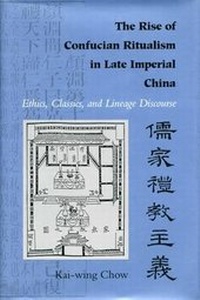
The Rise of Confucian Ritualism in Late Imperial China
Ethics, Classics and Lineage Discourse
Published on 1. December 1996
Book
Paperback/Softback
356 pages
978-0-8047-2791-4 (ISBN)
Description
This pathbreaking work argues that the major intellectual trend in China from the seventeenth through to the early nineteenth century was Confucian ritualism, as expressed in ethics and classical learning.Through the performance of rites, the early Qing scholars believed they could cultivate Confucian virtues and achieve social order. The author shows how Confucian ritualism, with its emphasis on lineage, became a broad movement of social reform that stressed conformity and clearly prescribed rules of behavior, expressed notably in the growing cult of female chastity.
Reviews / Votes
'Chow's monograph moves ritual to center stage in late imperial social and intellectual history, and the author makes a powerful case for doing so ... Because the author understands the intellectual history of late Ming and Qing as the history of a movement, or successive movements, of fundamental social reform, he has also made an important contribution to social and political history as these were related to intellectual history.' Journal of Chinese ReligionMore details
Edition
New edition
Language
English
Place of publication
Palo Alto
United States
Target group
College/higher education
Professional and scholarly
Edition type
New edition
Dimensions
Height: 229 mm
Width: 153 mm
Thickness: 22 mm
Weight
485 gr
ISBN-13
978-0-8047-2791-4 (9780804727914)
Copyright in bibliographic data and cover images is held by Nielsen Book Services Limited or by the publishers or by their respective licensors: all rights reserved.
Schweitzer Classification
Content
Reign periods of the Ming and Ch'ing dynasties; Introduction; 1. The crisis of the confucian order and didactic responses; 2. Ritualist ethics and textual purism in the K'ang-hsi reign; 3. Lineage discourse: gentry, local society, and the state; 4. Ancestral rites and lineage in early Ch'ing scholarship; 5. Ritual a nd the classics in the early Ch'ing; 6. Linguistic purism and the hermeneutics of the Han learning movement; 7. Ritualist ethics and the Han learning movement; 8. Ritualism and gentry culture: women and lineage; Conclusion; Reference matter; Notes; Bibliography; Character list; Index.