

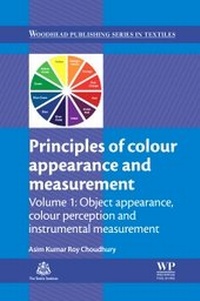
Principles of Colour and Appearance Measurement
Object Appearance, Colour Perception and Instrumental Measurement
Published on 22. January 2014
Book
Hardback
408 pages
978-0-85709-229-8 (ISBN)
Description
Colour and appearance perceptions are very complex psychological phenomena. Written by one of the foremost authorities in the field, Principles of Colour and Appearance Measurement is a major two-volume work addressing the key topics required to understand the issues and manage colour effectively. The book addresses how objects appear to viewers, how viewers perceive colour, and the major types of instrumentation used to measure colour.
Chapters detail the characteristics of light sources and object colour and appearance attributes. They encompass the complexities of human visual perception, including the various causes and types of colour blindness, and other unusual visual phenomena. The book also covers colour measurement instruments and methods, as well as fluorescence and whiteness.
Principles of Colour Appearance and Measurement is a comprehensive resource for designers, colour technologists, colour quality inspectors, product developers, and anyone who uses colour in their work.
Chapters detail the characteristics of light sources and object colour and appearance attributes. They encompass the complexities of human visual perception, including the various causes and types of colour blindness, and other unusual visual phenomena. The book also covers colour measurement instruments and methods, as well as fluorescence and whiteness.
Principles of Colour Appearance and Measurement is a comprehensive resource for designers, colour technologists, colour quality inspectors, product developers, and anyone who uses colour in their work.
Reviews / Votes
"These volumes have earned their place on the well-equipped color science bookshelf, both for their up-to-dateness compared to the classics, and completeness of coverage across a wide range of topics." --AATCC ReviewMore details
Series
Language
English
Place of publication
Cambridge
United Kingdom
Publishing group
Elsevier Science & Technology
Target group
Professional and scholarly
Dimensions
Height: 234 mm
Width: 156 mm
Weight
770 gr
ISBN-13
978-0-85709-229-8 (9780857092298)
Copyright in bibliographic data and cover images is held by Nielsen Book Services Limited or by the publishers or by their respective licensors: all rights reserved.
Schweitzer Classification
Other editions
Additional editions
Asim Kumar Roy Choudhury
Principles of Colour and Appearance Measurement
Object Appearance, Colour Perception and Instrumental Measurement
Book
10/2018
Woodhead Publishing Ltd
€185.70
The article will not be published
Principles of Colour and Appearance Measurement
Object Appearance, Colour Perception and Instrumental Measurement
E-Book
01/2014
Woodhead Publishing Ltd
€190.00
Available for download
Person
Dr. Asim Kumar Roy Choudhury is presently working as principal, KPS Institute of Polytechnic, Belmuri. He retired as Professor and HOD (Textile) from the Government College of Engineering and Textile Technology, Serampore (W.B.), India. He has over 30 years' experience in textile coloration and finishing in academia and industry, and has written numerous papers and several books on the subject, including the recently published two-volume work Principles of Colour and Appearance Measurement.
Content
Author contact details
Woodhead Publishing Series in Textiles
1. Characteristics of light sources
Abstract:
1.1 Introduction
1.2 Process of visual perception
1.3 Optics
1.4 Radiometry
1.5 Photometry
1.6 Black-body radiation
1.7 Colour temperature
1.8 Different light sources
1.9 Illuminants
1.10 Luminous efficacy of lamps
1.11 Colour rendering
1.12 References
2. Object appearance and colour
Abstract:
2.1 Introduction
2.2 Interaction of light with objects
2.3 Reflection
2.4 Scattering
2.5 Refraction
2.6 Transmission and absorption
2.7 Mechanisms of colour generation
2.8 References
3. Colour and appearance attributes
Abstract:
3.1 Introduction
3.2 Physical and psychophysical attributes
3.3 Gloss
3.4 Retroreflection
3.5 Transparency
3.6 Colour attributes
3.7 Assessment of colour appearance
3.8 Total appearance concept
3.9 Emotional aspects of colour
3.10 Colour combination schemes
3.11 Emotional aspects of colour combinations
3.12 References
4. Principles of colour perception
Abstract:
4.1 Introduction
4.2 Analysis of sun radiation
4.3 Principles of colour mixing
4.4 Colour matching experiment
4.5 CIE 2 degrees standard observer functions
4.6 CIE 10 degrees standard observer functions
4.7 Transformation of primaries
4.8 The human vision system
4.9 The remarkable properties of the eye
4.10 Colour vision theories
4.11 References
5. Unusual visual phenomena and colour blindness
Abstract:
5.1 Introduction
5.2 Unusual visual phenomena
5.3 Variation in colour vision
5.4 Defective colour vision
5.5 Yellowness of vision
5.6 References
6. Colour measurement instruments
Abstract:
6.1 Introduction
6.2 Measuring instruments
6.3 Video cameras for colour measurement
6.4 Components of colour measuring instruments
6.5 Measuring geometry
6.6 Direct versus reverse optics
6.7 Sample preparation and presentation
6.8 Sources of error
6.9 Future trends
6.10 References
7. Using instruments to quantify colour
Abstract:
7.1 Colorimetry
7.2 Colour space
7.3 Reflectance of object
7.4 CIE tristimulus colour space
7.5 Chromaticity
7.6 Chromaticity diagram
7.7 Dominant wavelength and excitation purity
7.8 CIE object colour solid
7.9 Advantages and disadvantages of CIE tristimulus colorimetry
7.10 Uniform colour scales
7.11 Fundamental colour space
7.12 Future trends
7.13 References
8. Issues in measuring whiteness and fluorescence
Abstract:
8.1 Introduction
8.2 Characteristics of whites
8.3 Whiteness improvement
8.4 Fluorescence
8.5 Problems of assessment
8.6 Measurement of fluorescence
8.7 UV calibration
8.8 UV calibration standards
8.9 Visual assessment of whiteness
8.10 References
9. Instrumental measures of whiteness
Abstract:
9.1 Introduction
9.2 Physical methods
9.3 Colorimetric methods
9.4 New whiteness indices
9.5 Topology of whiteness
9.6 Yellowness index
9.7 Application of whiteness indices
9.8 References
Index
Woodhead Publishing Series in Textiles
1. Characteristics of light sources
Abstract:
1.1 Introduction
1.2 Process of visual perception
1.3 Optics
1.4 Radiometry
1.5 Photometry
1.6 Black-body radiation
1.7 Colour temperature
1.8 Different light sources
1.9 Illuminants
1.10 Luminous efficacy of lamps
1.11 Colour rendering
1.12 References
2. Object appearance and colour
Abstract:
2.1 Introduction
2.2 Interaction of light with objects
2.3 Reflection
2.4 Scattering
2.5 Refraction
2.6 Transmission and absorption
2.7 Mechanisms of colour generation
2.8 References
3. Colour and appearance attributes
Abstract:
3.1 Introduction
3.2 Physical and psychophysical attributes
3.3 Gloss
3.4 Retroreflection
3.5 Transparency
3.6 Colour attributes
3.7 Assessment of colour appearance
3.8 Total appearance concept
3.9 Emotional aspects of colour
3.10 Colour combination schemes
3.11 Emotional aspects of colour combinations
3.12 References
4. Principles of colour perception
Abstract:
4.1 Introduction
4.2 Analysis of sun radiation
4.3 Principles of colour mixing
4.4 Colour matching experiment
4.5 CIE 2 degrees standard observer functions
4.6 CIE 10 degrees standard observer functions
4.7 Transformation of primaries
4.8 The human vision system
4.9 The remarkable properties of the eye
4.10 Colour vision theories
4.11 References
5. Unusual visual phenomena and colour blindness
Abstract:
5.1 Introduction
5.2 Unusual visual phenomena
5.3 Variation in colour vision
5.4 Defective colour vision
5.5 Yellowness of vision
5.6 References
6. Colour measurement instruments
Abstract:
6.1 Introduction
6.2 Measuring instruments
6.3 Video cameras for colour measurement
6.4 Components of colour measuring instruments
6.5 Measuring geometry
6.6 Direct versus reverse optics
6.7 Sample preparation and presentation
6.8 Sources of error
6.9 Future trends
6.10 References
7. Using instruments to quantify colour
Abstract:
7.1 Colorimetry
7.2 Colour space
7.3 Reflectance of object
7.4 CIE tristimulus colour space
7.5 Chromaticity
7.6 Chromaticity diagram
7.7 Dominant wavelength and excitation purity
7.8 CIE object colour solid
7.9 Advantages and disadvantages of CIE tristimulus colorimetry
7.10 Uniform colour scales
7.11 Fundamental colour space
7.12 Future trends
7.13 References
8. Issues in measuring whiteness and fluorescence
Abstract:
8.1 Introduction
8.2 Characteristics of whites
8.3 Whiteness improvement
8.4 Fluorescence
8.5 Problems of assessment
8.6 Measurement of fluorescence
8.7 UV calibration
8.8 UV calibration standards
8.9 Visual assessment of whiteness
8.10 References
9. Instrumental measures of whiteness
Abstract:
9.1 Introduction
9.2 Physical methods
9.3 Colorimetric methods
9.4 New whiteness indices
9.5 Topology of whiteness
9.6 Yellowness index
9.7 Application of whiteness indices
9.8 References
Index