

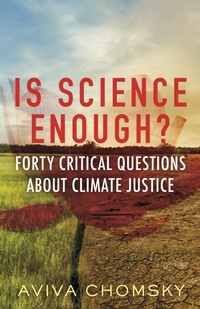
Is Science Enough?
Forty Critical Questions About Climate Justice
Published on 5. April 2022
Book
Paperback/Softback
208 pages
978-0-8070-1576-6 (ISBN)
Description
"This book shows that science is not enough to reverse climate catastrophe: we need put social, racial, and economic justice front and center, radically redistribute, and abandon the global growth economy"--
More details
Language
English
Place of publication
Boston, MA
United States
Product notice
Paperback (trade)
Unsewn / adhesive bound
Dimensions
Height: 214 mm
Width: 138 mm
Thickness: 18 mm
Weight
270 gr
ISBN-13
978-0-8070-1576-6 (9780807015766)
Copyright in bibliographic data and cover images is held by Nielsen Book Services Limited or by the publishers or by their respective licensors: all rights reserved.
Schweitzer Classification
Other editions
Additional editions
E-Book
04/2022
Beacon Press
€15.49
Available for download
Person
Aviva Chomsky
Content
Introduction
CHAPTER 1: TECHNICAL QUESTIONS
Can technology solve climate change?
What are greenhouse gases?
What are the main sources of GHG emissions?
How can we clean up our energy grid? What exactly are “clean,” “renewable,” and “zero-emission” energy sources?
What’s the difference between “zero-” and “net-zero” emissions?
Can forests serve as a carbon sink?
What is carbon capture? Is it a viable solution?
Does LEED certification mean that our buildings are using less energy?
Conclusion
CHAPTER 2: POLICY QUESTIONS
What was the Kyoto Protocol?
What is the Paris Agreement?
What are the advantages and disadvantages of putting a price on carbon?
How does a cap-and-trade system work?
How does a carbon tax work?
What about carbon offsets?
How does the United States subsidize the fossil fuel industry?
Is natural gas a bridge fuel?
How have the fossil fuel and other industries influenced policy discussions?
What kinds of policy solutions do environmentalists propose?
What is the Green New Deal?
Conclusion
CHAPTER 3: WHAT CAN I DO AS AN INDIVIDUAL?
Should I buy a Prius?
What about giving up my car and using Uber and Lyft?
Should we all stop flying?
Should we all be vegetarians?
What are strengths and weaknesses of pipeline protests as a strategy? What about divestment from fossil fuels?
Do we need to consume less?
Conclusion: What kinds of individual actions can make the most difference?
CHAPTER 4: SOCIAL, RACIAL, AND ECONOMIC JUSTICE
What’s the relationship of inequality to climate change?
What do race and racism have to do with climate change?
How will different people—and different parts of the world—be affected by climate change, now and in the future?
How are pandemics related to climate change?
How can we fairly hold different countries, people, and institutions accountable for their contributions to climate change? What methods for calculating emissions best show who is emitting the most, and where to target our efforts for change?
What do workers and the labor movement have to say about climate change? Is climate change a union issue?
What is a “just transition”?
What is “energy democracy”? How is it related to the struggle to confront climate change?
Conclusion: Should social, racial, and economic justice issues be linked to the fight to stop climate change?
CHAPTER 5: BROADENING THE LENS
Is population growth the root of the problem?
Is immigration bad for the environment?
What is economic growth? How important is it, and how does it affect the environment?
Can we have economic growth without increasing emissions?
Do we even need growth? What is degrowth? Is it a good idea?
Is degrowth compatible with the Green New Deal?
Are we making progress?
Conclusion: Reasons for optimism
CONCLUSION
Acknowledgments
Notes
CHAPTER 1: TECHNICAL QUESTIONS
Can technology solve climate change?
What are greenhouse gases?
What are the main sources of GHG emissions?
How can we clean up our energy grid? What exactly are “clean,” “renewable,” and “zero-emission” energy sources?
What’s the difference between “zero-” and “net-zero” emissions?
Can forests serve as a carbon sink?
What is carbon capture? Is it a viable solution?
Does LEED certification mean that our buildings are using less energy?
Conclusion
CHAPTER 2: POLICY QUESTIONS
What was the Kyoto Protocol?
What is the Paris Agreement?
What are the advantages and disadvantages of putting a price on carbon?
How does a cap-and-trade system work?
How does a carbon tax work?
What about carbon offsets?
How does the United States subsidize the fossil fuel industry?
Is natural gas a bridge fuel?
How have the fossil fuel and other industries influenced policy discussions?
What kinds of policy solutions do environmentalists propose?
What is the Green New Deal?
Conclusion
CHAPTER 3: WHAT CAN I DO AS AN INDIVIDUAL?
Should I buy a Prius?
What about giving up my car and using Uber and Lyft?
Should we all stop flying?
Should we all be vegetarians?
What are strengths and weaknesses of pipeline protests as a strategy? What about divestment from fossil fuels?
Do we need to consume less?
Conclusion: What kinds of individual actions can make the most difference?
CHAPTER 4: SOCIAL, RACIAL, AND ECONOMIC JUSTICE
What’s the relationship of inequality to climate change?
What do race and racism have to do with climate change?
How will different people—and different parts of the world—be affected by climate change, now and in the future?
How are pandemics related to climate change?
How can we fairly hold different countries, people, and institutions accountable for their contributions to climate change? What methods for calculating emissions best show who is emitting the most, and where to target our efforts for change?
What do workers and the labor movement have to say about climate change? Is climate change a union issue?
What is a “just transition”?
What is “energy democracy”? How is it related to the struggle to confront climate change?
Conclusion: Should social, racial, and economic justice issues be linked to the fight to stop climate change?
CHAPTER 5: BROADENING THE LENS
Is population growth the root of the problem?
Is immigration bad for the environment?
What is economic growth? How important is it, and how does it affect the environment?
Can we have economic growth without increasing emissions?
Do we even need growth? What is degrowth? Is it a good idea?
Is degrowth compatible with the Green New Deal?
Are we making progress?
Conclusion: Reasons for optimism
CONCLUSION
Acknowledgments
Notes