

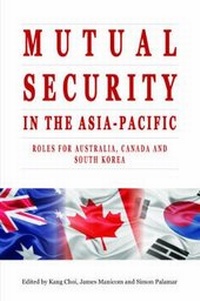
Mutual Security in the Asia-Pacific
Roles for Australia, Canada and South Korea
Published on 17. October 2016
Book
Paperback/Softback
216 pages
978-1-928096-13-9 (ISBN)
Description
China has experienced a remarkable transformation since the 1990s. It now boasts the second-largest--some would argue the largest--economy in the world having evolved from a closed economy into the leading goods-trading nation. China's economic rise has given it increasing prominence in international monetary and financial governance, but it also exposes China to new risks associated with its integration into the global financial system.
Drawing insights from economics and political science, Enter the Dragon: China in the International Financial System takes a broad conceptual approach and tackles the questions that accompany China's ascendance in international finance: What are the motivations and consequences of China's effort to internationalize the renminbi? What is the political logic underlying China's foreign financial policy? What forces have shaped China's preferences and capacities in global financial governance?
This book contributes to the ongoing debate over China's political interests, its agenda for economic and financial cooperation, and the domestic and international implications of its economic rise. Bringing together experts from both inside and outside of China, this volume argues that China's rise in the international financial system is a highly complex and political process, and can only be understood by incorporating analysis of domestic and international political economy.
Drawing insights from economics and political science, Enter the Dragon: China in the International Financial System takes a broad conceptual approach and tackles the questions that accompany China's ascendance in international finance: What are the motivations and consequences of China's effort to internationalize the renminbi? What is the political logic underlying China's foreign financial policy? What forces have shaped China's preferences and capacities in global financial governance?
This book contributes to the ongoing debate over China's political interests, its agenda for economic and financial cooperation, and the domestic and international implications of its economic rise. Bringing together experts from both inside and outside of China, this volume argues that China's rise in the international financial system is a highly complex and political process, and can only be understood by incorporating analysis of domestic and international political economy.
More details
Language
English
Place of publication
Ontario
Canada
Target group
College/higher education
Dimensions
Height: 228 mm
Width: 152 mm
ISBN-13
978-1-928096-13-9 (9781928096139)
Copyright in bibliographic data and cover images is held by Nielsen Book Services Limited or by the publishers or by their respective licensors: all rights reserved.
Schweitzer Classification
Other editions
Additional editions
E-Book
10/2016
CIGI
€42.49
Available for download
Persons
Domenico Lombardiis the director of the Global Economy Program at the Centre for International Governance Innovation (CIGI). He is a member of the Financial Times Forum of Economists and editor of the World Economics Journal. Previously, he served as an executive board member of the International Monetary Fund and the World Bank Group.
Hongying Wangis a CIGI senior fellow and an associate professor of political science at the University of Waterloo, specializing in international political economy, Chinese politics and Chinese foreign policy.
Hongying Wangis a CIGI senior fellow and an associate professor of political science at the University of Waterloo, specializing in international political economy, Chinese politics and Chinese foreign policy.
Content
Preface Domenico Lombardi and Hongying Wang
Acronyms
Introduction Domenico Lombardi and Hongying Wang
1. China's Power and the International Use of the RMB Juan Carlos Martinez Oliva
2. The Political Logic of RMB Internationalization: A Unique Journey to a Major Global Currency
Alex He
3. Sequencing RMB Internationalization Barry Eichengreen
4. Assessing the Potential of RMB Trade Settlement Qiyuan Xu
5. The Political Limits to RMB Internationalization Randall Germain and Herman Mark Schwartz
6. Constraints of Currency Inter vention on China's Monetary Policy Hailong Jin, Domenico Lombardi and Coby Hu
7. China's Rise as an International Creditor: Sign of Strength? Stuart S. Brown and Hongying Wang
8. The Domestic Political Sources of China's International Financial Policies David A. Steinberg
9. Internationalization of China's Bond Market, Development of Offshore RMB Centres and Provision of Global Safe Assets Liu Dongmin
10. China at the IMF Bessma Momani
11. China at the G20: Review, Expectation, Strategy and Agenda Alex He
12. China's Role in Financial Standard Setting after the 2007-2009 Financial Crisis: The Case of Basel III and Shadow Banking Reform David Kempthorne
13. China's Engagement in Minilateral Financial Cooperation Hongying Wang
Conclusion Domenico Lombardi and Hongying Wang
Contributors
Acronyms
Introduction Domenico Lombardi and Hongying Wang
1. China's Power and the International Use of the RMB Juan Carlos Martinez Oliva
2. The Political Logic of RMB Internationalization: A Unique Journey to a Major Global Currency
Alex He
3. Sequencing RMB Internationalization Barry Eichengreen
4. Assessing the Potential of RMB Trade Settlement Qiyuan Xu
5. The Political Limits to RMB Internationalization Randall Germain and Herman Mark Schwartz
6. Constraints of Currency Inter vention on China's Monetary Policy Hailong Jin, Domenico Lombardi and Coby Hu
7. China's Rise as an International Creditor: Sign of Strength? Stuart S. Brown and Hongying Wang
8. The Domestic Political Sources of China's International Financial Policies David A. Steinberg
9. Internationalization of China's Bond Market, Development of Offshore RMB Centres and Provision of Global Safe Assets Liu Dongmin
10. China at the IMF Bessma Momani
11. China at the G20: Review, Expectation, Strategy and Agenda Alex He
12. China's Role in Financial Standard Setting after the 2007-2009 Financial Crisis: The Case of Basel III and Shadow Banking Reform David Kempthorne
13. China's Engagement in Minilateral Financial Cooperation Hongying Wang
Conclusion Domenico Lombardi and Hongying Wang
Contributors