

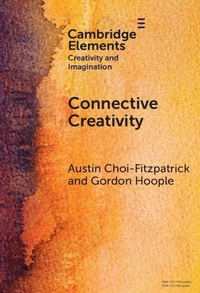
Connective Creativity
What Art Can Teach Us about Collaboration
Published on 19. December 2024
Book
Hardback
78 pages
978-1-009-50498-0 (ISBN)
Description
The story we often tell about artists is fiction. We tend to imagine the starving artists toiling alone in their studio when, in fact, creativity and imagination are often relational and communal. Through interviews with artistic collectives and first-hand experience building large scale installations in public spaces and at art events like Burning Man, Choi-Fitzpatrick and Hoople take the reader behind the scenes of a rather different art world. Connective Creativity leverages these experiences to reveal what artists can teach us about collaboration and teamwork and focuses in particular on the importance of embracing playfulness, cultivating a bias for action, and nurturing a shared identity. This Element concludes with an invitation to apply lessons from the arts to promote connective creativity across all our endeavors, especially to the puzzle of how we can foster more connective creativity with other minds, including other artificial actors.
More details
Series
Language
English
Place of publication
Cambridge
United Kingdom
Illustrations
Worked examples or Exercises
Dimensions
Height: 235 mm
Width: 157 mm
Thickness: 9 mm
Weight
277 gr
ISBN-13
978-1-009-50498-0 (9781009504980)
Copyright in bibliographic data and cover images is held by Nielsen Book Services Limited or by the publishers or by their respective licensors: all rights reserved.
Schweitzer Classification
Other editions
Additional editions
Austin Choi-Fitzpatrick | Gordon Hoople
Connective Creativity
What Art Can Teach Us about Collaboration
Book
12/2024
Cambridge University Press
€26.50
Shipment within 15-20 days
Persons
Content
1. The landscape: art as collective action; 2. The actors: types of artistic collaboration; 3. The case study: artbuilds collective; 4. The larger landscape: elements of connective creativity; 5. The path ahead: promoting connective creativity; Coda: collaboration beyond the human; Appendix: Methods; References.