

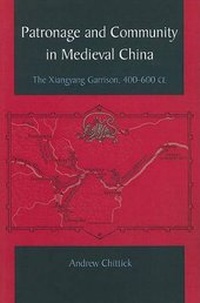
Patronage and Community in Medieval China
The Xiangyang Garrison, 400-600 CE
Published on 2. July 2010
Book
Paperback/Softback
201 pages
978-1-4384-2898-7 (ISBN)
Description
A vivid portrait of the culture of a provincial military society in China's early medieval period and its interactions with the southern imperial court.
This first book-length treatment of a provincial military society in China's early medieval period offers a vivid portrait of this milieu and invites readers to reevaluate their understanding of a critical period in Chinese history. Drawing on poetry, local history, archaeology, and Buddhist materials, as well as more traditional historical sources, Andrew Chittick explores the culture and interrelationships of the leading figures of the Xiangyang region (in the north of modern Hubei province) in the centuries leading up to the Sui unification. Using the model of patron-client relations to characterize the interactions between local men and representatives of the southern court at Jiankang, the book emphasizes the way in which these interactions were shaped by personal ties and cultural and status differences. The result is a compelling explanation for the shifting, unstable, and violent nature of the political and military system of the southern dynasties. Offering a wider perspective which considers the social world beyond the capital elite, the book challenges earlier conceptions of medieval society as "aristocratic" and rooted in family lineage and officeholding.
Andrew Chittick is E. Leslie Peter Associate Professor of East Asian Humanities at Eckerd College.
This first book-length treatment of a provincial military society in China's early medieval period offers a vivid portrait of this milieu and invites readers to reevaluate their understanding of a critical period in Chinese history. Drawing on poetry, local history, archaeology, and Buddhist materials, as well as more traditional historical sources, Andrew Chittick explores the culture and interrelationships of the leading figures of the Xiangyang region (in the north of modern Hubei province) in the centuries leading up to the Sui unification. Using the model of patron-client relations to characterize the interactions between local men and representatives of the southern court at Jiankang, the book emphasizes the way in which these interactions were shaped by personal ties and cultural and status differences. The result is a compelling explanation for the shifting, unstable, and violent nature of the political and military system of the southern dynasties. Offering a wider perspective which considers the social world beyond the capital elite, the book challenges earlier conceptions of medieval society as "aristocratic" and rooted in family lineage and officeholding.
Andrew Chittick is E. Leslie Peter Associate Professor of East Asian Humanities at Eckerd College.
More details
Series
Language
English
Place of publication
Albany, NY
United States
Target group
Professional and scholarly
US School Grade: College Graduate Student and over
Product notice
Paperback (trade)
Illustrations
5 Maps
Dimensions
Height: 229 mm
Width: 152 mm
Weight
290 gr
ISBN-13
978-1-4384-2898-7 (9781438428987)
Copyright in bibliographic data and cover images is held by Nielsen Book Services Limited or by the publishers or by their respective licensors: all rights reserved.
Schweitzer Classification
Other editions
Additional editions
E-Book
07/2010
1st Edition
De Gruyter
€36.49
Available for download
Content
List of Maps
Acknowledgments
1. Introduction
Aristocracy and Oligarchy
Community and Identity
Patronage as a System
Regimes, Regime Change, and Other Nomenclature
An Introduction to the Xiangyang Region
2. Development, 400-465
Liu Yu's New Policies: Immigration and Residence Determination
Liu Yu's New Policies: Administrative
Reorganization
Princes and Patronage: The Early Career of Liu Yuanjing
Xiangyang Men on Campaign, 442-454
Xiangyang Local Culture: Honor, Vengeance, and Violence
Xiangyang Local Culture: Music and Dance
Local Society Shows Its Strength: Xiangyang
under Liu Jun's Regime
Conclusion: The Perils of Power
3. Fragmentation, 465-500
Xiangyang Men in the Civil War of 465-466
The Evolving Structure of Relations between Court and Garrison, 466-483
Gentrifi cation and Emigration
Immigrant Clusters
Immigrant Groups with More Expansive Ties
The Crisis of the Qi Regime
Conclusion
4. Zenith, 500-530
Xiao Yan Assembles the "Xiangyang Clique"
The "Jiangling Clique" and the Jiankang Coup
Xiangyang Men at the Capital
Xiangyang Local Lore: The Evidence from Bao Zhi
Xiangyang Iconography: The Evidence from Local Tombs
The Patronage of Court-Style Buddhism
Imperial Bias against Local Culture
Competitive Spectacle: The Local Culture of Military Festivals
Conclusion
5. Sublimation, 530-600
Fighting Bands and Free-Floating Allegiances
Xiangyang under the Yuwen Regime
Vengeance and Family Ties
The Further Development of Buddhism
Conclusion
6. Conclusion
Local Community and Local Culture
Patronage and the Evolution of Court- Provincial Relations
APPENDIX A Genealogical Charts
Diagram 1: Selected Descendents of Liu Zhuo
Diagram 2: Selected Descendents of Wei Hua
Diagram 3: Relationships among Selected
Members of the Nanyang Cluster
Notes
Bibliography
Index
Acknowledgments
1. Introduction
Aristocracy and Oligarchy
Community and Identity
Patronage as a System
Regimes, Regime Change, and Other Nomenclature
An Introduction to the Xiangyang Region
2. Development, 400-465
Liu Yu's New Policies: Immigration and Residence Determination
Liu Yu's New Policies: Administrative
Reorganization
Princes and Patronage: The Early Career of Liu Yuanjing
Xiangyang Men on Campaign, 442-454
Xiangyang Local Culture: Honor, Vengeance, and Violence
Xiangyang Local Culture: Music and Dance
Local Society Shows Its Strength: Xiangyang
under Liu Jun's Regime
Conclusion: The Perils of Power
3. Fragmentation, 465-500
Xiangyang Men in the Civil War of 465-466
The Evolving Structure of Relations between Court and Garrison, 466-483
Gentrifi cation and Emigration
Immigrant Clusters
Immigrant Groups with More Expansive Ties
The Crisis of the Qi Regime
Conclusion
4. Zenith, 500-530
Xiao Yan Assembles the "Xiangyang Clique"
The "Jiangling Clique" and the Jiankang Coup
Xiangyang Men at the Capital
Xiangyang Local Lore: The Evidence from Bao Zhi
Xiangyang Iconography: The Evidence from Local Tombs
The Patronage of Court-Style Buddhism
Imperial Bias against Local Culture
Competitive Spectacle: The Local Culture of Military Festivals
Conclusion
5. Sublimation, 530-600
Fighting Bands and Free-Floating Allegiances
Xiangyang under the Yuwen Regime
Vengeance and Family Ties
The Further Development of Buddhism
Conclusion
6. Conclusion
Local Community and Local Culture
Patronage and the Evolution of Court- Provincial Relations
APPENDIX A Genealogical Charts
Diagram 1: Selected Descendents of Liu Zhuo
Diagram 2: Selected Descendents of Wei Hua
Diagram 3: Relationships among Selected
Members of the Nanyang Cluster
Notes
Bibliography
Index