

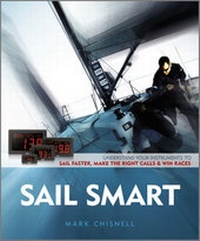
Sail Smart
Understand Your Instruments to Sail Faster, Make the Right Calls & Win Races
1st Edition
Published on 16. November 2012
Book
Paperback/Softback
102 pages
978-1-119-94237-5 (ISBN)
Description
Master your instruments and turn on-board information into racing results
Modern sailors are bombarded with a wealth of information from their on-board instruments. From apparent and true wind speed to boat speed and speed over the, there's no shortage of data to interpret. Sail Smart shows you how to become the master of your instruments and make the right calls every time, knowing for certain when to tack, which shift to look out for, how the tide can work for or against you, and much more. With diagrams and full-color photographs throughout, this accessible and instructional guide turns information into excellence.
*Unlock your winning potential
*Maximise your onboard instruments
*Learn to think like a professional yachtsman
Modern sailors are bombarded with a wealth of information from their on-board instruments. From apparent and true wind speed to boat speed and speed over the, there's no shortage of data to interpret. Sail Smart shows you how to become the master of your instruments and make the right calls every time, knowing for certain when to tack, which shift to look out for, how the tide can work for or against you, and much more. With diagrams and full-color photographs throughout, this accessible and instructional guide turns information into excellence.
*Unlock your winning potential
*Maximise your onboard instruments
*Learn to think like a professional yachtsman
Reviews / Votes
"This is a book for all keelboat owners, whether racing or cruising. On-board instruments present modern sailors with a wealth of information such as: apparent and true wind speed; boat speed; speed over the ground (SOG) and velocity made good (VMG). And these are just a few functions. With all the info available it's really a case of understanding what they all mean, and how to use them. Chisnell answers these questions and turns on-board racing information into results with an expert guide on how to turn the theory into practice.'" (Sailing Magazine)More details
Other editions
New editions
Mark Chisnell | Gilberto Pastorella
Mastering Data to Win
Understand Your Instruments to Make the Right Calls & Win Races
Book
09/2023
Fernhurst Books Limited
€21.50
Shipment within 3-4 weeks
Person
Mark Chisnell divides his time between professional sailing and writing, and has won awards as a broadcaster and for his non-fiction accounts of maritime adventure. Mark began his writing career with sailing - the sport in which he won three World Championships, and subsequently won plaudits and recognition for his adrenaline-fuelled and suspenseful accounts of round-the-world racing.
Content
Introduction vii
Chapter 1 Position Fixing Systems 1
Some Thoughts 1
The Global Positioning System 2
Using the GPS 6
Chapter 2 Instrument Systems 15
Stand-Alone Equipment versus Integrated Systems 15
The Wind Triangle and some Nomenclature 16
Chapter 3 Setting Up an Instrument System 23
Some Comments on the Calibration Process 23
Calibration of the Compass 25
Calibration of the Boat Speed 26
Calibration of the Apparent Wind Speed and Angle 27
Calibration of the Depth 34
Calibration of the Heel Angle Gauge 35
Calibration of Leeway 35
Calibration of the True or Sailing Wind 37
Don't Panic!! 45
Damping - High or Low? 46
Chapter 4 Some Instrument Techniques 49
Start Lines and Wind Shifts 49
Heel Angle or Wind Speed? 54
Anticipation 55
Chapter 5 Polar Tables and Where They Come From 57
What are Polar Tables? 57
Polar Table Accuracy 59
Velocity Prediction Programmes 60
Velocity Made Good and Target Boat Speeds 61
Data Collection and Performance Analysis 64
Chapter 6 Instrument Techniques using the Polar Table 71
Next Leg Calculations 71
Velocity Made Good to the Course: VMC 73
Weather and Current Routing 80
Appendix A A Quick Guide to Calibration 83
Appendix B General Maintenance 89
Appendix C Calibration Records 9
Chapter 1 Position Fixing Systems 1
Some Thoughts 1
The Global Positioning System 2
Using the GPS 6
Chapter 2 Instrument Systems 15
Stand-Alone Equipment versus Integrated Systems 15
The Wind Triangle and some Nomenclature 16
Chapter 3 Setting Up an Instrument System 23
Some Comments on the Calibration Process 23
Calibration of the Compass 25
Calibration of the Boat Speed 26
Calibration of the Apparent Wind Speed and Angle 27
Calibration of the Depth 34
Calibration of the Heel Angle Gauge 35
Calibration of Leeway 35
Calibration of the True or Sailing Wind 37
Don't Panic!! 45
Damping - High or Low? 46
Chapter 4 Some Instrument Techniques 49
Start Lines and Wind Shifts 49
Heel Angle or Wind Speed? 54
Anticipation 55
Chapter 5 Polar Tables and Where They Come From 57
What are Polar Tables? 57
Polar Table Accuracy 59
Velocity Prediction Programmes 60
Velocity Made Good and Target Boat Speeds 61
Data Collection and Performance Analysis 64
Chapter 6 Instrument Techniques using the Polar Table 71
Next Leg Calculations 71
Velocity Made Good to the Course: VMC 73
Weather and Current Routing 80
Appendix A A Quick Guide to Calibration 83
Appendix B General Maintenance 89
Appendix C Calibration Records 9