

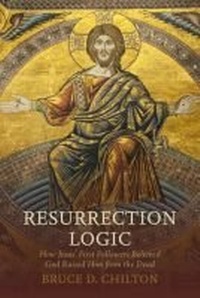
Resurrection Logic
How Jesus' First Followers Believed God Raised Him from the Dead
Published on 30. September 2019
Book
Hardback
319 pages
978-1-4813-1063-5 (ISBN)
Description
Death does not speak the final word. Resurrection does. Christianity stands or falls with this central confession: God raised Jesus from the dead.
Bruce Chilton investigates the Easter event of Jesus in Resurrection Logic. He undertakes his close reading of the New Testament texts without privileging the exact nature of the resurrection, but rather begins by situating his study of the resurrection in the context of Sumerian, Egyptian, Greek, and Syrian conceptions of the afterlife. He then identifies Jewish monotheistic affirmations of bodily resurrection in the Second Temple period as the most immediate context for early Christian claims. Chilton surveys first-generation accounts of Jesus' resurrection and finds a pluriform - and even at times seemingly contradictory - range of testimony from Jesus' first followers. This diversity, as Chilton demonstrates, prompted early Christianity to interpret the resurrection traditions by means of prophecy and coordinated narrative.
In the end, Chilton points to how the differing conceptions of the ways that God governs the world produced distinct understandings - or ""sciences"" - of the Easter event. Each understanding contained its own internal logic, which contributed to the collective witness of the early church handed down through the canonical text. In doing so, Chilton reveals the full tapestry of perspectives held together by the common-thread confession of Jesus' ongoing life and victory over death.
Bruce Chilton investigates the Easter event of Jesus in Resurrection Logic. He undertakes his close reading of the New Testament texts without privileging the exact nature of the resurrection, but rather begins by situating his study of the resurrection in the context of Sumerian, Egyptian, Greek, and Syrian conceptions of the afterlife. He then identifies Jewish monotheistic affirmations of bodily resurrection in the Second Temple period as the most immediate context for early Christian claims. Chilton surveys first-generation accounts of Jesus' resurrection and finds a pluriform - and even at times seemingly contradictory - range of testimony from Jesus' first followers. This diversity, as Chilton demonstrates, prompted early Christianity to interpret the resurrection traditions by means of prophecy and coordinated narrative.
In the end, Chilton points to how the differing conceptions of the ways that God governs the world produced distinct understandings - or ""sciences"" - of the Easter event. Each understanding contained its own internal logic, which contributed to the collective witness of the early church handed down through the canonical text. In doing so, Chilton reveals the full tapestry of perspectives held together by the common-thread confession of Jesus' ongoing life and victory over death.
Reviews / Votes
...a rewarding and thought-provoking study. -- Donald Senior -- The Bible TodayMore details
Language
English
Place of publication
Waco
United States
Target group
College/higher education
Professional and scholarly
Dimensions
Height: 229 mm
Width: 152 mm
Thickness: 28 mm
Weight
635 gr
ISBN-13
978-1-4813-1063-5 (9781481310635)
Copyright in bibliographic data and cover images is held by Nielsen Book Services Limited or by the publishers or by their respective licensors: all rights reserved.
Schweitzer Classification
Other editions
Additional editions
E-Book
08/2020
Baylor University Press
€43.99
Available for download
E-Book
09/2019
Baylor University Press
€43.99
Available for download
Person
Bruce D. Chilton is Bernard Iddings Bell Professor of Philosophy and Religion in the Department of Religion and Executive Director of The Institute of Advanced Theology at Bard College. He is also the author of Visions of the Apocalypse: Receptions of John's Revelation in Western Imagination, co-author of The Targums: A Critical Introduction, and co-editor of In Quest of the Historical Pharisees.
Content
Introduction
Part One: Crucibles of Hope
1. Resurrection and Immortality before Jesus
2. Israel's Revolution of Hope
3. Bodies Raised in Israel's Vindication
Part Two: Catalyst of Transformation
4. Paul on How Jesus ""Was Seen""
5. Seen ""by K??pha',"" Then ""by the Twelve""
6. Seen ""by More Than Five Hundred,"" Then ""by James""
7. Seen by ""All the Apostles""
Part Three: Reasoning with the Resurrection
8. After Paul, beyond the Tomb
9. Resurrection, History, and Realization
Conclusion
Part One: Crucibles of Hope
1. Resurrection and Immortality before Jesus
2. Israel's Revolution of Hope
3. Bodies Raised in Israel's Vindication
Part Two: Catalyst of Transformation
4. Paul on How Jesus ""Was Seen""
5. Seen ""by K??pha',"" Then ""by the Twelve""
6. Seen ""by More Than Five Hundred,"" Then ""by James""
7. Seen by ""All the Apostles""
Part Three: Reasoning with the Resurrection
8. After Paul, beyond the Tomb
9. Resurrection, History, and Realization
Conclusion