

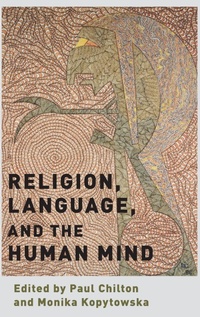
Religion, Language, and the Human Mind
Published on 10. May 2018
Book
Hardback
536 pages
978-0-19-063664-7 (ISBN)
Description
What is religion? How does it work? Many natural abilities of the human mind are involved, and crucial among them is the ability to use language. This volume brings together research from linguistics, cognitive science and neuroscience, as well as from religious studies, to understand the phenomena of religion as a distinctly human enterprise.
The book is divided into three parts, each part preceded by a full introductory chapter by the editors that discusses modern scientific approaches to religion and the application of modern linguistics, particularly cognitive linguistics and pragmatics. Part I surveys the development of modern studies of religious language and the diverse disciplinary strands that have emerged. Beginning with descriptive approaches to religious language and the problem of describing religious concepts across languages, chapters introduce the turn to cognition in linguistics and also in theology, and explore the brain's contrasting capacities, in particular its capacity for language and metaphor.
Part II continues the discussion of metaphor - the natural ability by which humans draw on basic knowledge of the world in order to explore abstractions and intangibles. Specialists in particular religions apply conceptual metaphor theory in various ways, covering several major religious traditions-Buddhism, Christianity, Hinduism, Islam and Judaism.
Part III seeks to open up new horizons for cognitive-linguistic research on religion, looking beyond written texts to the ways in which language is integrated with other modalities, including ritual, religious art, and religious electronic media. Chapters in Part III introduce readers to a range of technical instruments that have been developed within cognitive linguistics and discourse analysis in recent years. What unfolds ultimately is the idea that the embodied cognition of humans is the basis not only of their languages, but also of their religions.
The book is divided into three parts, each part preceded by a full introductory chapter by the editors that discusses modern scientific approaches to religion and the application of modern linguistics, particularly cognitive linguistics and pragmatics. Part I surveys the development of modern studies of religious language and the diverse disciplinary strands that have emerged. Beginning with descriptive approaches to religious language and the problem of describing religious concepts across languages, chapters introduce the turn to cognition in linguistics and also in theology, and explore the brain's contrasting capacities, in particular its capacity for language and metaphor.
Part II continues the discussion of metaphor - the natural ability by which humans draw on basic knowledge of the world in order to explore abstractions and intangibles. Specialists in particular religions apply conceptual metaphor theory in various ways, covering several major religious traditions-Buddhism, Christianity, Hinduism, Islam and Judaism.
Part III seeks to open up new horizons for cognitive-linguistic research on religion, looking beyond written texts to the ways in which language is integrated with other modalities, including ritual, religious art, and religious electronic media. Chapters in Part III introduce readers to a range of technical instruments that have been developed within cognitive linguistics and discourse analysis in recent years. What unfolds ultimately is the idea that the embodied cognition of humans is the basis not only of their languages, but also of their religions.
Reviews / Votes
This is a book highly recommended to researchers from various disciplinary backgrounds, theologians and priests but also lay people from different cultural and religious backgrounds. Most chapters can be consid-ered independently. But in any case, do not miss the splendid and informative introduction and overview. * Pn. Dr. Sybille C. Fritsch-Oppermann, ESSSAT News & Reviews * Religion, Language, and the Human Mind is a superb snapshot about what is going on in cognitive linguistics, religious studies, neuroscience, and everything in between. Readers will find something to their liking either for the enjoyment of learning, being intellectually challenged, or for the refinement of their own discipline. Highly recommended. * Reading Religion *More details
Language
English
Place of publication
New York
United States
Target group
Professional and scholarly
Dimensions
Height: 240 mm
Width: 161 mm
Thickness: 33 mm
Weight
963 gr
ISBN-13
978-0-19-063664-7 (9780190636647)
Copyright in bibliographic data and cover images is held by Nielsen Book Services Limited or by the publishers or by their respective licensors: all rights reserved.
Schweitzer Classification
Other editions
Additional editions
Paul Chilton | Monika Kopytowska
Religion, Language, and the Human Mind
E-Book
04/2018
1st Edition
OUP eBook
€67.49
Available for download
Paul Chilton | Monika Kopytowska
Religion, Language, and the Human Mind
E-Book
04/2018
1st Edition
OUP eBook
€84.99
Available for download
Persons
Paul Chilton received his doctorate from the University of Oxford. His research and writing have spanned several fields, including linguistics, discourse analysis, politics, international relations, and religious literature. He has worked in several universities, including Warwick, Lancaster, and Stanford, and has also lectured widely in China. His current research is in cognitive linguistics, discourse analysis, and their links with neuroscience.
Monika Kopytowska received her Ph.D. from the University of Lodz, Poland, where she is currently affiliated with the Department of Pragmatics. Her research interests revolve around the interface of language and cognition, identity, media discourse and the pragma-rhetorical aspects of the mass-mediated representation of religion, ethnicity, and conflict/terrorism.
Monika Kopytowska received her Ph.D. from the University of Lodz, Poland, where she is currently affiliated with the Department of Pragmatics. Her research interests revolve around the interface of language and cognition, identity, media discourse and the pragma-rhetorical aspects of the mass-mediated representation of religion, ethnicity, and conflict/terrorism.
Content
PREFACE
ACKNOWLEDGMENTS
CONTRIBUTORS
INTRODUCTION Religion as a Cognitive and Linguistic Phenomenon
Paul Chilton and Monika Kopytowska
PART I RELIGIOUS LANGUAGE, MIND AND BRAIN
CHAPTER 1 Whatever Happened to Theolinguistics?
David Crystal
CHAPTER 2 Speaking about God in Universal Words, Thinking about God
outside English
Anna Wierzbicka
CHAPTER 3 Religious Metaphors at the Crossroads between Apophatical
Theology and Cognitive Linguistics: an Interdisciplinary Study
Kurt Feyaerts and Lieven Boeve
CHAPTER 4 Linguistics and the Scientific Study of Religion: Prayer as a
Cognitive Register
William Downes
CHAPTER 5 Cognitive Neuroscience and Religious Language: A Working
Hypothesis
Patrick McNamara and Magda Giordano
CHAPTER 6 God, Metaphor and the Language of the Hemispheres
Iain McGilchrist
PART II INVESTIGATING METAPHOR IN RELIGIOUS TEXTS
CHAPTER 7 A Composite Countenance: The Divine Face as Mixed Metaphor
in Jewish Mysticism
Ellen Haskell
CHAPTER 8 The Guru's Tongue: Metaphor, Imagery, and Vernacular
Language in Vai??ava Sahajiy? Hindu Traditions
Glen Alexander Hayes
CHAPTER 9 Snakes, Leaves and Poisoned Arrows:
Metaphors of Emotion in Early Buddhism
Hubert Kowalewski
CHAPTER 10 Buddhist Metaphors in the Diamond Sutra and the Heart Sutra: A Cognitive Perspective
Xiuping Gao and Chun Lan
CHAPTER 11 The Muslim Prophetic Tradition: Spatial Source Domains for
Metaphorical Expressions
Ahmad El-Sharif
CHAPTER 12 Metaphor in Religious Transformation: 'Circumcision of the Heart' in Paul of Tarsus
Ralph Bisschops
PART III NEW PERSPECTIVES
CHAPTER 13 Cognitive Pragmatics and Multi-layered Communication: Allegory in Christian Religious Discourse
Christoph Unger
CHAPTER 14 Metaphor and Metonymy in Language and Art: the Dogma of the Holy Trinity and its Artistic Representation
Antonio Barcelona
CHAPTER 15 Waging a War against Oneself: a Conceptual Blend at the Heart of Christian Ascetic Practice
Mihailo Antovi?
CHAPTER 16 Hoc est corpus: Deixis and the Integration of Ritual Space
Paul Chilton and David Cram
CHAPTER 17 The Televisualization of Ritual: Spirituality, Spatiality
and Co-presence in Religious Broadcasting
Monika Kopytowska
ACKNOWLEDGMENTS
CONTRIBUTORS
INTRODUCTION Religion as a Cognitive and Linguistic Phenomenon
Paul Chilton and Monika Kopytowska
PART I RELIGIOUS LANGUAGE, MIND AND BRAIN
CHAPTER 1 Whatever Happened to Theolinguistics?
David Crystal
CHAPTER 2 Speaking about God in Universal Words, Thinking about God
outside English
Anna Wierzbicka
CHAPTER 3 Religious Metaphors at the Crossroads between Apophatical
Theology and Cognitive Linguistics: an Interdisciplinary Study
Kurt Feyaerts and Lieven Boeve
CHAPTER 4 Linguistics and the Scientific Study of Religion: Prayer as a
Cognitive Register
William Downes
CHAPTER 5 Cognitive Neuroscience and Religious Language: A Working
Hypothesis
Patrick McNamara and Magda Giordano
CHAPTER 6 God, Metaphor and the Language of the Hemispheres
Iain McGilchrist
PART II INVESTIGATING METAPHOR IN RELIGIOUS TEXTS
CHAPTER 7 A Composite Countenance: The Divine Face as Mixed Metaphor
in Jewish Mysticism
Ellen Haskell
CHAPTER 8 The Guru's Tongue: Metaphor, Imagery, and Vernacular
Language in Vai??ava Sahajiy? Hindu Traditions
Glen Alexander Hayes
CHAPTER 9 Snakes, Leaves and Poisoned Arrows:
Metaphors of Emotion in Early Buddhism
Hubert Kowalewski
CHAPTER 10 Buddhist Metaphors in the Diamond Sutra and the Heart Sutra: A Cognitive Perspective
Xiuping Gao and Chun Lan
CHAPTER 11 The Muslim Prophetic Tradition: Spatial Source Domains for
Metaphorical Expressions
Ahmad El-Sharif
CHAPTER 12 Metaphor in Religious Transformation: 'Circumcision of the Heart' in Paul of Tarsus
Ralph Bisschops
PART III NEW PERSPECTIVES
CHAPTER 13 Cognitive Pragmatics and Multi-layered Communication: Allegory in Christian Religious Discourse
Christoph Unger
CHAPTER 14 Metaphor and Metonymy in Language and Art: the Dogma of the Holy Trinity and its Artistic Representation
Antonio Barcelona
CHAPTER 15 Waging a War against Oneself: a Conceptual Blend at the Heart of Christian Ascetic Practice
Mihailo Antovi?
CHAPTER 16 Hoc est corpus: Deixis and the Integration of Ritual Space
Paul Chilton and David Cram
CHAPTER 17 The Televisualization of Ritual: Spirituality, Spatiality
and Co-presence in Religious Broadcasting
Monika Kopytowska