

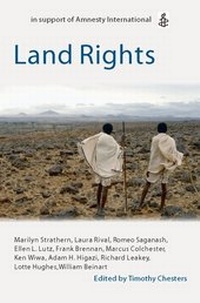
Land Rights
Oxford Amnesty Lectures
Published on 15. January 2009
Book
Paperback/Softback
240 pages
978-0-19-954510-0 (ISBN)
Description
Indigenous peoples and governments, industrialists and ecologists all use - or have at some stage to confront - the language of land rights. That language raises as many questions as it answers. Rights of the land or rights to the land? Rights of the individual or rights of the community? Even accepting that such rights exist, how to arbitrate between competing claims to land? Spanning as they do a wide range of intellectual territory, and their spheres of interest or activity ranging geographically from the Niger Delta to Papua New Guinea, from Quebec to the Eastern Cape, the contributors to this volume move across a range of different, and at times contradictory, approaches to land rights. Marilyn Strathern explores the divergent anthropologies of land, specifically regarding the equation of land and property. Cree lawyer and spokesman Romeo Saganash and Frank Brennan, an Australian lawyer and priest, explore the legal framework for land claims. The UN's International Decade of the Rights of Indigenous People recently ended in the failure of negotiating govemnents to accommodate, within international law, a 'collective' right to land. It is only by acknowledging this collective right to self-determination, both argue, that governments can come to terms with their indigenous populations and their own colonial past. Against the pleas of Brennan and Saganash, the Kenyan Richard Leakey, whose own history and politics is indissociable from that past, questions the whole notion of 'indigeneity'. The campaigner Ken Wiwa speaks too of the difficulties of redressing historical injusticeis, especially in a region - the Niger Delta - where the indigenous Ogoni have no written record of their losses. Finally William Beinart, a historian and advisor to the South African government, outlines some of the practical difficulties of land reform in that country.
Reviews / Votes
Review from previous edition All good citizens should probably want to buy them . . . simply because they are published in support of such a good cause. It turns out, though, that no self-sacrifice is involved. [These] are immensely rich, challenging, stimulating volumes . . . The contributors' lists are star-studded . . . and each book has a clear, coherent, overarching theme, despite the extreme diversity of the individual lectures' * The Independent *More details
Series
Language
English
Place of publication
Oxford
United Kingdom
Target group
College/higher education
Professional and scholarly
Dimensions
Height: 196 mm
Width: 129 mm
Thickness: 18 mm
Weight
182 gr
ISBN-13
978-0-19-954510-0 (9780199545100)
Copyright in bibliographic data and cover images is held by Nielsen Book Services Limited or by the publishers or by their respective licensors: all rights reserved.
Schweitzer Classification
Other editions
Additional editions
E-Book
01/2009
1st Edition
OUP eBook
€28.99
Available for download
Person
Timothy Chesters is a lecturer in the School of Modern Languages, Literatures and Cultures at Royal Holloway, University of London. He is the author of several articles on sixteenth- and seventeenth-century French literature and thought. He is currently writing a book on ghosts and apparitions in early modern France.
Content
Preface ; Contributors ; Introduction ; 1. Land: Intangible or Tangible Property? ; Response to Marilyn Strathern ; 2. Indigenous Peoples and International Human Rights ; Response to Romeo Saganash ; 3. Standing in Deep Time; Standing in the Law ; Response to Frank Brennan ; 4. If this is your land, where are your stories? ; Response to Ken Wiwa ; 5. Whose world is it anyway? ; Response to Richard Leakey ; 6. Land Reform in the Eastern Cape: An Argument against Recommunalisation