

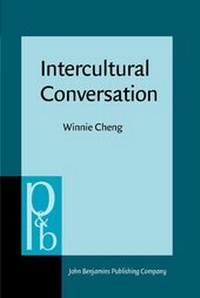
Intercultural Conversation
Published on 19. December 2003
Book
Hardback
279 pages
978-90-272-5360-6 (ISBN)
Description
This innovative study of naturally-occurring English conversations between Hong Kong Chinese and their native English friends and colleagues makes a worthwhile contribution to the research literature on intercultural conversation. Through analyzing dyadic intercultural conversations, the study investigates the ways in which culturally divergent conversationalists manage their organizational and interpersonal aspects of the unfolding conversations. The study focuses on five features of conversational interaction - disagreements, compliments and compliment responses, simultaneous talk, discourse topic management and discourse information structure - where cultural values and attitudes are particularly evident. For each of the features, hypotheses are formulated and tested through the detailed analysis of twenty-five intercultural conversations. This quantitative analysis is then followed by qualitative analysis of excerpts from the conversations to show the ways in which conversational interaction is performed and negotiated. The study shows in very revealing ways that intercultural conversations involve a complex, interactive and collaborative process of communication between the participants.
More details
Series
Language
English
Place of publication
Amsterdam
Netherlands
Target group
Professional and scholarly
Dimensions
Height: 225 mm
Width: 154 mm
Weight
510 gr
ISBN-13
978-90-272-5360-6 (9789027253606)
Copyright in bibliographic data and cover images is held by Nielsen Book Services Limited or by the publishers or by their respective licensors: all rights reserved.
Schweitzer Classification
Other editions
Additional editions
E-Book
12/2003
1st Edition
John Benjamins Publishing Company
€136.99
Available for download
Person
Content
1. List of figures and tables; 2. Acknowledgements; 3. Transcription notation; 4. 1. Communication across cultures; 5. 2. Literature review and descriptive framework; 6. 3. Research methodology and data collection; 7. 4. Preference organization; 8. 5. Compliments and compliment responses; 9. 6. Simultaneous talk; 10. 7. Discourse topic management; 11. 8. Discourse information structure; 12. 9. Conclusion; 13. References; 14. Authors index; 15. Subject index