

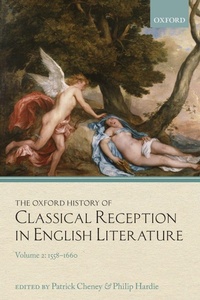
The Oxford History of Classical Reception in English Literature
Volume 2: 1558-1660
Published on 7. May 2020
Book
Paperback/Softback
808 pages
978-0-19-885916-1 (ISBN)
Description
The Oxford History of Classical Reception (OHCREL) is designed to offer a comprehensive investigation of the numerous and diverse ways in which literary texts of the classical world have stimulated responses and refashioning by English writers. Covering the full range of English literature from the early Middle Ages to the present day, OHCREL both synthesizes existing scholarship and presents cutting-edge new research, employing an international team of expert contributors for each of the five volumes.
OHCREL endeavours to interrogate, rather than inertly reiterate, conventional assumptions about literary 'periods', the processes of canon-formation, and the relations between literary and non-literary discourse. It conceives of 'reception' as a complex process of dialogic exchange and, rather than offering large cultural generalizations, it engages in close critical analysis of literary texts. It explores in detail the ways in which English writers' engagement with classical literature casts as much light on the classical originals as it does on the English writers' own cultural context.
This second volume covers the years 1558-1660, and explores the reception of the ancient genres and authors in English Renaissance literature, engaging with the major, and many of the minor, writers of the period, including Shakespeare, Marlowe, Spenser, and Jonson. Separate chapters examine the Renaissance institutions and contexts which shape the reception of antiquity, and an annotated bibliography provides substantial material for further reading.
OHCREL endeavours to interrogate, rather than inertly reiterate, conventional assumptions about literary 'periods', the processes of canon-formation, and the relations between literary and non-literary discourse. It conceives of 'reception' as a complex process of dialogic exchange and, rather than offering large cultural generalizations, it engages in close critical analysis of literary texts. It explores in detail the ways in which English writers' engagement with classical literature casts as much light on the classical originals as it does on the English writers' own cultural context.
This second volume covers the years 1558-1660, and explores the reception of the ancient genres and authors in English Renaissance literature, engaging with the major, and many of the minor, writers of the period, including Shakespeare, Marlowe, Spenser, and Jonson. Separate chapters examine the Renaissance institutions and contexts which shape the reception of antiquity, and an annotated bibliography provides substantial material for further reading.
Reviews / Votes
Review from previous edition This book bursts with a wealth of case studies and microhistories that will no doubt assist witchcraft scholars ... Overall, this is a valuable and impressive contribution to current scholarship. * Oma Alyagon Darr, Renaissance Quarterly * In sum, the endeavour amounts to a detailed, up-to-date, and authoritative compendium of learning and insight on a topic that defines the very soul of Renaissance literature. * William J. Kennedy, Modern Philology *More details
Series
Language
English
Place of publication
Oxford
United Kingdom
Target group
College/higher education
Dimensions
Height: 234 mm
Width: 156 mm
Thickness: 43 mm
Weight
1197 gr
ISBN-13
978-0-19-885916-1 (9780198859161)
Copyright in bibliographic data and cover images is held by Nielsen Book Services Limited or by the publishers or by their respective licensors: all rights reserved.
Schweitzer Classification
Persons
Patrick Cheney is Edwin Erle Sparks Professor of English and Comparative Literature at Pennsylvania State University. He has been a Visiting Research Fellow at Merton College, University of Oxford, and a recipient of the Faculty Scholar Medal at Pennsylvania State University for research in the humanities. He is General Editor of the Oxford History of Poetry in English, and a Visiting Fellow of All Souls College, Oxford. His publications have focused on the reception of classical ideas of authorship.
Philip Hardie is a Senior Research Fellow of Trinity College, Cambridge, and Honorary Professor of Latin at the University of Cambridge. He is a Fellow of the British Academy and was Corpus Christi Professor of the Latin Language and Literature at the University of Oxford (2002-6). He holds an honorary doctorate from the University of Thessaloniki, and was the recipient of the Premio Internazionale Virgilio (Mantova) in 2012. He has published extensively both on ancient Latin literature and on its reception.
Philip Hardie is a Senior Research Fellow of Trinity College, Cambridge, and Honorary Professor of Latin at the University of Cambridge. He is a Fellow of the British Academy and was Corpus Christi Professor of the Latin Language and Literature at the University of Oxford (2002-6). He holds an honorary doctorate from the University of Thessaloniki, and was the recipient of the Premio Internazionale Virgilio (Mantova) in 2012. He has published extensively both on ancient Latin literature and on its reception.
Editor
Edwin Erle Sparks Professor of English and Comparative LiteratureEdwin Erle Sparks Professor of English and Comparative Literature, Pennsylvania State University
Senior Research Fellow and Honorary Professor of Latin LiteratureSenior Research Fellow and Honorary Professor of Latin Literature, Trinity College, University of Cambridge
Content
List of Contributors
1: Patrick Cheney and Philip Hardie: Introduction
Part I: Institutions and Contexts
2: Peter Mack: The Classics in Humanism, Education, and Scholarship
3: Stuart Gillespie: The Availability of the Classics: Readers, Writers, Translation, Performance
4: Peter Mack: Classical Rhetoric in English
5: Gavin Alexander: The Classics in Literary Criticism
6: Mark Vessey: Classics and Christianity
7: Jane Stevenson: Women Writers and the Classics
8: Cultural Contexts
Curtis Perry: a) Politics and Nationalism
Cora Fox: b) Sexuality and Desire
Patrick Cheney: c) Literary Careers
Philip Hardie: d) Fame and Immortality
Part II: Genres
9: Helen Cooper: Pastoral and Georgic
10: Philip Hardie: Epic Poetry
11: Lynn Enterline: Elizabethan Minor Epic
12: William Fitzgerald: The Epistolary Tradition
13: Helen Moore: Prose Romance
14: Roland Greene: Elegy, Hymn, Epithalamium, Ode: Some Renaissance Reinterpretations
15: Susanna Braund: Complaint, Epigram, and Satire
16: Gordone Braden: Tragedy
17: Bruce Smith: Comedy
18: Tanya Pollard: Tragicomedy
19: Bart Vanes: Historiography and Biography
20: Reid Barbour and Claire Preston: Discursive and Speculative Writing
Part III: Authors
21: Jessica Wolfe: Homer
22: Elizabeth Jane Bellamy: Plato
23: Maggie Kilgour: Virgil and Ovid
24: Victoria Moul (with a contribution by Charles Martindale): Horace
25: Richard McCabe: Spenser
26: Charles Martindale: Marlowe
27: Colin Burrow: Shakespeare
28: Sean Keilen: Jonson
29: Thomas Luxon: Early Milton
Craig Kallendorf: Classical Reception in English Literature, 1558-1660: An Annotated Bibliography
Index
1: Patrick Cheney and Philip Hardie: Introduction
Part I: Institutions and Contexts
2: Peter Mack: The Classics in Humanism, Education, and Scholarship
3: Stuart Gillespie: The Availability of the Classics: Readers, Writers, Translation, Performance
4: Peter Mack: Classical Rhetoric in English
5: Gavin Alexander: The Classics in Literary Criticism
6: Mark Vessey: Classics and Christianity
7: Jane Stevenson: Women Writers and the Classics
8: Cultural Contexts
Curtis Perry: a) Politics and Nationalism
Cora Fox: b) Sexuality and Desire
Patrick Cheney: c) Literary Careers
Philip Hardie: d) Fame and Immortality
Part II: Genres
9: Helen Cooper: Pastoral and Georgic
10: Philip Hardie: Epic Poetry
11: Lynn Enterline: Elizabethan Minor Epic
12: William Fitzgerald: The Epistolary Tradition
13: Helen Moore: Prose Romance
14: Roland Greene: Elegy, Hymn, Epithalamium, Ode: Some Renaissance Reinterpretations
15: Susanna Braund: Complaint, Epigram, and Satire
16: Gordone Braden: Tragedy
17: Bruce Smith: Comedy
18: Tanya Pollard: Tragicomedy
19: Bart Vanes: Historiography and Biography
20: Reid Barbour and Claire Preston: Discursive and Speculative Writing
Part III: Authors
21: Jessica Wolfe: Homer
22: Elizabeth Jane Bellamy: Plato
23: Maggie Kilgour: Virgil and Ovid
24: Victoria Moul (with a contribution by Charles Martindale): Horace
25: Richard McCabe: Spenser
26: Charles Martindale: Marlowe
27: Colin Burrow: Shakespeare
28: Sean Keilen: Jonson
29: Thomas Luxon: Early Milton
Craig Kallendorf: Classical Reception in English Literature, 1558-1660: An Annotated Bibliography
Index