

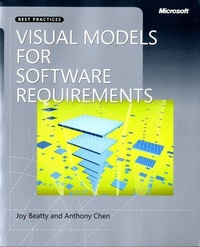
Visual Models for Software Requirements
Published on 15. July 2012
Book
Paperback/Softback
480 pages
978-0-7356-6772-3 (ISBN)
Description
Apply best practices for capturing, analyzing, and implementing software requirements through visual models-and deliver better results for your business. The authors-experts in eliciting and visualizing requirements-walk you through a simple but comprehensive language of visual models that has been used on hundreds of real-world, large-scale projects. Build your fluency with core concepts-and gain essential, scenario-based context and implementation advice-as you progress through each chapter.
Transcend the limitations of text-based requirements data using visual models that more rigorously identify, capture, and validate requirements
Get real-world guidance on best ways to use visual models-how and when, and ways to combine them for best project outcomes
Practice the book's concepts as you work through chapters
Change your focus from writing a good requirement to ensuring a complete system
Transcend the limitations of text-based requirements data using visual models that more rigorously identify, capture, and validate requirements
Get real-world guidance on best ways to use visual models-how and when, and ways to combine them for best project outcomes
Practice the book's concepts as you work through chapters
Change your focus from writing a good requirement to ensuring a complete system
More details
Other editions
Additional editions
Anthony Chen | Joy Beatty
Visual Models for Software Requirements
E-Book
07/2012
1st Edition
Microsoft Press
€51.49
Available for download
Anthony Chen | Joy Beatty
Visual Models for Software Requirements
E-Book
07/2012
1st Edition
Microsoft Press
from
€38.09
Available for download
Persons
Anthony Chen is a requirements architect who has developed a requirements training program used internationally, and helped pioneer key requirements-modeling concepts.
Content
Foreword
Introduction
Part I: An Introduction to Models
Chapter 1: Introduction to RML
Chapter 2: Model Categorization
Part II: Objectives Models
Chapter 3: Business Objectives Model
Chapter 4: Objective Chain
Chapter 5: Key Performance Indicator Model
Chapter 6: Feature Tree
Chapter 7: Requirements Mapping Matrix
Part III: People Models
Chapter 8: Org Chart
Chapter 9: Process Flow
Chapter 10: Use Case
Chapter 11: Roles and Permissions Matrix
Part IV: Systems Models
Chapter 12: Ecosystem Map
Chapter 13: System Flow
Chapter 14: User Interface Flow
Chapter 15: Display-Action-Response
Chapter 16: Decision Table
Chapter 17: Decision Tree
Chapter 18: System Interface Table
Part V: Data Models
Chapter 19: Business Data Diagram
Chapter 20: Data Flow Diagram
Chapter 21: Data Dictionary
Chapter 22: State Table
Chapter 23: State Diagram
Chapter 24: Report Table
Part VI: Models in the Big Picture
Chapter 25: Selecting Models for a Project
Chapter 26: Using Models Together
Quick Lookup Models Grids
General Guidelines for Models
Exercise Answers
Glossary
Introduction
Part I: An Introduction to Models
Chapter 1: Introduction to RML
Chapter 2: Model Categorization
Part II: Objectives Models
Chapter 3: Business Objectives Model
Chapter 4: Objective Chain
Chapter 5: Key Performance Indicator Model
Chapter 6: Feature Tree
Chapter 7: Requirements Mapping Matrix
Part III: People Models
Chapter 8: Org Chart
Chapter 9: Process Flow
Chapter 10: Use Case
Chapter 11: Roles and Permissions Matrix
Part IV: Systems Models
Chapter 12: Ecosystem Map
Chapter 13: System Flow
Chapter 14: User Interface Flow
Chapter 15: Display-Action-Response
Chapter 16: Decision Table
Chapter 17: Decision Tree
Chapter 18: System Interface Table
Part V: Data Models
Chapter 19: Business Data Diagram
Chapter 20: Data Flow Diagram
Chapter 21: Data Dictionary
Chapter 22: State Table
Chapter 23: State Diagram
Chapter 24: Report Table
Part VI: Models in the Big Picture
Chapter 25: Selecting Models for a Project
Chapter 26: Using Models Together
Quick Lookup Models Grids
General Guidelines for Models
Exercise Answers
Glossary