

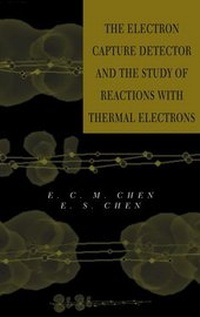
The Electron Capture Detector and The Study of Reactions With Thermal Electrons
1st Edition
Published on 11. May 2004
Book
Hardback
416 pages
978-0-471-32622-9 (ISBN)
Description
Broad in scope, this book describes the general theory and practice of using the Electron Capture Detector (ECD) to study reactions of thermal electrons with molecules. It reviews electron affinities and thermodynamic and kinetic parameters of atoms, small molecules, and large organic molecules obtained by using various methods.
* Summarizes other methods for studying reactions of thermal electrons with molecules
* Discusses applications in analytical chemistry, physical chemistry, and biochemistry
* Provides a data table of electron affinities
Reviews / Votes
"...contains a wealth of thermochemical information." (ChemPhysChem, 2005; Vol. 6, 9) "This book is thorough and comprehensive in its coverage of ECDs and ECDs to study the reactions with thermal electrons..." (E-STREAMS, October 2004)More details
Product info
GB
Edition
1., Auflage
Language
English
Place of publication
United States
Publishing group
John Wiley & Sons Inc
Target group
Professional and scholarly
Product notice
sewn/stitched
Cloth over boards
Illustrations
Drawings: 177 B&W, 0 Color
Dimensions
Height: 241 mm
Width: 158 mm
Thickness: 24 mm
Weight
708 gr
ISBN-13
978-0-471-32622-9 (9780471326229)
Schweitzer Classification
Other editions
Additional editions
E. C. M. Chen | E. S. D. Chen
The Electron Capture Detector and The Study of Reactions With Thermal Electrons
E-Book
04/2004
Wiley
€224.99
Available for download
Persons
E. C. M. CHEN is Professor Emeritus in the Department of Natural and Applied Sciences at the University of Houston-Clear Lake.
E. S. CHEN is formerly of the Center for Research on Parallel Computation at Rice University in Houston, Texas.
Content
FOREWORD.
PREFACE.
1. Scope and History of the Electron.
2. Definitions, Nomenclature, Reactions, and Equations.
3. Thermal Electron Reactions at the University of Houston.
4. Theoretical Basis of the Experimental Tools.
5. Experimental Procedures and Data Reduction.
6. Complementary Experimental and Theoretical Procedures.
7. Consolidating Experimental, Theoretical, and Empirical Data.
8. Selection, Assignment, and Correlations of Atomic Electron Affinities.
9. Diatomic and Triatomic Molecules and Sulfur Fluorides.
10. Negative Ions of Organic Molecules.
11. Thermal Electrons and Environmental Pollutants.
12. Biologically Significant Molecules.
APPENDICES.
I Glossary of Terms, Acronyms, and Symbols.
II Structures of Organic Molecules.
III General Least Squares.
IV Tables of Evaluated Electron Affinities.
AUTHOR INDEX.
SUBJECT INDEX.