


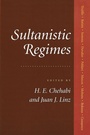
Sultanistic Regimes
Published on 31. July 1998
Book
Hardback
296 pages
978-0-8018-5693-8 (ISBN)
Description
Authoritarian governments are often based, not on ideology, nor a leader's personal mission or charisma, but simply on raw power sustained by fear of punishment and hope of reward. Such regimes are identified by the authors of this study as "sultanistic". The life span of these regimes is limited, and they tend to fall under chaotic circumstances which are unfavourable to democratic transition. Under such conditions, corruption reigns at all levels of society. This text identifies common characteristics of such regimes, comparing them to totalitarian and authoritarian forms of government, and tracing common patterns for their genesis and demise. The text examines such regimes as the Dominican Republic, Cuba, Haiti, Iran, Nicaragua and the Philippines. It explores their political economy and the circumstances under which they may fall victim to revolution. The authors then offer country studies which test the model developed in the first part of the book against the real-life experiences of governments in six nations.
More details
Language
English
Place of publication
Baltimore, MD
United States
Target group
College/higher education
Professional and scholarly
Dimensions
Height: 229 mm
Width: 152 mm
Thickness: 22 mm
Weight
590 gr
ISBN-13
978-0-8018-5693-8 (9780801856938)
DOI
10.56021/9780801856938
Copyright in bibliographic data is held by Nielsen Book Services Limited or its licensors: all rights reserved.
Schweitzer Classification
Other editions
Additional editions
Houchang E. Chehabi | Juan J. Linz
Sultanistic Regimes
Book
07/1998
Johns Hopkins University Press
€38.50
Article not available for order