

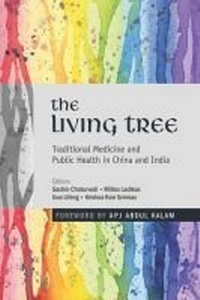
The Living Tree
Traditional Medicine and Public Health in China and India
Published on 30. August 2014
Book
Hardback
364 pages
978-93-327-0083-3 (ISBN)
Description
This volume examines the various issues in access to health issues and the role of intellectual property rights in access to drugs and the scope for using traditional medicine in public health. A team of experts from China, India, UK, Germany, The Netherlands, Norway and the Philippines have contributed to this volume. The volume examines Health Impact Fund, a mechanism that is proposed to incentivise R&D in neglected diseases and enhance access to drugs, and analyses how China and India can cooperate in traditional medicine sector besides providing reviews on the status of traditional medicine in both countries and the challenges before that sector in China and India in regulation, intellectual property rights and industrial policy. This is a unique volume that makes a significant contribution to the debates on access to medicine and role of traditional medicine in public health.
More details
Language
English
Place of publication
Ghaziabad
India
Target group
Professional and scholarly
Dimensions
Height: 235 mm
Width: 159 mm
Weight
456 gr
ISBN-13
978-93-327-0083-3 (9789332700833)
Copyright in bibliographic data and cover images is held by Nielsen Book Services Limited or by the publishers or by their respective licensors: all rights reserved.
Schweitzer Classification
Persons
Sachin Chaturvedi is a Senior Fellow at the Research and Information System for Developing Countries (RIS), a think tank with the Government of India's Ministry of External Affairs. He works on, inter alia, development cooperation policies and South-South cooperation, and science, technology and innovation policies.
Miltos Ladikas currently holds Research Fellow posts at the Centre for Professional Ethics, University of Central Lancashire, UK and the Institute for Technology Assessment and Systems Analysis, Karlsruhe Institute of Technology, Germany. His professional background covers the areas of technology assessment, public perceptions of S&T, ethics in S&T policy and science and development.
Guo Lifeng is Associate Professor, Chinese Academy of Science and Technology for Development (CASTED), Ministry of Science and Technology, Beijing, China. Her research interests include science and technology polices and IPR issue in International trade.
Krishna Ravi Srinivas is an Associate Fellow with RIS, a policy research think tank based in New Delhi, India. He has written on, inter alia, IPRs, open source and open innovation models, traditional knowledge, and climate change and technology transfer.
Miltos Ladikas currently holds Research Fellow posts at the Centre for Professional Ethics, University of Central Lancashire, UK and the Institute for Technology Assessment and Systems Analysis, Karlsruhe Institute of Technology, Germany. His professional background covers the areas of technology assessment, public perceptions of S&T, ethics in S&T policy and science and development.
Guo Lifeng is Associate Professor, Chinese Academy of Science and Technology for Development (CASTED), Ministry of Science and Technology, Beijing, China. Her research interests include science and technology polices and IPR issue in International trade.
Krishna Ravi Srinivas is an Associate Fellow with RIS, a policy research think tank based in New Delhi, India. He has written on, inter alia, IPRs, open source and open innovation models, traditional knowledge, and climate change and technology transfer.
Content
- Foreword A.P.J. Abdul Kalam
- Preface Biswajit Dhar
- Introduction
- Health Sector Challenges, Traditional Medicines and India China Collaboration
- Section I: Health Impact Fund
- 1. The Health Impact Fund: Issues and Challenges
- 2. Stakeholder Views Regarding the Objectives and Implementation of the HIF
- 3. Health Impact of New Pharmaceutical Pro-ducts in the Context of Health Impact Funds
- 4. Gender-based Barriers to Access to Health Care and Medicine: The Case of India and China
- Section II: India
- 5. Intellectual Property Rights and Traditional Chinese Medicine: The Experience in China and What India can learn from that
- 6. Dynamics of Traditional Medicine Industry: Issues in Trade, Technology and Standards
- 7. Regulatory Guidelines for Traditional Medicines in India
- 8. Traditional Medicine and Intellectual Property Policies
- Section III: China
- 9. China-India Cooperation on Intellectual Property Protection of Traditional Medicines
- 10. Industrial Development: External Trade and R&D of Traditional Chinese Medicine
- 11. Traditional Drug: Standard and Basic Medicine System of China
- 12. Public Health Problem and Development of Traditional Medicine
- Section IV: Conclusion
- 13. Potential or China-India Cooperation and HIF: Concluding Remarks and Policy Recommendations
- Preface Biswajit Dhar
- Introduction
- Health Sector Challenges, Traditional Medicines and India China Collaboration
- Section I: Health Impact Fund
- 1. The Health Impact Fund: Issues and Challenges
- 2. Stakeholder Views Regarding the Objectives and Implementation of the HIF
- 3. Health Impact of New Pharmaceutical Pro-ducts in the Context of Health Impact Funds
- 4. Gender-based Barriers to Access to Health Care and Medicine: The Case of India and China
- Section II: India
- 5. Intellectual Property Rights and Traditional Chinese Medicine: The Experience in China and What India can learn from that
- 6. Dynamics of Traditional Medicine Industry: Issues in Trade, Technology and Standards
- 7. Regulatory Guidelines for Traditional Medicines in India
- 8. Traditional Medicine and Intellectual Property Policies
- Section III: China
- 9. China-India Cooperation on Intellectual Property Protection of Traditional Medicines
- 10. Industrial Development: External Trade and R&D of Traditional Chinese Medicine
- 11. Traditional Drug: Standard and Basic Medicine System of China
- 12. Public Health Problem and Development of Traditional Medicine
- Section IV: Conclusion
- 13. Potential or China-India Cooperation and HIF: Concluding Remarks and Policy Recommendations