


I Am the People
Reflections on Popular Sovereignty Today
Published on 17. December 2019
Book
Paperback/Softback
208 pages
978-0-231-19549-2 (ISBN)
Description
The forms of liberal government that emerged after World War II are in the midst of a profound crisis. In I Am the People, Partha Chatterjee reconsiders the concept of popular sovereignty in order to explain today's dramatic outburst of movements claiming to speak for "the people."
To uncover the roots of populism, Chatterjee traces the twentieth-century trajectory of the welfare state and neoliberal reforms. Mobilizing ideals of popular sovereignty and the emotional appeal of nationalism, anticolonial movements ushered in a world of nation-states while liberal democracies in Europe guaranteed social rights to their citizens. But as neoliberal techniques shrank the scope of government, politics gave way to technical administration by experts. Once the state could no longer claim an emotional bond with the people, the ruling bloc lost the consent of the governed. To fill the void, a proliferation of populist leaders have mobilized disaffected groups into a battle that they define as the authentic people against entrenched oligarchy.
Once politics enters a spiral of competitive populism, Chatterjee cautions, there is no easy return to pristine liberalism. Only a counter-hegemonic social force that challenges global capital and facilitates the equal participation of all peoples in democratic governance can achieve significant transformation. Drawing on thinkers such as Antonio Gramsci, Michel Foucault, and Ernesto Laclau and with a particular focus on the history of populism in India, I Am the People is a sweeping, theoretically rich account of the origins of today's tempests.
To uncover the roots of populism, Chatterjee traces the twentieth-century trajectory of the welfare state and neoliberal reforms. Mobilizing ideals of popular sovereignty and the emotional appeal of nationalism, anticolonial movements ushered in a world of nation-states while liberal democracies in Europe guaranteed social rights to their citizens. But as neoliberal techniques shrank the scope of government, politics gave way to technical administration by experts. Once the state could no longer claim an emotional bond with the people, the ruling bloc lost the consent of the governed. To fill the void, a proliferation of populist leaders have mobilized disaffected groups into a battle that they define as the authentic people against entrenched oligarchy.
Once politics enters a spiral of competitive populism, Chatterjee cautions, there is no easy return to pristine liberalism. Only a counter-hegemonic social force that challenges global capital and facilitates the equal participation of all peoples in democratic governance can achieve significant transformation. Drawing on thinkers such as Antonio Gramsci, Michel Foucault, and Ernesto Laclau and with a particular focus on the history of populism in India, I Am the People is a sweeping, theoretically rich account of the origins of today's tempests.
Reviews / Votes
Partha Chatterjee's scintillating intervention is essential reading for a global constituency that is being encouraged, by journalists and polemicists alike, to understand populism, racism, and xenophobia through facile, divisive polarizations-the elites vs. the masses; globalization vs. the nation-state; tribalism vs. democracy. He is able to engage with the ideological ambiguities, political contingencies, and democratic antagonisms of our age while providing a constructive compass on where we are today and what is to be done. I Am the People is a fine achievement. -- Homi Bhabha, Anne F. Rothenberg Professor of the Humanities, Harvard University In these masterful lectures, Chatterjee provides a truly global account of the logics of populist and popular sovereignty in the twentieth and early twenty-first centuries. Drawing on the example of modern Indian capitalism and governmental techniques, Chatterjee shows that the career of the 'people' and populism in India enables a richer, deeper, and more complex account of populist politics than is the norm in current debates in Euro-America. -- Thomas Blom Hansen, Stanford University Chatterjee sets forth an entirely original genealogy of political populism built around the theoretical significance of populist politics in India and their unexpected convergences with the West. No other political theorist has the range, analytical depth, ambition, and sheer novelty of political imagination to traverse this truly global story of popular sovereignty. Chatterjee has also delightfully given a new life to Gramsci's concept of passive revolution for a new age and a new generation of critical theorists. -- Karuna Mantena, Columbia University Recommended. * Choice * There is much [that] students of sovereignty, populism, political theory, and media will find worth considering. * Religious Studies Review *More details
Series
Language
English
Place of publication
New York
United States
Target group
Professional and scholarly
Product notice
Paperback (trade)
Dimensions
Height: 216 mm
Width: 140 mm
ISBN-13
978-0-231-19549-2 (9780231195492)
Copyright in bibliographic data and cover images is held by Nielsen Book Services Limited or by the publishers or by their respective licensors: all rights reserved.
Schweitzer Classification
Other editions
Additional editions
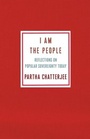
Book
12/2019
Columbia University Press
€76.75
Article not available at the moment
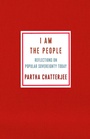
E-Book
12/2019
1st Edition
Columbia University Press
€24.49
Available for download
Person
Partha Chatterjee is a professor of anthropology and of Middle Eastern, South Asian, and African studies at Columbia University. He is the author of more than twenty books, including The Politics of the Governed: Reflections on Popular Politics in Most of the World (Columbia, 2004) and The Black Hole of Empire: History of a Global Practice of Power (2012).
Content
Preface
1. Even Justice
2. The Cynicism of Power
3. "I Am the People"
Afterword: The Optimism of the Intellect
Notes
Bibliography
Index
1. Even Justice
2. The Cynicism of Power
3. "I Am the People"
Afterword: The Optimism of the Intellect
Notes
Bibliography
Index