

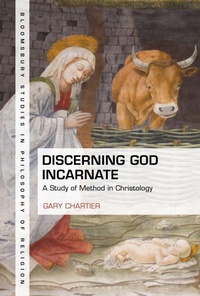
Discerning God Incarnate
A Study of Method in Christology
Will be published approx. on 17. September 2026
Book
Hardback
216 pages
978-1-350-47339-3 (ISBN)
Description
Is incarnational Christology credible? Should we understand Jesus as God incarnate? Discerning God Incarnate offers a critical survey of a range of proposals in contemporary theology and philosophy of religion on the validation of the doctrine of the Incarnation.
In this engaging and original study Gary Chartier investigates approaches that span across the topics of consciousness, resurrection, tradition and experience, focusing on the logic and pervasive assumptions of each argument.
Historical study of the Bible and historical sensitivity to the ways in which church tradition develops, along with contemporary views of divine action, make it difficult to affirm belief in the Incarnation simply on the basis of what the Bible or the church teaches. Chartier examines the alternative paths to affirming incarnational Christology that take full account of contemporary historical and philosophical insights. He explores the potential and limitations of the kind of 'critical orthodoxy' associated with such figures as Charles Gore, J. M. Creed and Leonard Hodgson, embracing both credal orthodoxy and historical consciousness.
Providing a sharp philosophical reflection on the degree to which different critical Christological arguments are exclusive or potentially mutually supportive, this is a valuable resource for any student and scholar studying philosophy of religion and theology.
In this engaging and original study Gary Chartier investigates approaches that span across the topics of consciousness, resurrection, tradition and experience, focusing on the logic and pervasive assumptions of each argument.
Historical study of the Bible and historical sensitivity to the ways in which church tradition develops, along with contemporary views of divine action, make it difficult to affirm belief in the Incarnation simply on the basis of what the Bible or the church teaches. Chartier examines the alternative paths to affirming incarnational Christology that take full account of contemporary historical and philosophical insights. He explores the potential and limitations of the kind of 'critical orthodoxy' associated with such figures as Charles Gore, J. M. Creed and Leonard Hodgson, embracing both credal orthodoxy and historical consciousness.
Providing a sharp philosophical reflection on the degree to which different critical Christological arguments are exclusive or potentially mutually supportive, this is a valuable resource for any student and scholar studying philosophy of religion and theology.
More details
Series
Language
English
Place of publication
London
United Kingdom
Publishing group
Bloomsbury Publishing PLC
Target group
Professional and scholarly
College/higher education
Product notice
Laminated cover
Dimensions
Height: 234 mm
Width: 156 mm
Thickness: 11 mm
Weight
454 gr
ISBN-13
978-1-350-47339-3 (9781350473393)
Copyright in bibliographic data and cover images is held by Nielsen Book Services Limited or by the publishers or by their respective licensors: all rights reserved.
Schweitzer Classification
Other editions
Additional editions
E-Book
approx. 08/2026
Bloomsbury Academic
€94.49
Available for download
E-Book
approx. 08/2026
Bloomsbury Academic
€94.49
Available for download
Person
Gary Chartier is Distinguished Professor of Law and Business Ethics at La Sierra University, USA.
Content
Acknowledgments
Introduction
A Web of Belief
The Historical Conversation
Critical Orthodoxy
The Plan of the Book
1 Aut Deus Aut Malus Homo
The Argument in Different Forms
Jesus's Expressed Self-Understanding
Mystical Oneness?
Inadvertent Claims?
Justified Lies?
A Charlatan?
Uncertainty?
Need Belief That One Is Divine Imply Cognitive Impairment?
Was Jesus Cognitively Impaired?
The Nature of Jesus's Self-Conception
Testing the Trilemma Argument
2 Resurrection, History, and Eternal Sonship
Jesus and His Resurrection
From Resurrection to Incarnation
Jesus's Authority
Interpreting the Resurrection
Was the Appearance to St. Paul Typical?
Ps. 110 and the Acclamation of Jesus as Lord
Probing Pannenberg
3 Resurrection and Exaltation
Brown's Case for Incarnational Christology
Potential Difficulties with Brown's Case for Incarnation
Appraising Brown
4 The Inner Logic of Christian Doctrine
Authority, Revelation, and Doctrine
History and Divine Action
A Positive Case
Why Incarnation Matters Morally and Religiously
Incarnation and the Integrity of Christian Doctrine
Internal Support and External Apologetics
Reflecting on Hebblethwaite
5 Coincidence and Probability
Swinburne's Probabilistic Argument
Evaluating Swinburne's Argument
Scrutinizing Swinburne
6 Early High Christology, Divine Consciousness, Resurrection, and Abduction
Loke's Abductive Argument for the Incarnation
Potential Challenges to Loke's Approach
Looking at Loke
7 Beyond Positive Arguments
Transcending Simple Deduction
Connecting the Dots
Embracing Reasons of the Heart
Options and Implications
Conclusion
Works Cited
Index
Introduction
A Web of Belief
The Historical Conversation
Critical Orthodoxy
The Plan of the Book
1 Aut Deus Aut Malus Homo
The Argument in Different Forms
Jesus's Expressed Self-Understanding
Mystical Oneness?
Inadvertent Claims?
Justified Lies?
A Charlatan?
Uncertainty?
Need Belief That One Is Divine Imply Cognitive Impairment?
Was Jesus Cognitively Impaired?
The Nature of Jesus's Self-Conception
Testing the Trilemma Argument
2 Resurrection, History, and Eternal Sonship
Jesus and His Resurrection
From Resurrection to Incarnation
Jesus's Authority
Interpreting the Resurrection
Was the Appearance to St. Paul Typical?
Ps. 110 and the Acclamation of Jesus as Lord
Probing Pannenberg
3 Resurrection and Exaltation
Brown's Case for Incarnational Christology
Potential Difficulties with Brown's Case for Incarnation
Appraising Brown
4 The Inner Logic of Christian Doctrine
Authority, Revelation, and Doctrine
History and Divine Action
A Positive Case
Why Incarnation Matters Morally and Religiously
Incarnation and the Integrity of Christian Doctrine
Internal Support and External Apologetics
Reflecting on Hebblethwaite
5 Coincidence and Probability
Swinburne's Probabilistic Argument
Evaluating Swinburne's Argument
Scrutinizing Swinburne
6 Early High Christology, Divine Consciousness, Resurrection, and Abduction
Loke's Abductive Argument for the Incarnation
Potential Challenges to Loke's Approach
Looking at Loke
7 Beyond Positive Arguments
Transcending Simple Deduction
Connecting the Dots
Embracing Reasons of the Heart
Options and Implications
Conclusion
Works Cited
Index