

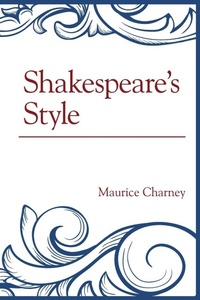
Shakespeare's Style
Published on 3. March 2016
Book
Paperback/Softback
200 pages
978-1-61147-766-5 (ISBN)
Description
Shakespeare's Style presents a detailed consideration of aspects of Shakespeare's writing style in his plays. Each chapter offers a detailed discussion about a single feature of style in a chosen Shakespeare play. Topics examine include: a discussion of a key image or images, both verbal and nonverbal; consideration of the way a character is put together; reflection of the changing audience response to a character; and audience response to an account of the speech rhythms of a single play. This book will be of interest to audiences who see Shakespeare's plays, readers of the printed page, and students aiding them in concentrating on the significant ways that Shakespeare expresses himself.
Reviews / Votes
Referring to each of Shakespeare's plays in at least one chapter, this volume comprises 34 brief but thoughtful essays. Charney conceives of 'style' broadly as he discusses more than the formal aspects of Shakespeare's work. The topics range from the lack of figurative language in Julius Caesar and Iago's 'Ha!' (which Othello picks up as he accepts Iago's accusations of Desdemona) to the insomnia of Macbeth and Lady Macbeth and the 'harsh cruelty' of Falstaff's banishment in 2 Henry IV. The author even includes an appreciative chapter on the jailer's daughter in The Two Noble Kinsmen. An accomplished scholar conversant with the literature, Charney provides close readings that pick up characteristics of individual plays that readers might miss: for example, he notes that the speech rhythms of The Winter's Tale are quite irregular, the lines often deviating from the conventional blank verse. [T]his book will interest scholars as well as a general audience. It will remind readers that Charney's excellent How to Read Shakespeare is still the best book to introduce students to Shakespeare. Summing Up: Recommended. All readers. * Choice Reviews *More details
Language
English
Place of publication
Cranbury
United States
Publishing group
Associated University Presses
Target group
Professional and scholarly
Dimensions
Height: 229 mm
Width: 152 mm
Thickness: 11 mm
Weight
307 gr
ISBN-13
978-1-61147-766-5 (9781611477665)
Copyright in bibliographic data and cover images is held by Nielsen Book Services Limited or by the publishers or by their respective licensors: all rights reserved.
Schweitzer Classification
Other editions
Additional editions
Maurice Charney
Shakespeare's Style
E-Book
08/2014
1st Edition
Fairleigh Dickinson University Press,U.S.
€47.49
Available for download
Person
Maurice Charney isretired from Rutgers University as a distinguished professor and was president of both the Shakespeare Association of America and the Academy of Literary Studies.
Content
Contents
Introduction
1. Antipholus of Syracuse as Comic Hero in The Comedy of Errors
2. The Satire on Learning in Love's Labor's Lost
3. Richard's Physical Deformities in 3 Henry VI and Richard III
4. The Sardonic Aaron in Titus Andronicus
5. Who Tames Whom in The Taming of the Shrew?
6. The Conventions of Romantic Love in The Two Gentlemen of Verona
7. The Portentous Tragedy of Romeo and Juliet
8. Audience Response to Richard in Richard II
9. The Fairy World of A Midsummer Night's Dream
10. Shylock's Monomaniacal Style in The Merchant of Venice
11.Commodity and the Bastard in King John
12. Falstaff's Hyperbole in the Henry IV Plays
13. The Banishment of Falstaff in the Henry IVPlays
14. Shakespeare's Illiterates
15. The Wit Combat of Beatrice and Benedick in Much Ado About Nothing
16. The Roman Style of Julius Caesar
17. Jaques as Satiric Observer in As You Like It
18. Feste as Corrupter of Words in Twelfth Night
19. Hamlet as Actor
20. Sex Nausea in Troilus and Cressida
21. Parolles the Braggart in All's Well That Ends Well
22. Iago's and Othello's "Ha's"
23. Lucio the Calumniator in Measure for Measure
24. Madness in King Lear
25. The Macbeths's Insomnia
26. Roman Values in Antony and Cleopatra
27. The Cultivation of Excess in Timon of Athens
28. Coriolanus's Manliness
29. The Saintly Marina in Pericles
30. Imogen: Romance Heroine of Cymbeline
31. Speech Rhythms in The Winter's Tale
32. Prospero's "Art" in The Tempest
33. The Tragedy of Cardinal Wolsey in Henry VIII
34. The Pretty Madness of the Jailer's Daughter in The Two Noble Kinsmen
Conclusion
Introduction
1. Antipholus of Syracuse as Comic Hero in The Comedy of Errors
2. The Satire on Learning in Love's Labor's Lost
3. Richard's Physical Deformities in 3 Henry VI and Richard III
4. The Sardonic Aaron in Titus Andronicus
5. Who Tames Whom in The Taming of the Shrew?
6. The Conventions of Romantic Love in The Two Gentlemen of Verona
7. The Portentous Tragedy of Romeo and Juliet
8. Audience Response to Richard in Richard II
9. The Fairy World of A Midsummer Night's Dream
10. Shylock's Monomaniacal Style in The Merchant of Venice
11.Commodity and the Bastard in King John
12. Falstaff's Hyperbole in the Henry IV Plays
13. The Banishment of Falstaff in the Henry IVPlays
14. Shakespeare's Illiterates
15. The Wit Combat of Beatrice and Benedick in Much Ado About Nothing
16. The Roman Style of Julius Caesar
17. Jaques as Satiric Observer in As You Like It
18. Feste as Corrupter of Words in Twelfth Night
19. Hamlet as Actor
20. Sex Nausea in Troilus and Cressida
21. Parolles the Braggart in All's Well That Ends Well
22. Iago's and Othello's "Ha's"
23. Lucio the Calumniator in Measure for Measure
24. Madness in King Lear
25. The Macbeths's Insomnia
26. Roman Values in Antony and Cleopatra
27. The Cultivation of Excess in Timon of Athens
28. Coriolanus's Manliness
29. The Saintly Marina in Pericles
30. Imogen: Romance Heroine of Cymbeline
31. Speech Rhythms in The Winter's Tale
32. Prospero's "Art" in The Tempest
33. The Tragedy of Cardinal Wolsey in Henry VIII
34. The Pretty Madness of the Jailer's Daughter in The Two Noble Kinsmen
Conclusion