

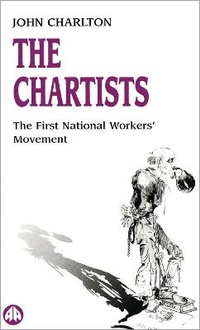
The Chartists
The First National Workers Movement
Published on 20. January 1997
Book
Paperback/Softback
120 pages
978-0-7453-1183-8 (ISBN)
Description
'[The Chartists] is lucid, well crafted, conversant with a mass of literature and highly accessible. It is in short a real achievement...' Professor David McNally, Department of Political Science, York University, Toronto
Chartism was the first national workers' movement, drawing together in activity working men and women throughout Britain. The mass uprisings of 1839, 1842 and 1848 brought many middle-class radicals prominence, but at a local level hundreds of workers also emerged to give the movement a strong, innovative working-class leadership.
The Chartists is the first study to place emphasis on the importance of these mass movements and on the problems of building workers' organisation during the period. John Charlton chronicles the key events and outlines the leading figures, examining many aspects of the movement that are frequently overlooked in introductory texts, from Chartist Christians and Chartist trade unionists to Chartist feminists and the impact of the movement on the thinking of Marx and Engels. Featuring brief biographies and an assessment of recent literature on the subject, this is an original and highly readable history of Chartism.
Chartism was the first national workers' movement, drawing together in activity working men and women throughout Britain. The mass uprisings of 1839, 1842 and 1848 brought many middle-class radicals prominence, but at a local level hundreds of workers also emerged to give the movement a strong, innovative working-class leadership.
The Chartists is the first study to place emphasis on the importance of these mass movements and on the problems of building workers' organisation during the period. John Charlton chronicles the key events and outlines the leading figures, examining many aspects of the movement that are frequently overlooked in introductory texts, from Chartist Christians and Chartist trade unionists to Chartist feminists and the impact of the movement on the thinking of Marx and Engels. Featuring brief biographies and an assessment of recent literature on the subject, this is an original and highly readable history of Chartism.
Reviews / Votes
'A lucidly written and well-researched account ... Its particular value lies in its examination of areas of the movement often overlooked in introductory texts.' Teaching HistoryMore details
Series
Language
English
Place of publication
London
United Kingdom
Target group
College/higher education
Product notice
Paperback (UK-trade)
Dimensions
Height: 215 mm
Width: 135 mm
Weight
190 gr
ISBN-13
978-0-7453-1183-8 (9780745311838)
Copyright in bibliographic data and cover images is held by Nielsen Book Services Limited or by the publishers or by their respective licensors: all rights reserved.
Schweitzer Classification
Other editions
Additional editions
E-Book
01/1997
1st Edition
Pluto Press
€24.49
Available for download
E-Book
01/1997
Pluto Press
€122.99
Available for download
Person
John Charlton is a lecturer in Politics at the University of Leeds and lectured in History and Politics at Leeds Metropolitan University for 25 years. He is one of Britain's leading experts on the multitude of primary texts on the Chartists.
Content
Introduction
1. The 1830s bourgeois power and the working Class
2. The Making of the Charter
3. The Mass Strike of 1842
4. Downturn 1842-47
5. 1848
6. Anatomy of the Movement
7. State Power
8. Conclusion
Appendix 1 Marx and Engels and Chartism
Appendix 2 Chartism and the Historians
Appendix 3 Brief Biographies
Notes
Index
1. The 1830s bourgeois power and the working Class
2. The Making of the Charter
3. The Mass Strike of 1842
4. Downturn 1842-47
5. 1848
6. Anatomy of the Movement
7. State Power
8. Conclusion
Appendix 1 Marx and Engels and Chartism
Appendix 2 Chartism and the Historians
Appendix 3 Brief Biographies
Notes
Index