

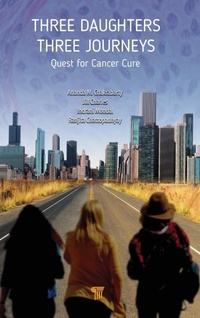
Three Daughters, Three Journeys
Quest for Cancer Cure
1st Edition
Published on 10. May 2017
Book
Hardback
176 pages
978-981-4745-90-1 (ISBN)
Description
Cancer threatens the lives of people around the world. Women, in particular, are at risk of certain cancers with a genetic cause. Certain mutations in the BRCA1 and BRCA2 genes put mothers and daughters at risk of breast and ovarian cancers. Unlike many cancers that most commonly occur after age 60, these inheritable cancers threaten women's lives, health and fertility even when they are young, before most would even begin to go for annual mammogram screenings to check for breast cancer.
Three Daughters, Three Journeys takes on the biggest health issue of our time from a global perspective with three heroines fighting for their lives against cancer. Marzena, a Polish oncology nurse, has spent her life treating child patients with cancer. Then, she confronts it in her own family and her own body. Kamola, a rural Indian girl, knows she has symptoms of the same disease that took her mother, but feels afraid to discuss it with her father and brothers, knowing her family cannot afford medical treatment. Kamola confides in Dr Rini Mishra, a doctor testing a new treatment called Neelazin, using a bacterial anticancer protein in food, to destroy cancer cells. Selena, a wealthy woman of color in Chicago, finds out about her genetic risks of breast and ovarian cancer. She has a choice of preventative surgery that will save her life but remove any chance of having children. As she meets women who struggle to afford cancer treatment, Selena dedicates her life to providing affordable homes and counseling to families affected by the disease.
Although the drug Neelazin is fictional, the possibility of new cancer treatments using bacterial anticancer proteins is being researched now. A problem with the current chemotherapy for cancer treatment is the high toxicity of most of these drugs, as these drugs can enter both normal and cancer cells, though preferably cancer cells, causing the death of normal cells as well that are important in maintaining health. Another problem is that current chemotherapeutic drugs mostly target a single or few key steps that are important for cancer growth and proliferation and inhibit the growth of cancer cells. The cancer cells respond by quickly changing these single targets, thereby becoming resistant to the drugs, as is reflected in stage IV cancer patients. An alternative to chemotherapy would be to exploit the bacterial evolutionary wisdom and use certain proteins that can have preferential entry to cancer cells in order to minimize normal cell toxicity and multiple targets in cancer cells through protein-protein complex formation, thus reducing resistance development in cancer cells. An interesting advantage of protein drugs is to express them as part of food, and some recent research seems to suggest that oral consumption of such foods may allow the therapeutic protein to reach the blood stream to target the cancer. Women with the genetic risk factors could soon have the choice of taking a pill or such anticancer protein-expressing food to treat or prevent cancer, rather than removing the healthy tissue of the breasts and ovaries. Hopefully, they would not have to choose between fertility and survival, as is the implied message in this book, fictional as it is at this time.
Three Daughters, Three Journeys takes on the biggest health issue of our time from a global perspective with three heroines fighting for their lives against cancer. Marzena, a Polish oncology nurse, has spent her life treating child patients with cancer. Then, she confronts it in her own family and her own body. Kamola, a rural Indian girl, knows she has symptoms of the same disease that took her mother, but feels afraid to discuss it with her father and brothers, knowing her family cannot afford medical treatment. Kamola confides in Dr Rini Mishra, a doctor testing a new treatment called Neelazin, using a bacterial anticancer protein in food, to destroy cancer cells. Selena, a wealthy woman of color in Chicago, finds out about her genetic risks of breast and ovarian cancer. She has a choice of preventative surgery that will save her life but remove any chance of having children. As she meets women who struggle to afford cancer treatment, Selena dedicates her life to providing affordable homes and counseling to families affected by the disease.
Although the drug Neelazin is fictional, the possibility of new cancer treatments using bacterial anticancer proteins is being researched now. A problem with the current chemotherapy for cancer treatment is the high toxicity of most of these drugs, as these drugs can enter both normal and cancer cells, though preferably cancer cells, causing the death of normal cells as well that are important in maintaining health. Another problem is that current chemotherapeutic drugs mostly target a single or few key steps that are important for cancer growth and proliferation and inhibit the growth of cancer cells. The cancer cells respond by quickly changing these single targets, thereby becoming resistant to the drugs, as is reflected in stage IV cancer patients. An alternative to chemotherapy would be to exploit the bacterial evolutionary wisdom and use certain proteins that can have preferential entry to cancer cells in order to minimize normal cell toxicity and multiple targets in cancer cells through protein-protein complex formation, thus reducing resistance development in cancer cells. An interesting advantage of protein drugs is to express them as part of food, and some recent research seems to suggest that oral consumption of such foods may allow the therapeutic protein to reach the blood stream to target the cancer. Women with the genetic risk factors could soon have the choice of taking a pill or such anticancer protein-expressing food to treat or prevent cancer, rather than removing the healthy tissue of the breasts and ovaries. Hopefully, they would not have to choose between fertility and survival, as is the implied message in this book, fictional as it is at this time.
More details
Language
English
Place of publication
Singapore
Singapore
Target group
College/higher education
Professional and scholarly
Academic, Postgraduate, and Professional Practice & Development
Dimensions
Height: 235 mm
Width: 157 mm
Thickness: 14 mm
Weight
417 gr
ISBN-13
978-981-4745-90-1 (9789814745901)
Copyright in bibliographic data and cover images is held by Nielsen Book Services Limited or by the publishers or by their respective licensors: all rights reserved.
Schweitzer Classification
Other editions
Additional editions
Jill Charles | Indrani Mondal | Ranjita Chattopadhyay
Three Daughters, Three Journeys
Quest for Cancer Cure
E-Book
05/2017
1st Edition
Routledge
€41.99
Available for download
Jill Charles | Indrani Mondal | Ranjita Chattopadhyay
Three Daughters, Three Journeys
Quest for Cancer Cure
E-Book
05/2017
1st Edition
Routledge
€41.99
Available for download
Persons
Charles, Jill; Mondal, Indrani; Chattopadhyay, Ranjita; Chakrabarty, Ananda
Content
Selena - Sunflowers. Marzena - Daybreak. Kamola - Murmur of the River. Selena - The Test. Marzena - Day. Kamola - The Magic World. Selena - Why Right Now? Marzena - Twilight. Kamola - The Big Yellow Moon. Selena - Knowing the Worst. Marzena - Night. Kamola - The Milk Tea and Sterile Bed. Selena - No Hard Feelings. Marzena - New Dawn. Kamola - Light at the End of the Tunnel. Selena - Sunflower House. Kamola - The Sunshine. The Quest Begins. The Conference. Three Daughters.