

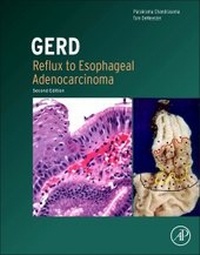
GERD
Reflux to Esophageal Adenocarcinoma
2nd Edition
Published on 1. September 2015
Book
Hardback
512 pages
978-0-12-394594-5 (ISBN)
Description
GERD: Reflux to Esophageal Adenocarcinoma, Second Edition, brings together a vast amount of disparate literature on the topic, presenting the entire pathogenesis of reflux disease in one convenient location. With gastroesophageal reflux disease now one of the most common maladies in humans, the text is a timely, informational compilation of data on how gastroesophageal reflux causes cellular changes in the esophagus.
The text also offers a complete solution to a problem that has confused physicians for over a century. Both clinical and pathological information regarding reflux disease and its treatment are presented, providing a comprehensive reference for gastroenterologists, esophageal surgeons, and pathologists alike.
The text also offers a complete solution to a problem that has confused physicians for over a century. Both clinical and pathological information regarding reflux disease and its treatment are presented, providing a comprehensive reference for gastroenterologists, esophageal surgeons, and pathologists alike.
Reviews / Votes
"This is the most comprehensive book ever written about gastroesophageal reflux disease. Dr. Tom R. DeMeester has been the leading authority on this disease of the 20th century, and has headed for the last 15 years one of the most productive units of foregut surgery in the world. Dr. Chandrasoma has recently emerged as a leading pathologist in this area. The authors have extensively covered all aspects of gastroesophageal reflux disease, from the anatomy to the pathophysiology, from the diagnosis to the rationale for treatment. They have carefully reviewed the literature in view of their own experience, explaining how this disease can progress from symptoms to cancer.An essential reading for whoever treats patients with gastroesophageal reflux disease, from gastroenterologists to surgeons."
--Marco G. Patti, MD, Professor of Surgery, University of California, San Francisco
""One would be hard pressed to find a better collaboration to characterize the total clinical spectrum of esophageal adenocarcinoma than Tom DeMeester and Para Chandrasoma. This textbook is rich with the fruits of the knowledge and experience of these two outstanding investigators, including not only the full range of commonly accepted knowledge and beliefs in this field but also developing concepts on the histopathologic relationship between chronic reflux and injury to the distal esophageal mucosa that have resulted from detailed observation and clinical research from this illustrious team. Failure to appreciate the histologic changes that occur with, and therefore predict, the process of development of adenocarcinoma leave the clinician with a false sense of understanding. As the authors state, "most influential physicians on the subject today simply do not look through the microscope and have no true understanding of histology." The approach that this team follows at the University of Southern California is based on their belief that "to be successful, the super specialized clinical esophagologist must understand the significance of the microscopic pathology of the biopsies that are taken, and the super specialized esophageal pathologist must understand the clinical basis of columnar-lined esophagus."" All of us who are involved in the care of patients with esophageal adenocarcinoma owe a debt of gratitude to Drs. DeMeester and Chandrasoma for producing the exceptional material contained within this text.""
--Donald O. Castell, MD, Professor of Medicine, Director, Esophageal Disorders Program, Medical University of South Carolina
"Everyone interested in esophageal disease should read this book. It is unlike any other I have ever read on the subject and is likely the most controversial and thought provoking of any on this disease. The book represents the collected experience and opinions of the book's 2 authors - an accomplished pathologist (Dr. Chandrasoma) and arguably the most accomplished esophageal surgeon of his time (Dr. DeMeester) - who have worked together at the same institution for approximately 15 years in a surgical esophageal and foregut group that sees complex and difficult gastroesophageal reflux disease (GERD) cases. This book is extremely well written, carefully and thoughtfully prepared, and offers the open-minded reader a view of GERD that they would not read in any standard textbook or review article on the subject. The rich descriptions of the histopathology, views on carditis, cardiac intestinal metaplasia; and the microscopic definition of the gastroesophageal junction are valuable to all that study this disease." - Philp O. Katz, Thomas Jefferson University and Albert Einstein Medical Center, Philadelphia, PA, Gastroenterology, 2007
More details
Edition
2nd edition
Language
English
Place of publication
San Diego
United States
Publishing group
Elsevier Science Publishing Co Inc
Target group
Professional and scholarly
Gastroenterologists, esophageal surgeons, and pathologists
Dimensions
Height: 276 mm
Width: 216 mm
ISBN-13
978-0-12-394594-5 (9780123945945)
Copyright in bibliographic data and cover images is held by Nielsen Book Services Limited or by the publishers or by their respective licensors: all rights reserved.
Schweitzer Classification
Other editions
Previous edition
Book
10/2006
Elsevier
€128.50
Shipment within 15-20 days
Person
Dr. Parakrama Chandrasoma was born in Sri Lanka and received his medical education and initial pathology training in the Medical School of the University of Sri Lanka. He has postgraduate degrees in internal medicine, including the M.D. (Sri Lanka) and Membership of the Royal College of Physicians (UK). He immigrated to the United States in 1978. Upon completing his pathology residency, he assumed duties as Chief of Surgical Pathology at the Los Angeles County + University of Southern California Medical Center He has held this position since. After an initial interest in neuropathology, Dr. Chandrasoma joined Dr. Tom DeMeester's Foregut Surgery team as pathologist in 1991. This led to a productive study of gastroesophageal reflux disease spanning 16 years and resulting in the development of numerous original concepts relating to the pathogenesis of gastroesophageal reflux disease. Dr. Chandrasoma has written over 140 peer reviewed papers and 6 previous pathology textbooks, including a general text on Gastrointestinal Pathology and a text on Gastroesophageal Reflux Disease, and is a Professor of Pathology at the Keck School of Medicine at the University of Southern California. He is married with three children and lives in Pasadena, California.
Content
PROPOSED TABLE OF CONTENTS--
Chapter 1: The history of Barrett's esophagus
Chapter 2: The Importance of Gastroesophageal Reflux
Chapter 3: Clinical Manifestations of Reflux Disease
Chapter 4: Definitions
Chapter 5: Development of Esophagus and Stomach and Cell Kinetics
Chapter 6: Normal Anatomy and Physiology of the Esophagus
Chapter 7: Gastricization - end-stage esophagus
Chapter 8: The lower esophageal sphincter and reflux
Chapter 9: Gastroesophageal Reflux and early changes in squamous epithelium
Chapter 10: Columnar transformation of the esophagus - Reflux carditis
Chapter 11: Evolution of Cardiac mucosa
Chapter 12. Injurious elements in the gastric refluxate
Chapter 13. Oxynto-cardiac mucosa: the Parietal cell
Chapter 14. Intestinal Metaplasia
Chapter 15: Intestinal Metaplasia of the Gastric Cardia
Chapter 16: Treatment of Reflux Disease
Chapter 17: Effect of Treatment on metaplastic columnar epithelium
Chapter 18: The Neoplastic transformation of intestinal metaplasia
Chapter 19: Adenocarcinoma induced by Reflux
Chapter 20: Treatment of adenocarcinoma of the Esophagus
Chapter 21: Pathologic assessment of the resected specimens
Chapter 22: The Future
Chapter 1: The history of Barrett's esophagus
Chapter 2: The Importance of Gastroesophageal Reflux
Chapter 3: Clinical Manifestations of Reflux Disease
Chapter 4: Definitions
Chapter 5: Development of Esophagus and Stomach and Cell Kinetics
Chapter 6: Normal Anatomy and Physiology of the Esophagus
Chapter 7: Gastricization - end-stage esophagus
Chapter 8: The lower esophageal sphincter and reflux
Chapter 9: Gastroesophageal Reflux and early changes in squamous epithelium
Chapter 10: Columnar transformation of the esophagus - Reflux carditis
Chapter 11: Evolution of Cardiac mucosa
Chapter 12. Injurious elements in the gastric refluxate
Chapter 13. Oxynto-cardiac mucosa: the Parietal cell
Chapter 14. Intestinal Metaplasia
Chapter 15: Intestinal Metaplasia of the Gastric Cardia
Chapter 16: Treatment of Reflux Disease
Chapter 17: Effect of Treatment on metaplastic columnar epithelium
Chapter 18: The Neoplastic transformation of intestinal metaplasia
Chapter 19: Adenocarcinoma induced by Reflux
Chapter 20: Treatment of adenocarcinoma of the Esophagus
Chapter 21: Pathologic assessment of the resected specimens
Chapter 22: The Future