

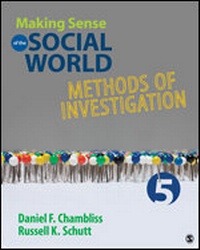
Making Sense of the Social World
Methods of Investigation
5th Edition
Published on 17. March 2015
Book
Paperback/Softback
400 pages
978-1-4833-8061-2 (ISBN)
Description
This popular textbook provides a balanced treatment of qualitative and quantitative methods, integrating substantive and compelling examples and research techniques throughout. It is written in a less formal style than many comparable texts, complete with practical examples drawn from everyday experience. The book has an Interactive eBook version with links to relevant video content, SAGE journal articles, interactive exercises and more.
New to this Edition:
New chapter on unobtrusive measures
New 'Research in the News' boxes
New 'Careers and Research' boxes
Increased coverage of mixed methods, and the use of technology and web-based research
Interactive eBook updated with new functionality for assessments and new videos
New to this Edition:
New chapter on unobtrusive measures
New 'Research in the News' boxes
New 'Careers and Research' boxes
Increased coverage of mixed methods, and the use of technology and web-based research
Interactive eBook updated with new functionality for assessments and new videos
More details
Edition
5th Revised edition
Language
English
Place of publication
Thousand Oaks
United States
Target group
College/higher education
Edition type
Revised edition
Dimensions
Height: 254 mm
Width: 203 mm
Weight
789 gr
ISBN-13
978-1-4833-8061-2 (9781483380612)
Copyright in bibliographic data and cover images is held by Nielsen Book Services Limited or by the publishers or by their respective licensors: all rights reserved.
Schweitzer Classification
Other editions
New editions

Daniel F. Chambliss | Russell K. Schutt
Making Sense of the Social World - International Student Edition
Methods of Investigation
Book
02/2019
6th Edition
SAGE Publications Inc
€197.58
Shipment within 15-20 days
Book
6th Edition
SAGE Publications (USA)
€117.80
The article will not be published
Persons
Daniel F. Chambliss, PhD, is the Eugene M. Tobin Distinguished Professor of Sociology, Emeritus at Hamilton College in Clinton, New York, where he has taught from 1981 to 2023. He received his PhD from Yale University in 1982; later that year, his thesis research received the American Sociological Association's (ASA's) Medical Sociology Dissertation Prize. In 1988, he published the book Champions: The Making of Olympic Swimmers, which received the Book of the Year Prize from the U.S. Olympic Committee. In 1989, he received the ASA's Theory Prize for work on organizational excellence based on his swimming research. Recipient of both Fulbright and Rockefeller Foundation fellowships, he published his second book, Beyond Caring: Hospitals, Nurses, and the Social Organization of Ethics, in 1996; for that work, he was awarded the ASA's Eliot Freidson Prize in Medical Sociology. In 2014, Harvard University Press published his book How College Works, coauthored with his former student Christopher G. Takacs. His research and teaching interests include organizational analysis, higher education, social theory, and comparative research methods. In 2018, he received the ASA's national career award for Distinguished Contributions to Teaching.
Russell K. Schutt, PhD, is professor emeritus of sociology at the University of Massachusetts Boston, where he received the 2007 Chancellor's Award for Distinguished Service and taught from 1979 to 2022. He is also a Clinical Research Scientist I at Beth Israel Deaconess Medical Center and a Lecturer (part-time) in the Department of Psychiatry, Harvard Medical School. He completed his BA, MA, and PhD degrees at the University of Illinois at Chicago and was a postdoctoral fellow in the Sociology of Social Control Training Program at Yale University (where he met Dan). In addition to ten editions of Investigating the Social World: The Process and Practice of Research and one of Understanding the Social World, as well as coauthored versions for the fields of social work, criminal justice, psychology, and education, his other books include Homelessness, Housing, and Mental Illness (2011), Social Neuroscience: Brain, Mind, and Society (coedited, 2015), and Organization in a Changing Environment (1986). He has authored and coauthored more than 65 peer reviewed journal articles, as well as book chapters and research reports on homelessness, mental health, organizations, law, and teaching research methods. His currently a Dual Principal Investigator (with Matcheri Keshavan, MD) in randomized comparative effectiveness trial of two socially-oriented interventions to improve community functioning among persons diagnosed with serious mental illness, funded by the Patient-Centered Outcomes Research Institute (PCORI). His other recently concluded research includes co-principal investigator on a National Science Foundation-funded study of the social impact of the pandemic in Boston, and co-investigator on a Veterans Health Administration-funded study of peer support. His earlier research has been funded by the National Cancer Institute, the Veterans Health Administration, the National Institute of Mental Health, the Fetzer Institute, and state agencies. Details are available at https://blogs.umb.edu/russellkschutt/.
Russell K. Schutt, PhD, is professor emeritus of sociology at the University of Massachusetts Boston, where he received the 2007 Chancellor's Award for Distinguished Service and taught from 1979 to 2022. He is also a Clinical Research Scientist I at Beth Israel Deaconess Medical Center and a Lecturer (part-time) in the Department of Psychiatry, Harvard Medical School. He completed his BA, MA, and PhD degrees at the University of Illinois at Chicago and was a postdoctoral fellow in the Sociology of Social Control Training Program at Yale University (where he met Dan). In addition to ten editions of Investigating the Social World: The Process and Practice of Research and one of Understanding the Social World, as well as coauthored versions for the fields of social work, criminal justice, psychology, and education, his other books include Homelessness, Housing, and Mental Illness (2011), Social Neuroscience: Brain, Mind, and Society (coedited, 2015), and Organization in a Changing Environment (1986). He has authored and coauthored more than 65 peer reviewed journal articles, as well as book chapters and research reports on homelessness, mental health, organizations, law, and teaching research methods. His currently a Dual Principal Investigator (with Matcheri Keshavan, MD) in randomized comparative effectiveness trial of two socially-oriented interventions to improve community functioning among persons diagnosed with serious mental illness, funded by the Patient-Centered Outcomes Research Institute (PCORI). His other recently concluded research includes co-principal investigator on a National Science Foundation-funded study of the social impact of the pandemic in Boston, and co-investigator on a Veterans Health Administration-funded study of peer support. His earlier research has been funded by the National Cancer Institute, the Veterans Health Administration, the National Institute of Mental Health, the Fetzer Institute, and state agencies. Details are available at https://blogs.umb.edu/russellkschutt/.
Content
Chapter 1: Science, Society, and Social Research
Learning about the Social World
Can Social Scientists See the Social World More Clearly?
How Well Have We Done Our Research?
Chapter 2: The Process and Problems of Social Research
What Is the Question?
What Is the Theory?
What Is the Strategy?
What Is the Design?
But Is It Ethical?
Chapter 3: Ethics in Research
Historical Background
Ethical Principles
Chapter 4: Conceptualization and Measurement
What Do We Have in Mind?
How Will We Know When We've Found It?
How Much Information Do We Really Have?
Did We Measure What We Wanted to Measure?
Chapter 5: Sampling
How Do We Prepare to Sample?
What Sampling Method Should We Use?
Chapter 6: Causation and Experimental Design
Causal Explanation
What Causes What?
Why Experiment?
What If a True Experiment Isn't Possible?
What Are the Threats to Validity in Experiments?
How Do Experimenters Protect Their Subjects?
Chapter 7: Survey Research
Why Is Survey Research So Popular?
How Should We Write Survey Questions?
How Should Questionnaires Be Designed?
What Are the Alternatives for Administering Surveys?
A Comparison of Survey Designs
Ethical Issues in Survey Research
Chapter 8: Elementary Quantitative Data Analysis
Why Do Statistics?
How to Prepare Data for Analysis
What Are the Options for Displaying Distributions?
What Are the Options for Summarizing Distributions?
How Can We Tell Whether Two Variables Are Related?
Analyzing Data Ethically: How Not to Lie With Statistics
Chapter 9: Qualitative Methods: Observing, Participating, Listening
What Are Qualitative Methods?
How Does Participant Observation Become a Research Method?
How Do You Conduct Intensive Interviews?
How Do You Run Focus Groups?
Analyzing Qualitative Data
Ethical Issues in Qualitative Research
Chapter 10: Qualitative Data Analysis
What Is Distinctive About Qualitative Data Analysis?
What Techniques Do Qualitative Data Analysts Use?
What Are Some Alternatives in Qualitative Data Analysis?
Why Are Mixed Methods Helpful?
How Can Computers Assist Qualitative Data Analysis?
What Ethical Issues Arise in Doing Qualitative Data Analysis?
Chapter 11: Unobtrusive Measures
Creative Sources
Content Analysis
Historical Methods
Comparative Methods
Chapter 12: Evaluation Research
What Is the History of Evaluation Research?
What Is Evaluation Research?
What Are the Alternatives in Evaluation Designs?
What Can an Evaluation Study Focus On?
Ethical Issues in Evaluation Research
Chapter 13: Reviewing, Proposing, and Reporting Research
Comparing Research Designs
Reviewing Research
Proposing New Research
Reporting Research
Learning about the Social World
Can Social Scientists See the Social World More Clearly?
How Well Have We Done Our Research?
Chapter 2: The Process and Problems of Social Research
What Is the Question?
What Is the Theory?
What Is the Strategy?
What Is the Design?
But Is It Ethical?
Chapter 3: Ethics in Research
Historical Background
Ethical Principles
Chapter 4: Conceptualization and Measurement
What Do We Have in Mind?
How Will We Know When We've Found It?
How Much Information Do We Really Have?
Did We Measure What We Wanted to Measure?
Chapter 5: Sampling
How Do We Prepare to Sample?
What Sampling Method Should We Use?
Chapter 6: Causation and Experimental Design
Causal Explanation
What Causes What?
Why Experiment?
What If a True Experiment Isn't Possible?
What Are the Threats to Validity in Experiments?
How Do Experimenters Protect Their Subjects?
Chapter 7: Survey Research
Why Is Survey Research So Popular?
How Should We Write Survey Questions?
How Should Questionnaires Be Designed?
What Are the Alternatives for Administering Surveys?
A Comparison of Survey Designs
Ethical Issues in Survey Research
Chapter 8: Elementary Quantitative Data Analysis
Why Do Statistics?
How to Prepare Data for Analysis
What Are the Options for Displaying Distributions?
What Are the Options for Summarizing Distributions?
How Can We Tell Whether Two Variables Are Related?
Analyzing Data Ethically: How Not to Lie With Statistics
Chapter 9: Qualitative Methods: Observing, Participating, Listening
What Are Qualitative Methods?
How Does Participant Observation Become a Research Method?
How Do You Conduct Intensive Interviews?
How Do You Run Focus Groups?
Analyzing Qualitative Data
Ethical Issues in Qualitative Research
Chapter 10: Qualitative Data Analysis
What Is Distinctive About Qualitative Data Analysis?
What Techniques Do Qualitative Data Analysts Use?
What Are Some Alternatives in Qualitative Data Analysis?
Why Are Mixed Methods Helpful?
How Can Computers Assist Qualitative Data Analysis?
What Ethical Issues Arise in Doing Qualitative Data Analysis?
Chapter 11: Unobtrusive Measures
Creative Sources
Content Analysis
Historical Methods
Comparative Methods
Chapter 12: Evaluation Research
What Is the History of Evaluation Research?
What Is Evaluation Research?
What Are the Alternatives in Evaluation Designs?
What Can an Evaluation Study Focus On?
Ethical Issues in Evaluation Research
Chapter 13: Reviewing, Proposing, and Reporting Research
Comparing Research Designs
Reviewing Research
Proposing New Research
Reporting Research