

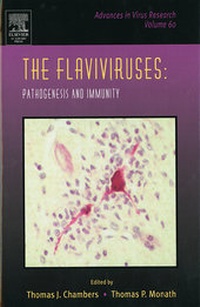
The Flaviviruses: Pathogenesis and Immunity: Volume 60
Published on 18. December 2003
Book
Hardback
486 pages
978-0-12-039860-7 (ISBN)
Description
Over 50% of known flaviviruses have been associated with human disease. The Flavivirus genus constitutes some of the most serious human pathogens including Japanese encephalitis, dengue and yellow fever. Flaviviruses are known for their complex life cycles and epidemic spread, and are considered a globally-emergent viral threat.Pathogenesis and Immunity, the second volume of The Flaviviruses, examines the processes by which the flaviviruses cause disease, the different cytopathic effects and the associated immunopathological responses produced in their hosts.
Reviews / Votes
"...the chapters are well written, and the editors have ensured continuity of a high standard of writing throughout the set...Given the wealth of information, with contributions by over 60 authors, The Flavaviruses, really is an essential series of books that belongs on every arbovirologists' bookshelf."-Stephen Higgs, Ph.D., University of Texas Medical Branch, U.S., (2004)
More details
Series
Language
English
Place of publication
San Diego
United States
Publishing group
Elsevier Science Publishing Co Inc
Target group
Professional and scholarly
Virologists, molecular epidemiologists, clinicians and public health specialists, immunologists, and researchers in vaccine development
Dimensions
Height: 229 mm
Width: 152 mm
Weight
860 gr
ISBN-13
978-0-12-039860-7 (9780120398607)
Copyright in bibliographic data and cover images is held by Nielsen Book Services Limited or by the publishers or by their respective licensors: all rights reserved.
Schweitzer Classification
Other editions
Additional editions
The Flaviviruses: Pathogenesis and Immunity
Pathogenesis and Immunity
E-Book
12/2003
Academic Press
€137.00
Available for download
Persons
Professor Karl Maramorosch works at Rutgers University, New Brunswick, NJ, USA. Frederick A. Murphy, DVM, PhD, is professor, Department of Pathology, University of Texas Medical Branch (UTMB), Galveston. He holds a BS and DVM from Cornell University and a PhD from the University of California, Davis (UC Davis). Formerly he was dean and distinguished professor, School of Veterinary Medicine, and distinguished professor, School of Medicine, UC Davis. Before that he served as director of the National Center for Infectious Diseases, and director of the Division of Viral and Rickettsial Diseases, Centers for Disease Control, Atlanta. He is a member of the Institute of Medicine of the U.S. National Academy of Sciences and is a member of the German National Academy of Sciences and the Belgian Royal Academy of Medicine. He holds an honorary Doctor of Medicine and Surgery from the University of Turku, Finland; an honorary Doctor of Science from the University of Guelph, Canada; an honorary Doctor of Veterinary Medicine from the University of London, United Kingdom; an honorary Doctor of Science from University College Dublin, Ireland; the Presidential Rank Award of the U.S. Government; the PennVet World Leadership Award from the University of Pennsylvania, and the Distinguished Microbiologist Award from the American College of Veterinary Microbiologists. At UTMB, he is a member of the Institute for Human Infections and Immunity, Center for Biodefense and Emerging Infectious Diseases, Galveston National Laboratory, and McLaughlin Endowment for Infection and Immunity. His professional interests include the pathology and epidemiology of highly pathogenic viruses/viral diseases: rabies and the rabies-like viruses, arboviruses, hemorrhagic fever viruses, and other neurotropic viruses. He has been a leader in advancing the concepts of "new and emerging infectious diseases? and "new and emerging zoonoses? and "the threat posed by bioterrorism.? Most recently, he has been working on Internet resources on the history of virology: "The Foundations of Virology? at http://www.utmb.edu/virusimages/.
Content
Pathogenesis and Immunity
Molecular Determinants of Virulence: The Structural and Functional Basis for Flavivirus Attenuation
Genetic resistance to flaviviruses
Immunobiology of mosquito-borne encephalitic Flaviviruses
Immune Modulation by Flaviviruses
Mechanisms of virus-induced cell death
Dynamics of Flavivirus Infection in Mosquitos
Dynamics of Infection in Tick vectors and at the tick-host interface
Encephalitic viruses
Pathogenesis and Pathophysiology of Yellow Fever virus
Immunopathogenesis of dengue hemorrhagic fever
Immunology and Immunopathogenesis of Dengue Disease
Neutralization and Antibody-Dependent Enhancement of Dengue Viruses
Molecular Determinants of Virulence: The Structural and Functional Basis for Flavivirus Attenuation
Genetic resistance to flaviviruses
Immunobiology of mosquito-borne encephalitic Flaviviruses
Immune Modulation by Flaviviruses
Mechanisms of virus-induced cell death
Dynamics of Flavivirus Infection in Mosquitos
Dynamics of Infection in Tick vectors and at the tick-host interface
Encephalitic viruses
Pathogenesis and Pathophysiology of Yellow Fever virus
Immunopathogenesis of dengue hemorrhagic fever
Immunology and Immunopathogenesis of Dengue Disease
Neutralization and Antibody-Dependent Enhancement of Dengue Viruses