

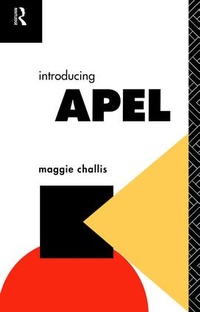
Introducing APEL
1st Edition
Published on 22. August 2017
Book
Hardback
172 pages
978-1-138-46624-1 (ISBN)
Description
The fact that learning accumulates and exists outside an education or training environment cannot be disputed. Yet traditionally, it is only institutional, certificated learning that carries any status. Accreditation of Prior Experiential Learning systems seek to give positive credit for all learning, by placing it within a recognised accreditation framework. In the light of recent legislation, APEL systems offer the key towards more flexible and open delivery systems for futher education. Maggie Challis offers a detailed, practical introduction to the skills and processes of implementing an APEL system, exploring the seven key stages through which learners progress: initial counselling recognising and identifying skills relating these skills to an agreed set of outcomes gathering evidence of these skills documentation of the evidence assessment of the evidence accreditation Detailed guidance is provided on setting up and monitoring services and tutors and managers alike will find advice on identifying appropriate learning programmes for students; access to higher education; redundancy counselling; and the transfer of professional qualifications gained overseas. Most importantly, Maggie Challis shows the potential for APEL across a wide range of learning contexts, in all areas of education and training.
Reviews / Votes
`... useful book on an important topic. It is crisply written with illustrative case scenarios throughout, which effectively demonstrate APEL in action in a variety of settings and situations. It will be of value to any FE/HE lecturer wondering how APEL might be emloyed in their course(s) and to managers considering the broader issues of APEL implementation college-wide.' - Education Training Vol 35 No 5 93APEL is important, and these are two good books. Both should be read by those wanting to provide comprehensive student services in colleges and with genuine interest in the needs of learners.' - Times Educational Supplement (on this and APL: Developing More Flexible Colleges.
`Readers will find this a concise, authoritative introductory book on a subject which will become of increasing importance ... it has a wide relevance both for assessors and for potential candidates, but will particularly help those involved in training in the further education sector' - Capability
More details
Series
Language
English
Place of publication
London
United Kingdom
Publishing group
Taylor & Francis Ltd
Target group
College/higher education
Dimensions
Height: 216 mm
Width: 138 mm
Weight
453 gr
ISBN-13
978-1-138-46624-1 (9781138466241)
Copyright in bibliographic data and cover images is held by Nielsen Book Services Limited or by the publishers or by their respective licensors: all rights reserved.
Schweitzer Classification
Other editions
Additional editions
Person
Maggie Challis
Content
Contents Section 1.The Accreditaion of Prior Experimential Learning - A Historical Context Section 2.How Does APEL Work? Section 3.How can we make APEL happen? Section 4.Conclusion Appendix 1.Creation and Structure of National Vocational Qualifications Appendix 2.Open College Networks Appendix 3.National Standards for Assessment and Verification