

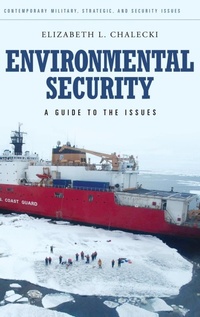
Environmental Security
A Guide to the Issues
Published on 24. January 2013
Book
Hardback
256 pages
978-0-313-39151-4 (ISBN)
Description
This timely volume presents the key concepts, issues, and debates surrounding environmental security, illustrating through a range of examples and cases how global environmental matters and international security are closely linked.
Issues of climate change, dwindling resources, natural disaster, and disease that comprise environmental security are at the forefront of global politics and the media today. Environmental Security: A Guide to the Issues is a primer for anyone attuned to these threats. This well-reasoned, thought-provoking volume establishes and updates the connection between global environmental problems and international security, describing existing theories of environmental security and illustrating them with evidence from present-day global ecological realities.
Specifically, the book shows readers how both shortages and abundance of natural resources such as fresh water, oil and natural gas, and diamonds and timber can contribute to conflict and insecurity. It also discusses how agriculture and fisheries issues affect food security with international ramifications, how global ecosystem shifts like climate change are affecting both the earth and the movement of people on it, and how war and preparation for war can affect the natural environment. Finally, the book explores how nations can, and must, cooperate with each other to confront and manage these threats.
Issues of climate change, dwindling resources, natural disaster, and disease that comprise environmental security are at the forefront of global politics and the media today. Environmental Security: A Guide to the Issues is a primer for anyone attuned to these threats. This well-reasoned, thought-provoking volume establishes and updates the connection between global environmental problems and international security, describing existing theories of environmental security and illustrating them with evidence from present-day global ecological realities.
Specifically, the book shows readers how both shortages and abundance of natural resources such as fresh water, oil and natural gas, and diamonds and timber can contribute to conflict and insecurity. It also discusses how agriculture and fisheries issues affect food security with international ramifications, how global ecosystem shifts like climate change are affecting both the earth and the movement of people on it, and how war and preparation for war can affect the natural environment. Finally, the book explores how nations can, and must, cooperate with each other to confront and manage these threats.
Reviews / Votes
A useful overview for beginning researchers. Summing Up: Recommended. * Choice *More details
Series
Language
English
Place of publication
United States
Publishing group
Bloomsbury Publishing Plc
Target group
College/higher education
Dimensions
Height: 240 mm
Width: 161 mm
Thickness: 18 mm
Weight
552 gr
ISBN-13
978-0-313-39151-4 (9780313391514)
Copyright in bibliographic data and cover images is held by Nielsen Book Services Limited or by the publishers or by their respective licensors: all rights reserved.
Schweitzer Classification
Other editions
Additional editions
E-Book
01/2013
1st Edition
Praeger Publishers Inc
€55.99
Available for download
E-Book
01/2013
1st Edition
Praeger Publishers Inc
€55.99
Available for download
Persons
Elizabeth L. Chalecki, PhD, is visiting Mellon assistant professor in the Environmental Studies Program at Goucher College, Baltimore, MD.
Content
Foreword by Stacy VanDeveer
Preface and Acknowledgments
Chapter 1 Historical and Current Overview of the Issue
Chapter 2 Natural Resources
Chapter 3 Food Security
Chapter 4 Climate Change
Chapter 5 Collateral Damage
Chapter 6 Conclusion: Ecological Thinking
Appendix I: Biographies
Appendix II: Key Documents
Stockholm Declaration of the United Nations Conference on the Human Environment, 16 June 1972
Rio Declaration on Environment and Development, 14 June 1992
Convention on the Prohibition of Military or Any Other Hostile Use of Environmental Modification Techniques, 18 May 1977
Protocol Additional to the Geneva Conventions of 12 August 1949, and Relating to the Protection of Victims of International Armed Conflicts (Protocol I), 8 June 1977
The Carter Doctrine, 1980
An Abrupt Climate Change Scenario and Its Implications for United States National Security (Executive Summary), 2003
Further Resources
Index
Preface and Acknowledgments
Chapter 1 Historical and Current Overview of the Issue
Chapter 2 Natural Resources
Chapter 3 Food Security
Chapter 4 Climate Change
Chapter 5 Collateral Damage
Chapter 6 Conclusion: Ecological Thinking
Appendix I: Biographies
Appendix II: Key Documents
Stockholm Declaration of the United Nations Conference on the Human Environment, 16 June 1972
Rio Declaration on Environment and Development, 14 June 1992
Convention on the Prohibition of Military or Any Other Hostile Use of Environmental Modification Techniques, 18 May 1977
Protocol Additional to the Geneva Conventions of 12 August 1949, and Relating to the Protection of Victims of International Armed Conflicts (Protocol I), 8 June 1977
The Carter Doctrine, 1980
An Abrupt Climate Change Scenario and Its Implications for United States National Security (Executive Summary), 2003
Further Resources
Index