

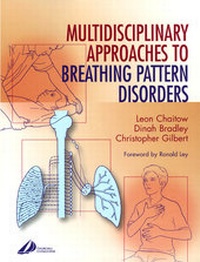
Multidisciplinary Approaches to Breathing Pattern Disorders
A Multidisciplinary Approach
Published on 17. January 2002
Book
Paperback/Softback
288 pages
978-0-443-07053-2 (ISBN)
Description
Functional breathing pattern disorders (BPD - the extreme of which is hyperventilation) disturb the biochemistry of the body, often leading to respiratory alkalosis. They are extremely common, mainly affecting women and frequently go unrecognized by clinicians. Research shows that BPDs can be responsible for causing, or helping to maintain, a vast range of symptoms including muscular pain (particularly involving the thorax and neck area), inefficient motor control, reduced core stability, tremors, and tetany, feelings of anxiety, easy fatiguability, sleep disturbances, dysphagia, epigastric pain, IBS, parasthesia, palpitations, dizziness, disturbed vision, and a variety of circulatory symptoms resulting from smooth muscle constriction. BPDs are easily tested for and - with patient cooperation - are commonly correctable via a combination of manual therapy and breathing rehabilitation strategies.
More details
Language
English
Place of publication
London
United Kingdom
Publishing group
Elsevier Health Sciences
Target group
Professional and scholarly
Functional breathing pattern disorders (BPD - the extreme of which is hyperventilation) disturb the biochemistry of the body, often leading to respiratory alkalosis. They are extremely common, mainly affecting women and frequently go unrecognized by clinicians. Research shows that BPDs can be responsible for causing, or helping to maintain, a vast range of symptoms including muscular pain (particularly involving the thorax and neck area), inefficient motor control, reduced core stability, tremors, and tetany, feelings of anxiety, easy fatiguability, sleep disturbances, dysphagia, epigastric pain, IBS, parasthesia, palpitations, dizziness, disturbed vision, and a variety of circulatory symptoms resulting from smooth muscle constriction. BPDs are easily tested for and - with patient cooperation - are commonly correctable via a combination of manual therapy and breathing rehabilitation strategies.
Illustrations
60 ills.
Dimensions
Height: 250 mm
Width: 190 mm
Thickness: 19 mm
Weight
620 gr
ISBN-13
978-0-443-07053-2 (9780443070532)
Copyright in bibliographic data and cover images is held by Nielsen Book Services Limited or by the publishers or by their respective licensors: all rights reserved.
Schweitzer Classification
Other editions
New editions
Sasha Chaitow | Tania Clifton-Smith | Rosalba Courtney
Chaitow's Breathing Pattern Disorders
A Multidisciplinary Guide to Diagnosis, Treatment, and Management
Book
approx. 11/2026
3rd Edition
Churchill Livingstone
€62.50
Not yet published
Christopher Gilbert | Leon Chaitow | Dinah Bradley
Recognizing and Treating Breathing Disorders
A Multidisciplinary Approach
Book
11/2013
2nd Edition
Churchill Livingstone
€75.68
Shipment within 10-20 days
Persons
Leon Chaitow ND DO is an internationally known and respected osteopathic and naturopathic practitioner and teacher of soft tissue manipulation methods of treatment. He is author of over 60 books, including a series on Advanced Soft Tissue Manipulation (Muscle Energy Techniques, Positional Release Techniques, Modern Neuromuscular Techniques) and also Palpation Skills; Cranial Manipulation: Theory and Practice; Fibromyalgia Syndrome: A Practitioner's Guide to Treatment, and many more. He is editor of the peer reviewed Journal of Bodywork and Movement Therapies, that offers a multidisciplinary perspective on physical methods of patient care. Leon Chaitow was for many years senior lecturer on the Therapeutic Bodywork degree courses which he helped to design at the School of Integrated Health, University of Westminster, London, where is he now an Honorary Fellow. He continues to teach and practice part-time in London, when not in Corfu, Greece where he focuses on his writing.
Content
The structure and function of breathing. Patterns of breathing dysfunction in hyperventilation syndrome. Biochemical influences on breathing. Biomechanical influences on breathing. Interaction of psychological and emotional effects with breathing dysfunction. Osteopathic assessment and treatment of thoracic and respiratory dysfunction. Physiotherapy breathing rehabilitation strategies. Self-regulation of breathing. Other breathing issues. Self-help approaches: reducing shoulder movement during breathing.