

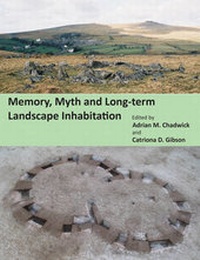
Memory, Myth and Long-Term Landscape Inhabitation
Published on 1. December 2013
Book
Hardback
336 pages
978-1-78297-393-5 (ISBN)
Description
Memory and forgetting are fundamental to human existence and experiences of the world. Within archaeology, there has been increasing interest in the role of the past in the past. To date, however, there has been little specific discussion of how such long-term persistence of place and practice was possible; and why this was the case. The sixteen papers in this volume use detailed contextual evidence to address these questions. In many instances, contributors discuss less visible examples where 'memory work' can be identified from non-monumental, 'everyday' landscapes. The case studies focus on British archaeology from the Neolithic to the early medieval period, but other contributions deal with Neolithic Central Europe, ancient Etruscan and Egyptian landscapes, and historic Native American practices. The volume interweaves theoretical considerations of memory, materiality and landscape with exciting evidence emerging from research and developer-funded commercial archaeology, challenging existing methodologies and proposing new research questions for future fieldwork and post-excavation practice.
More details
Series
Language
English
Place of publication
Oxford
United Kingdom
Target group
Professional and scholarly
Illustrations
166 b/w and col. illustrations
Dimensions
Height: 280 mm
Width: 216 mm
ISBN-13
978-1-78297-393-5 (9781782973935)
Copyright in bibliographic data and cover images is held by Nielsen Book Services Limited or by the publishers or by their respective licensors: all rights reserved.
Schweitzer Classification
Persons
Catriona Gibson is a post-doctoral researcher on the project Grave Goods: Objects and Death in later Prehistoric Britain, based at the University of Reading, where she also obtained her PhD. She has worked extensively in both commercial and academic archaeology. Her research interests include exploring evidence for connectivity and mobility during later prehistory, and forging stronger links between developer-led and academic archaeology.
Content
1. "Do you remember the first time?" A preamble through memory, myth and place. Adrian M. Chadwick and Catriona D. Gibson
2. Narrating the house. The transformation of longhouses in early Neolithic Europe. Daniela Hofmann
3. Memory, myth, place and landscape inhabitation: a perspective from the south-west peninsula. Andy M. Jones
4. Mounds, memories and myths: ancient monuments and place in the Leicestershire landscape. John Thomas
5. Out of time but not out of place. Tempo, rhythm and dynamics of inhabitation in southern England. Catriona D. Gibson
6. Landesque Capital and the development of the British uplands in later prehistory: investigating the accretion of cairns, cairnfields, memories and myths in ancient agricultural landscapes. Andrew W. Hoaen and Helen L. Loney
7. Re-building memory, identity and place: the long term re-use of prehistoric settlements on the Isles of Scilly. Gary Robinson
8. The significance of goats and chickens? Iron Age and Roman faunal assemblages, depositional practices and memory work at Wattle Syke, West Yorkshire. Adrian M. Chadwick, Louise Martin and Jane Richardson
9. Telling tales? Myth, memory, and Crickley Hill. Kirsten Jarrett
10. The MTV generations: remixing the past in prehistory - or forgetting to change old habits. Gareth Chaffey and Alistair Barclay
11. 'Landscape is time materialising': a study of embodied experience and memory in Egypt's Eastern Desert. Anna Garnett
12. Moving through memories: site distribution, performance and practice in rural Etruria. Lucy Shipley
13. Castelo Velho and Prazo (Vila Nova de Foz Coa, Portugal): the oral tradition. Alexandra Vieira
14. Land, myth, and language: the preservation of social memories. Mara Vejby and Jocelyn Ahlers
15. 'Memories can't wait'1 - creating histories, materialising memories and making myths in Iron Age and Romano-British landscapes. Adrian M. Chadwick
16. Granny's old sheep bones and other stories from the Melton landscape. Chris Fenton-Thomas
2. Narrating the house. The transformation of longhouses in early Neolithic Europe. Daniela Hofmann
3. Memory, myth, place and landscape inhabitation: a perspective from the south-west peninsula. Andy M. Jones
4. Mounds, memories and myths: ancient monuments and place in the Leicestershire landscape. John Thomas
5. Out of time but not out of place. Tempo, rhythm and dynamics of inhabitation in southern England. Catriona D. Gibson
6. Landesque Capital and the development of the British uplands in later prehistory: investigating the accretion of cairns, cairnfields, memories and myths in ancient agricultural landscapes. Andrew W. Hoaen and Helen L. Loney
7. Re-building memory, identity and place: the long term re-use of prehistoric settlements on the Isles of Scilly. Gary Robinson
8. The significance of goats and chickens? Iron Age and Roman faunal assemblages, depositional practices and memory work at Wattle Syke, West Yorkshire. Adrian M. Chadwick, Louise Martin and Jane Richardson
9. Telling tales? Myth, memory, and Crickley Hill. Kirsten Jarrett
10. The MTV generations: remixing the past in prehistory - or forgetting to change old habits. Gareth Chaffey and Alistair Barclay
11. 'Landscape is time materialising': a study of embodied experience and memory in Egypt's Eastern Desert. Anna Garnett
12. Moving through memories: site distribution, performance and practice in rural Etruria. Lucy Shipley
13. Castelo Velho and Prazo (Vila Nova de Foz Coa, Portugal): the oral tradition. Alexandra Vieira
14. Land, myth, and language: the preservation of social memories. Mara Vejby and Jocelyn Ahlers
15. 'Memories can't wait'1 - creating histories, materialising memories and making myths in Iron Age and Romano-British landscapes. Adrian M. Chadwick
16. Granny's old sheep bones and other stories from the Melton landscape. Chris Fenton-Thomas