

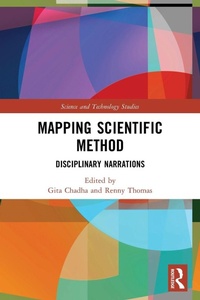
Mapping Scientific Method
Disciplinary Narrations
1st Edition
Published on 29. January 2024
Book
Paperback/Softback
342 pages
978-1-032-28874-1 (ISBN)
Description
This volume explores how the scientific method enters and determines the dominant methodologies of various modern academic disciplines. It highlights the ways in which practitioners from different disciplinary backgrounds -- the humanities, the natural sciences, and the social sciences -- engage with the scientific method in their own disciplines.
The book maps the discourse (within each of the disciplines) that critiques the scientific method, from different social locations, in order to argue for more complex and nuanced approaches in methodology. It also investigates the connections between the method and the structures of power and domination which exist within these disciplines. In the process, it offers a new way of thinking about the philosophy of the scientific method.
Part of the Science and Technology Studies series, this volume is the first of its kind in the South Asian context to debate scientific methods and address questions by scholars based in the global south. It will be useful to students and practitioners of science, humanities, social sciences, philosophy of science, and philosophy of social science. Research scholars from these disciplines, especially those engaging in interdisciplinary research, will also benefit from this volume.
The book maps the discourse (within each of the disciplines) that critiques the scientific method, from different social locations, in order to argue for more complex and nuanced approaches in methodology. It also investigates the connections between the method and the structures of power and domination which exist within these disciplines. In the process, it offers a new way of thinking about the philosophy of the scientific method.
Part of the Science and Technology Studies series, this volume is the first of its kind in the South Asian context to debate scientific methods and address questions by scholars based in the global south. It will be useful to students and practitioners of science, humanities, social sciences, philosophy of science, and philosophy of social science. Research scholars from these disciplines, especially those engaging in interdisciplinary research, will also benefit from this volume.
Reviews / Votes
"Mapping Scientific Method is a superb addition to studies of the scientific method. Challenging the idea of any singular scientific method, the authors of this volume narrate the richness of disciplinary methods, and the innovations and imagination of the sciences. Taking on the "method ladenness" of knowledge, Chadha and Thomas have assembled a path breaking volume that adds to our understanding of the Eurocentrism of science, and more importantly offering us alternate genealogies and methods from the histories and sociologies of the sciences of South Asia. Eschewing claims of an idealized and false unity of science, the authors call for a multiplicity and diversity of method. They present on-the-ground complexities of how science is done in India in a variety of the natural and social sciences, and the humanities. Deeply committed to a project of reclaiming "science" as a critically important site for dealing with the complexities of the world, the volume reckons with science's deep and wide global roots. With our growing interest in decolonization, this anthology will prove to be an indispensable collection of how we might diversify not only our methods and methodologies, but also our history, sociology and anthropology of the sciences."Banu Subramaniam, University of Massachusetts, Amherst, USA.
"How has the career of the 'scientific method' shaped our ways of knowing the world? This innovative and important collections suggests that decolonizing knowledge requires a head-on engagement with this question. And, that it is something more than cutting and pasting 'other' people's histories into dominant historical and cultural narratives. It necessitates nuanced and localised immersion in the history of methods across disciplines at sites beyond the Euro-American academia. This, the volume argues, carries the potential for renewing the possibilities of critical thinking itself. As contributors to the volume lucidly demonstrate, such reflections also allow for an understanding of the post-colonial condition as well as alternatives to the hegemonies of both western scientific method and its caricatures in the non-western world."
Sanjay Srivastava, University College London, UK.
More details
Series
Language
English
Place of publication
London
United Kingdom
Publishing group
Taylor & Francis Ltd
Target group
College/higher education
Postgraduate
Illustrations
3 s/w Tabellen
3 Tables, black and white
Dimensions
Height: 234 mm
Width: 156 mm
Thickness: 20 mm
Weight
550 gr
ISBN-13
978-1-032-28874-1 (9781032288741)
Copyright in bibliographic data and cover images is held by Nielsen Book Services Limited or by the publishers or by their respective licensors: all rights reserved.
Schweitzer Classification
Other editions
Additional editions
E-Book
07/2022
1st Edition
Routledge India
€61.99
Available for download
Book
07/2022
1st Edition
Routledge India
€208.50
Shipment within 10-20 days
E-Book
07/2022
1st Edition
Routledge India
€61.99
Available for download
Persons
Gita Chadha is a faculty member at the Department of Sociology, University of Mumbai, India. Her areas of academic interests are sociological theory, feminist epistemologies, feminist science studies and visual cultures. Her publications include Feminists and Science: Critiques and Perspectives in India, Vo 1 & 2 (2015, 2017) and Reimaging Sociology in India: Feminist Perspectives (2018).
Renny Thomas is Assistant Professor of Sociology and Social Anthropology at the Department of Humanities and Social Sciences, Indian Institute of Science Education and Research (IISER) Bhopal, Madhya Pradesh, India. He is the author of Science and Religion in India: Beyond Disenchantment (2022).
Renny Thomas is Assistant Professor of Sociology and Social Anthropology at the Department of Humanities and Social Sciences, Indian Institute of Science Education and Research (IISER) Bhopal, Madhya Pradesh, India. He is the author of Science and Religion in India: Beyond Disenchantment (2022).
Content
Introduction: Method-o-logical Diversity: Seeking Disciplinary Narrations
Gita Chadha and Renny Thomas
Part I: SHIFTS WITHIN THE SILO: HUMANITIES
Introduction to Part I
1. Methods in Substantivist Linguistics
Probal Dasgupta
2. 'If Not Precisely a Science': The Provocations of Literary Studies
Sharmila Sreekumar
3. Philosophy and Method
Sundar Sarukkai
Part II: SHIFTS WITHIN THE SILO: NATURAL SCIENCES
Introduction to Part II
4. The Methods of Mathematics
Amber Habib
5. Questions of Method: The Philosophy and Practice of Modern Human Genetics
Chitra Kannabiran
6. Chemistry, Method, Science, and Society: A Conversation
Gita Chadha, Ram Ramaswamy and Renny Thomas
7. 'Between Clearing and Concealment': Knowledge-making in Physics
K. Sridhar
Part III: SHIFTS WITHIN THE SILO: SOCIAL SCIENCES
Introduction to Part III
8. Decolonising Method: Where Do We Stand in Political Studies?
Aditya Nigam
9. Betwixt And Between?: Anthropology's Engagement with the Sciences and Humanities
Kamala Ganesh
10. Economics, Feminist Economics, and Women's Studies: Methodological Orientations and Disciplinary Boundaries
Neetha N.
11. Method, Object, and Praxis: Marx and the Historians of Science
Rahul Govind
12. Psychology in India: Knowledge, Method, Nation
Sabah Siddiqui
13. Geography in India: Gendered Concerns and Methodological Issues
Saraswati Raju
14. Beyond the Postcolonial: Speculations on the Indian Contemporary
Yasmeen Arif
15. Towards New Ecologies of Method: A Speculative Afterword
Sasheej Hegde
Gita Chadha and Renny Thomas
Part I: SHIFTS WITHIN THE SILO: HUMANITIES
Introduction to Part I
1. Methods in Substantivist Linguistics
Probal Dasgupta
2. 'If Not Precisely a Science': The Provocations of Literary Studies
Sharmila Sreekumar
3. Philosophy and Method
Sundar Sarukkai
Part II: SHIFTS WITHIN THE SILO: NATURAL SCIENCES
Introduction to Part II
4. The Methods of Mathematics
Amber Habib
5. Questions of Method: The Philosophy and Practice of Modern Human Genetics
Chitra Kannabiran
6. Chemistry, Method, Science, and Society: A Conversation
Gita Chadha, Ram Ramaswamy and Renny Thomas
7. 'Between Clearing and Concealment': Knowledge-making in Physics
K. Sridhar
Part III: SHIFTS WITHIN THE SILO: SOCIAL SCIENCES
Introduction to Part III
8. Decolonising Method: Where Do We Stand in Political Studies?
Aditya Nigam
9. Betwixt And Between?: Anthropology's Engagement with the Sciences and Humanities
Kamala Ganesh
10. Economics, Feminist Economics, and Women's Studies: Methodological Orientations and Disciplinary Boundaries
Neetha N.
11. Method, Object, and Praxis: Marx and the Historians of Science
Rahul Govind
12. Psychology in India: Knowledge, Method, Nation
Sabah Siddiqui
13. Geography in India: Gendered Concerns and Methodological Issues
Saraswati Raju
14. Beyond the Postcolonial: Speculations on the Indian Contemporary
Yasmeen Arif
15. Towards New Ecologies of Method: A Speculative Afterword
Sasheej Hegde