

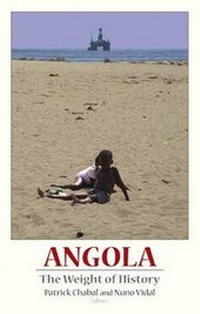
Angola
The Weight of History
Published on 29. October 2007
Book
Hardback
256 pages
978-1-85065-880-1 (ISBN)
Description
It is hoped that the multiparty elections of 2007 will bring about a political system in Angola that will ensure the country's sustained economic and social development. Angola is just emerging from almost three decades of civil war, and its abundant natural resources and booming oil sector could lay the groundwork for long-term economic prosperity and cement the transition towards political stability. But are these hopes realistic? "Angola" provides a thorough introduction to the history of Angola and analyzes its economic, political, and social evolution since independence. Its contributors offer incisive, original, and contemporary interpretations of one of the most complex countries in Africa.
Reviews / Votes
"This book's great strength is to put the contemporary,postwar condition of Angola into a historicalcontext and to show how the present cannot beunderstood without this highly particular past. Itis also very useful as a basis for the comparativeanalysis of African polities and economies." -ChrisCramer, School of Oriental and African StudiesMore details
Language
English
Place of publication
London
United Kingdom
Dimensions
Height: 216 mm
Width: 138 mm
ISBN-13
978-1-85065-880-1 (9781850658801)
Copyright in bibliographic data and cover images is held by Nielsen Book Services Limited or by the publishers or by their respective licensors: all rights reserved.
Schweitzer Classification
Persons
Patrick Chabal is professor of Lusophone African studiesat King's College, University of London.Nuno Vidal is a professor of economics at the Universityof Lisbon.
Content
Contents1. Transitions in Angola (Patrick Chabal) 2. Angola in Historical Context (Malyn Newitt) 3. The Mutation of Hegemonic Domination (Christine Messiant) 4. The Angolan Regime and the Move to Multiparty Politics (Nuno Vidal) 5. The Economic Foundations of the Patrimonial State (Tony Hodges) 6. Social Neglect and the Emergence of Civil Society (Nuno Vidal)