

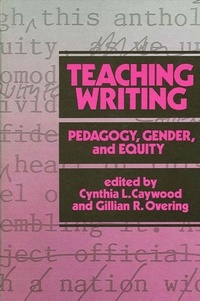
Teaching Writing
Pedagogy, Gender, and Equity
Published on 15. November 1986
Book
Paperback/Softback
238 pages
978-0-88706-353-4 (ISBN)
Description
This anthology explores the relationship between feminism and writing theory. The chapters cover the major issues: basic pedagogical theory and philosophical approaches to the teaching of writing, studies of problems encountered by female writers and writing instructors, and useful how-to essays on classroom technique. The authors also address important, provocative questions about power in the classroom-its use, abuse, and distribution.
The book is based on the concept of equity, which the editors define: "Equity does not mean to us the abolition of differences among individuals, nor does it imply a blanket imposition of an Orwellian homogeneity. It does not mean stifling some voices so that others may be heard; it does not demand the compromising of academic standards in the name of egalitarianism. Equity, as we understand it, creates new standards which accommodate and nurture differences. Equity fosters the individual voice in the classroom, investing students with confidence in their own authority. Equity unleashes the creative potential of heterogeneity. this definition of equity is at the heart of this anthology, and our attempts as teachers to model our pedagogy on this principle provided the impetus for assembling it." - from the Introduction
The book is based on the concept of equity, which the editors define: "Equity does not mean to us the abolition of differences among individuals, nor does it imply a blanket imposition of an Orwellian homogeneity. It does not mean stifling some voices so that others may be heard; it does not demand the compromising of academic standards in the name of egalitarianism. Equity, as we understand it, creates new standards which accommodate and nurture differences. Equity fosters the individual voice in the classroom, investing students with confidence in their own authority. Equity unleashes the creative potential of heterogeneity. this definition of equity is at the heart of this anthology, and our attempts as teachers to model our pedagogy on this principle provided the impetus for assembling it." - from the Introduction
More details
Language
English
Place of publication
Albany, NY
United States
Target group
Professional and scholarly
US School Grade: College Graduate Student and over
Product notice
Paperback (trade)
Dimensions
Height: 229 mm
Width: 152 mm
Thickness: 25 mm
Weight
363 gr
ISBN-13
978-0-88706-353-4 (9780887063534)
Copyright in bibliographic data and cover images is held by Nielsen Book Services Limited or by the publishers or by their respective licensors: all rights reserved.
Schweitzer Classification
Persons
Cynthia L. Caywood is an Assistant Professor of English at the University of San Diego, where she directs the Writing Center. Gillian R. Overing is an Associate Professor of English at Wake Forest University.
Content
Acknowledgments
Introduction
I: Old Silences, New Voices
Pamela J. Annas
Silences: Feminist Language Research and the Teaching of Writing
Wendy Goulston
Women Writing
Carol Stanger
The Sexual Politics of the One-to-One Tutorial Approach and Collaborative Learning
Elisabeth Daeumer and Sandra Runzo
Transforming the Composition Classroom
II: Awareness and Action: The Teacher's Responsibility
Alice S. Horning
The "Climate of Fear" in the Teaching of Writing
Alice F. Freed
Hearing Is Believing: The Effect of Sexist Language on Language Skills
III: Writing and Speaking: The Student's Authority
Olivia Frey
Equity and Peace in the New Writing Class
Diana J. Fuss
Gender, Role, and Class: In Quest of the Perfect Writing Theme
Mary DeShazer
Creation and Relation: Teaching Essays by T. S. Eliot and Adrienne Rich
Mary Quinn
Teaching Digression as a Mode of Discovery: A Student-Centered Approach to the Discussion of Literature
Ann Lavine
Subject Matter and Gender
IV: Equity in Practice
Pattie Cowell
Valuing Language: Feminist Pedagogy in the Writing Classroom
Donna M. Perry
Making Journal Writing Matter
James D. Riemer
Becoming Gender Conscious: Writing About Sex Roles in a Composition Course
Susan Radner
Writing About Families: How to Apply Feminism to a Traditional Writing Syllabus
Mickey Pearlman
How I Would Liberate My Mother
V: Equity Across the Curriculum: The Administrator's Challenge
Robert Mielke
Revisionist Theory on Moral Development and Its Impact upon Pedagogical and Departmental Practice
Judith Bechte
Why Teaching Writing Always Brings up Questions of Equity l
Cynthia L. Caywood and Gillian R. Overing
Writing Across the Curriculum: A Model for a Workshop and a Call for Change
Rebecca Blevins Faery
Women and Writing Across the Curriculum: Learning and Liberation
Bibliography
Notes on Contributors
Index
Introduction
I: Old Silences, New Voices
Pamela J. Annas
Silences: Feminist Language Research and the Teaching of Writing
Wendy Goulston
Women Writing
Carol Stanger
The Sexual Politics of the One-to-One Tutorial Approach and Collaborative Learning
Elisabeth Daeumer and Sandra Runzo
Transforming the Composition Classroom
II: Awareness and Action: The Teacher's Responsibility
Alice S. Horning
The "Climate of Fear" in the Teaching of Writing
Alice F. Freed
Hearing Is Believing: The Effect of Sexist Language on Language Skills
III: Writing and Speaking: The Student's Authority
Olivia Frey
Equity and Peace in the New Writing Class
Diana J. Fuss
Gender, Role, and Class: In Quest of the Perfect Writing Theme
Mary DeShazer
Creation and Relation: Teaching Essays by T. S. Eliot and Adrienne Rich
Mary Quinn
Teaching Digression as a Mode of Discovery: A Student-Centered Approach to the Discussion of Literature
Ann Lavine
Subject Matter and Gender
IV: Equity in Practice
Pattie Cowell
Valuing Language: Feminist Pedagogy in the Writing Classroom
Donna M. Perry
Making Journal Writing Matter
James D. Riemer
Becoming Gender Conscious: Writing About Sex Roles in a Composition Course
Susan Radner
Writing About Families: How to Apply Feminism to a Traditional Writing Syllabus
Mickey Pearlman
How I Would Liberate My Mother
V: Equity Across the Curriculum: The Administrator's Challenge
Robert Mielke
Revisionist Theory on Moral Development and Its Impact upon Pedagogical and Departmental Practice
Judith Bechte
Why Teaching Writing Always Brings up Questions of Equity l
Cynthia L. Caywood and Gillian R. Overing
Writing Across the Curriculum: A Model for a Workshop and a Call for Change
Rebecca Blevins Faery
Women and Writing Across the Curriculum: Learning and Liberation
Bibliography
Notes on Contributors
Index