


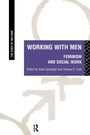
Working with Men
Feminism and Social Work
1st Edition
Published on 23. November 1995
Book
Hardback
238 pages
978-0-415-11184-3 (ISBN)
Description
One of feminism's key contributions to improving social work practice has been to expose the gender-blindness which has characterized social work policy and literature.
Working with Men extends and diversifies this contribution by presenting a controversial collection of essays written by feminists about men. In what has been a previously unexplored area of social work, the contributors to Working with Men, feminist academics, researchers and practitioners, explore the issue of feminist practice with men highlighting the dilemmas which they have encountered in undertaking this work. They contend that for too long feminists have ignored the issue of direct work with men. The argument that men must take responsibility for their own reconstruction they assert is no longer sustainable: feminists must generate their own discourse about the nature of men and masculinity derived from their own experience of critically engaging with and challenging men. The contributors conclude that direct work with men is a legitimate feminist activity; that it is one important strand of a broader strategy whose ultimate goal is the empowerment of women.
This book will be valuable reading for all students of social work and applied social science as well as social work practitioners and managers.
Working with Men extends and diversifies this contribution by presenting a controversial collection of essays written by feminists about men. In what has been a previously unexplored area of social work, the contributors to Working with Men, feminist academics, researchers and practitioners, explore the issue of feminist practice with men highlighting the dilemmas which they have encountered in undertaking this work. They contend that for too long feminists have ignored the issue of direct work with men. The argument that men must take responsibility for their own reconstruction they assert is no longer sustainable: feminists must generate their own discourse about the nature of men and masculinity derived from their own experience of critically engaging with and challenging men. The contributors conclude that direct work with men is a legitimate feminist activity; that it is one important strand of a broader strategy whose ultimate goal is the empowerment of women.
This book will be valuable reading for all students of social work and applied social science as well as social work practitioners and managers.
Reviews / Votes
`This is a ground-breaking book...will help both men and women to develop their practice in ways that recognise the deeply engendered nature of social work' - Professional Social Work'This is a useful introductory text for both students and practitioners and presents a strong case both for working with men and for locating this work within an explicit feminist framework.' - Scottish Affairs
More details
Language
English
Place of publication
London
United Kingdom
Publishing group
Taylor & Francis Ltd
Target group
College/higher education
Professional and scholarly
Postgraduate and Professional
Illustrations
6 s/w Tabellen
6 Tables, black and white
Dimensions
Height: 222 mm
Width: 145 mm
Thickness: 17 mm
Weight
438 gr
ISBN-13
978-0-415-11184-3 (9780415111843)
Copyright in bibliographic data and cover images is held by Nielsen Book Services Limited or by the publishers or by their respective licensors: all rights reserved.
Schweitzer Classification
Other editions
Additional editions

E-Book
09/2002
Routledge
€69.99
Available for download

E-Book
09/2002
Routledge
€69.99
Available for download
Book
11/1995
1st Edition
Routledge
€93.60
Shipment within 15-20 days
Persons
Kate Cavanagh is Lecturer in Social Work at the University of Glasgow; Viviene E. Cree is Lecturer in Social Work at the University of Edinburgh.
Content
Introduction 1 Men, masculinism and social work 2 A prison perspective 3 Working with the CHANGE men's programme 4 Challenges in working with male social work students 5 Why do men care? 6 Interviewing violent men: challenge or compromise? 7 Helping men to cope with marital breakdown 8 Sexuality, feminism and work with men 9 Building fragile bridges: educating for change 10 Working with boys 11 Moving on