

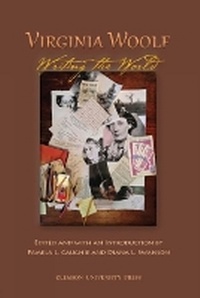
Virginia Woolf: Writing the World
Published on 12. June 2015
Book
Hardback
256 pages
978-0-9908958-0-0 (ISBN)
Description
Woolf Writing the World addresses such themes as the creation of worlds through literary writing, Woolf's reception as a world writer, world wars and the centenary of the First World War, and natural worlds in Woolf's writings. The selected papers represent the major themes of the conference as well as a diverse range of contributors from around the world and from different positions in and outside the university. The contents include familiar voices from past conferences--e.g., Judith Allen, Eleanor McNees, Elisa Kay Sparks--and well-known scholars who have contributed less frequently, if at all, to past Selected Papers--e.g., Susan Stanford Friedman, Steven Putzel, Michael Tratner--as well as new voices of younger scholars, students, and independent scholars. The volume is divided into four themed sections. The first and longest section, War and Peace, is framed by Mark Hussey's keynote roundtable, "War and Violence," and Maud Ellmann's keynote address, "Death in the Air: Virginia Woolf and Sylvia Townsend Warner in World War II." The second section, World Writer(s), includes papers that read the Woolfs in a global context. The papers in Animal and Natural Worlds bring recent developments in ecocriticism and post-humanist studies to analysis of Woolf's writing of human and nonhuman worlds. Finally, Writing and Worldmaking addresses various aspects of genre, style, and composition. Madelyn Detloff's closing essay, "The Precarity of 'Civilization' in Woolf's Creative Worldmaking," brings us back to international and cultural conflicts in our own day, reminding us, as Detloff says, why Woolf still matters today.
More details
Series
Language
English
Place of publication
Liverpool
United Kingdom
Target group
Professional and scholarly
Dimensions
Height: 239 mm
Width: 163 mm
ISBN-13
978-0-9908958-0-0 (9780990895800)
Copyright in bibliographic data and cover images is held by Nielsen Book Services Limited or by the publishers or by their respective licensors: all rights reserved.
Schweitzer Classification
Persons
Pamela L. Caughie is Professor of English at Loyola University Chicago. Diana L. Swanson is Associate Professor of Women's, Gender, and Sexuality Studies and English at Northern Illinois University.
Content
To be confirmed:
Introduction to Woolf Writing the World
Pamela L. Caughie (Loyola University Chicago) and Diana L. Swanson (Northern Illinois University)
Keynote Addresses
Roundtable: War and Violence
Mark Hussey (Pace University),
Sara Cole (Columbia University),
J. Ashley Foster (Graduate Center of the City University of New York),
Christine Froula (Northwestern University), and Jean Mills (John Jay College)
War, Wireless, Weather: Woolf and Warner
Maud Ellmann (University of Chicago)
The Voyage In, Out, and Beyond: Virginia Woolf after Postcolonialism
Tuzyline Allan (Baruch College, City University of New York)
War and Peace
Intersections: Surveillance, Propaganda, and Just War
Judith Allen (University of Pennsylvania)
Modernism and Memorials: Virginia Woolf and Christopher Isherwood
Erica Gene Delsandro (Bucknell University)
Taking Up Her Pen for World Peace: Virginia Woolf, Feminist Pacifist. Or Not?
Paula Maggio (Kent State University)
The Sex War and the Great War: Woolf's Late Victorian Inheritance in Three Guineas
Christine Michelle Haskill (Western Michigan University)
Sky Haunting: The British Motor-car Industry and the World Wars
Ann Martin (University of Sasketchewan)
The 1914 "Expurgated Chunk": The Great War in and out of The Years
Eleanor McNees (University of Denver)
"Beauty, simplicity, and peace": Faithful Pacifism, Activist Writing, and The Years
Charles Andrews (Whitworth University)
"they crashed; solved; united": Virginia Woolf, Katharine Burdekin, and Britain's Cosmopolitan Musical Culture
David Deutsch (University of Alabama)
World Writer(s)
Teaching Privileges: Three Guineas and the Cost of Global Citizenship
David Fine (Lehigh University)
From Guineas to Riyals: Teaching Woolf in the Middle East
Erin Amann Holliday-Karre (Qatar University)
Fashionable Misconceptions: The Creation of the East in Virginia Woolf's Orlando
Matthew Beeber (University of Colorado-Boulder)
From London to Taipei: Writing the Past in "Youyuan jingmeng" and Mrs. Dalloway
Shao-Hua Wang (University of Oxford)
An Estranged Intimacy with the World: The Post-Colonial Woolf's Ethical Refrain of Planetary Love in The Voyage Out
Alan Chih-chien Hsieh (National Taiwan University)
Before and After A Room of One's Own: Shakespeare's Sister in India
Susan Stanford Friedman (University of Wisconsin-Madison)
Leonard Woolf: Writing the World of Palestine, Zionism, and the State of Israel
Steven Putzel (Penn State University-Wilkes-Barre)
Animal and Natural Worlds
"And the donkey brays": Donkeys at Work in Virginia Woolf
Elizabeth Hanson (Independent Scholar)
Companion Creatures: "Dogmanity" in Three Guineas
Vicki Tromanhauser (State University of New York-New Paltz)
Virginia Woolf's Object-Oriented Ecology
Elsa Hoegberg (Uppsala University)
The Bodies In/Are The Waves
Michael Tratner (Bryn Mawr College)
Stretching our "Antennae": Converging Worlds of the Seen and the Unseen in "Kew Gardens"
Joyce E. Kelley (Auburn University at Montgomery)
"The Problem of Space": Embodied Language and the Body in Nature in To the Lighthouse
Kim Sigouin (Carleton University)
"Whose Woods These Are": Virginia Woolf and the Primeval Forests of the Mind
Elisa Kay Sparks (Clemson University)
Writing and Worldmaking
Virginia Woolf's 1897 Journal as Threshold Text
Gill Lowe (University Campus Suffolk)
Negative Feminism and Anti-Development in The Voyage Out
Anne Cunningham (State University of New York-Stony Brook)
Upheavals of Intimacy in To the Lighthouse
Maayan P. Dauber (Princeton University)
The Reconciliations of Poetry in Woolf's Between the Acts; or, Why It's "perfectly ridiculous to call it a novel"
Amy Huseby (University of Wisconsin-Madison)
Virginia Woolf, Composition Theorist: How Imagined Audiences Can Wreck a Writer
Kelle Mullineaux (Northern Illinois University)
The Precarity of "Civilization" in Woolf's Creative Worldmaking
Madelyn Detloff (Miami University, Ohio)
Contributors' Notes
Index
Introduction to Woolf Writing the World
Pamela L. Caughie (Loyola University Chicago) and Diana L. Swanson (Northern Illinois University)
Keynote Addresses
Roundtable: War and Violence
Mark Hussey (Pace University),
Sara Cole (Columbia University),
J. Ashley Foster (Graduate Center of the City University of New York),
Christine Froula (Northwestern University), and Jean Mills (John Jay College)
War, Wireless, Weather: Woolf and Warner
Maud Ellmann (University of Chicago)
The Voyage In, Out, and Beyond: Virginia Woolf after Postcolonialism
Tuzyline Allan (Baruch College, City University of New York)
War and Peace
Intersections: Surveillance, Propaganda, and Just War
Judith Allen (University of Pennsylvania)
Modernism and Memorials: Virginia Woolf and Christopher Isherwood
Erica Gene Delsandro (Bucknell University)
Taking Up Her Pen for World Peace: Virginia Woolf, Feminist Pacifist. Or Not?
Paula Maggio (Kent State University)
The Sex War and the Great War: Woolf's Late Victorian Inheritance in Three Guineas
Christine Michelle Haskill (Western Michigan University)
Sky Haunting: The British Motor-car Industry and the World Wars
Ann Martin (University of Sasketchewan)
The 1914 "Expurgated Chunk": The Great War in and out of The Years
Eleanor McNees (University of Denver)
"Beauty, simplicity, and peace": Faithful Pacifism, Activist Writing, and The Years
Charles Andrews (Whitworth University)
"they crashed; solved; united": Virginia Woolf, Katharine Burdekin, and Britain's Cosmopolitan Musical Culture
David Deutsch (University of Alabama)
World Writer(s)
Teaching Privileges: Three Guineas and the Cost of Global Citizenship
David Fine (Lehigh University)
From Guineas to Riyals: Teaching Woolf in the Middle East
Erin Amann Holliday-Karre (Qatar University)
Fashionable Misconceptions: The Creation of the East in Virginia Woolf's Orlando
Matthew Beeber (University of Colorado-Boulder)
From London to Taipei: Writing the Past in "Youyuan jingmeng" and Mrs. Dalloway
Shao-Hua Wang (University of Oxford)
An Estranged Intimacy with the World: The Post-Colonial Woolf's Ethical Refrain of Planetary Love in The Voyage Out
Alan Chih-chien Hsieh (National Taiwan University)
Before and After A Room of One's Own: Shakespeare's Sister in India
Susan Stanford Friedman (University of Wisconsin-Madison)
Leonard Woolf: Writing the World of Palestine, Zionism, and the State of Israel
Steven Putzel (Penn State University-Wilkes-Barre)
Animal and Natural Worlds
"And the donkey brays": Donkeys at Work in Virginia Woolf
Elizabeth Hanson (Independent Scholar)
Companion Creatures: "Dogmanity" in Three Guineas
Vicki Tromanhauser (State University of New York-New Paltz)
Virginia Woolf's Object-Oriented Ecology
Elsa Hoegberg (Uppsala University)
The Bodies In/Are The Waves
Michael Tratner (Bryn Mawr College)
Stretching our "Antennae": Converging Worlds of the Seen and the Unseen in "Kew Gardens"
Joyce E. Kelley (Auburn University at Montgomery)
"The Problem of Space": Embodied Language and the Body in Nature in To the Lighthouse
Kim Sigouin (Carleton University)
"Whose Woods These Are": Virginia Woolf and the Primeval Forests of the Mind
Elisa Kay Sparks (Clemson University)
Writing and Worldmaking
Virginia Woolf's 1897 Journal as Threshold Text
Gill Lowe (University Campus Suffolk)
Negative Feminism and Anti-Development in The Voyage Out
Anne Cunningham (State University of New York-Stony Brook)
Upheavals of Intimacy in To the Lighthouse
Maayan P. Dauber (Princeton University)
The Reconciliations of Poetry in Woolf's Between the Acts; or, Why It's "perfectly ridiculous to call it a novel"
Amy Huseby (University of Wisconsin-Madison)
Virginia Woolf, Composition Theorist: How Imagined Audiences Can Wreck a Writer
Kelle Mullineaux (Northern Illinois University)
The Precarity of "Civilization" in Woolf's Creative Worldmaking
Madelyn Detloff (Miami University, Ohio)
Contributors' Notes
Index