

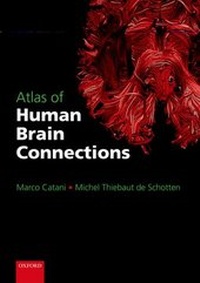
Atlas of Human Brain Connections
1st Edition
Published on 14. June 2012
Book
Hardback
544 pages
978-0-19-954116-4 (ISBN)
Description
One of the major challenges of modern neuroscience is to define the complex pattern of neural connections that underlie cognition and behaviour. Brain connections have been investigated extensively in many animal species, including monkeys. Until recently, however, we have been unable to verify their existence in humans or identify possible tracts that are unique to the human brain.
The Atlas of Human Brain Connections capitalises on novel diffusion MRI tractography methods to provide a comprehensive overview of connections derived from virtual in vivo tractography dissections of the human brain. The book introduces the reader to the fundaments of human brain organization as derived from the study of the surface, sectional and connectional anatomy.
It starts with an historical overview of the giant steps taken in neuroanatomy, from its birth more than 2000 years ago, to contemporary neuroimaging insights. Next, detailed descriptions of the major white matter connections, their function, and associated clinical syndromes are dealt with in detail. The composite maps of the atlas are an excellent anatomical resource for teaching, clinical, and research purposes. By reviewing both the basic principles of neuroanatomy, its historical roots,
and its modern achievements in the field of DTI tractography, the book aims to fill the gap between the detailed connectional anatomy of the monkey brain and the 19th century descriptions of white matter tracts from post-mortem human dissections.
Covering a wide range of topics in the field of clinical neuroanatomy, this book constitutes both an excellent introduction to the brain, as well as a valuable reference work for experienced clinicians and researchers working in the field of neurology, psychiatry, neurosurgery, and neuroradiology.
The Atlas of Human Brain Connections capitalises on novel diffusion MRI tractography methods to provide a comprehensive overview of connections derived from virtual in vivo tractography dissections of the human brain. The book introduces the reader to the fundaments of human brain organization as derived from the study of the surface, sectional and connectional anatomy.
It starts with an historical overview of the giant steps taken in neuroanatomy, from its birth more than 2000 years ago, to contemporary neuroimaging insights. Next, detailed descriptions of the major white matter connections, their function, and associated clinical syndromes are dealt with in detail. The composite maps of the atlas are an excellent anatomical resource for teaching, clinical, and research purposes. By reviewing both the basic principles of neuroanatomy, its historical roots,
and its modern achievements in the field of DTI tractography, the book aims to fill the gap between the detailed connectional anatomy of the monkey brain and the 19th century descriptions of white matter tracts from post-mortem human dissections.
Covering a wide range of topics in the field of clinical neuroanatomy, this book constitutes both an excellent introduction to the brain, as well as a valuable reference work for experienced clinicians and researchers working in the field of neurology, psychiatry, neurosurgery, and neuroradiology.
Reviews / Votes
'The Atlas of Human Brain Connections is intended to help neuroscientists and clinicians in the process of correlating structure with function, and lesions with symptoms." With those spare words, the authors introduce beginners and experts alike to their wondrous, 500-page treasure-trove of fiber tracts, beautifully illustrated in all three planes of serial sections (axial, coronal, and sagittal) as well as in two-dimensional reconstructions. Faced with thereality of its myriad highways of communication, we are led to think anew about how the human brain performs its miracles. To that end, this uncommon view of brain structure will soon become indispensable.' * Dr Mortimer Mishkin, Chief of the Section on Cognitive Neuroscience in the Laboratory of Neuropsychology, NIMH * Cognitive neuroscience is at a crossroads. On one hand, it sits on a rich data set of cortical connectivity in the monkey, an animal that lacks the complicated behaviors of interest. On the other hand, it is amassing an even richer set of facts on the functional map of the human brain, but with relatively little information on underlying structural connectivity. This lavishly illustrated volume by Catani and Thiebaut de Schotten represents a major step in closing
this gap. The authors have combined the science of diffusion tensor imaging with the art of tractography in a comprehensive work slated to become a standard reference for exploring the structural foundations of human brain function. * Marsel Mesulam, MD, Director, Cognitive Neurology and Alzheimer's Disease Center *
More details
Language
English
Place of publication
Oxford
United Kingdom
Target group
College/higher education
Professional and scholarly
Neuroscientists, neurologists, psychiatrists
Dimensions
Height: 305 mm
Width: 218 mm
Thickness: 28 mm
Weight
1782 gr
ISBN-13
978-0-19-954116-4 (9780199541164)
Copyright in bibliographic data and cover images is held by Nielsen Book Services Limited or by the publishers or by their respective licensors: all rights reserved.
Schweitzer Classification
Other editions
Additional editions
Marco Catani | Michel Thiebaut de Schotten
Atlas of Human Brain Connections
Book
02/2015
Oxford University Press
€148.80
Shipment within 15-20 days
Persons
Marco Catani is a Clinical Senior Lecturer in the Department of Forensic and Neurodevelopmental Science at The Institute of Psychiatry and Honorary Consultant Psychiatrist at the Maudsley Hospital. He is the Head of the Natbrainlab at King's College London, UK. Over the last ten years he has pioneered the use of novel imaging methods to re-explore the neuroanatomy of connections and describe new pathways of the human brain.
Michel Thiebaut de Schotten is a research fellow in the Department of Forensic and Neurodevelopmental Science at the Institute of Psychiatry. He is member of the Natbrainlab at King's College London, UK. In the last five years he has combined several modality of neuroimaging to understand the role of the white matter networks in the human living brain.
Michel Thiebaut de Schotten is a research fellow in the Department of Forensic and Neurodevelopmental Science at the Institute of Psychiatry. He is member of the Natbrainlab at King's College London, UK. In the last five years he has combined several modality of neuroimaging to understand the role of the white matter networks in the human living brain.
Author
Senior Lecturer and Honorary Consultant Psychiatrist, Head of the Natbrainlab, Department of Forensic and Neurodevelopmental Sciences, Institute of Psychiatry, King's College London, London, UK
Research Fellow, Natbrainlab, Department of Forensic and Neurodevelopmental Sciences, Institute of Psychiatry, King's College London, London, UK
Content
APPENDIX I; APPENDIX II; INDEX