

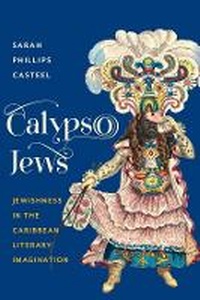
Calypso Jews
Jewishness in the Caribbean Literary Imagination
Published on 12. January 2016
Book
Hardback
352 pages
978-0-231-17440-4 (ISBN)
Description
In original and insightful ways, Caribbean writers have turned to Jewish experiences of exodus and reinvention, from the Sephardim expelled from Iberia in the 1490s to the "Calypso Jews" who fled Europe for Trinidad in the 1930s. Examining these historical migrations through the lens of postwar Caribbean fiction and poetry, Sarah Phillips Casteel presents the first major study of representations of Jewishness in Caribbean literature. Bridging the gap between postcolonial and Jewish studies, Calypso Jews enriches cross-cultural investigations of Caribbean creolization. Caribbean writers invoke both the 1492 expulsion and the Holocaust as part of their literary archaeology of slavery and its legacies. Despite the unequal and sometimes fraught relations between Blacks and Jews in the Caribbean before and after emancipation, Black-Jewish literary encounters reflect sympathy and identification more than antagonism and competition. Providing an alternative to U.S.-based critical narratives of Black-Jewish relations, Casteel reads Derek Walcott, Maryse Conde, Michelle Cliff, Jamaica Kincaid, Caryl Phillips, David Dabydeen, and Paul Gilroy, among others, to reveal a distinctive interdiasporic literature.
Reviews / Votes
A rich, consequential, powerful work that will make a difference in Jewish and postcolonial studies alike. -- Jonathan Freedman, author of Klezmer America: Jewishness, Ethnicity, Modernity An engaging and rather unusual study of diaspora Jewry in the West Indies... [that shines a] bright, exalting light... on the Caribbean and its many different peoples. -- Ian Thomson Times Literary Supplement Throughout Calypso Jews, Casteel makes a case for how hidden Sephardism has captured the imagination of culturally diverse authors post-slavery. The fullness and novelty of her research opens a fascinating dialogue on the intersections of black and Jewish relationships as revealed through Caribbean literature. -- Sharon Elswit Jewish Book Council A path-breaking study... By bringing a fresh approach to a much-neglected area of scholarship, Casteel has made a major contribution to our understanding of the Caribbean writer's commitment to bearing witness to the traumas of modernity. -- Patrick Taylor H-Caribbean Casteel's richly informative study...shows us that the peoples of the world do not merely trade and compete with, love and harm one another; they also watch each other in history, become compelled by one another's stories. ALH Online Review Series XMore details
Series
Language
English
Place of publication
New York
United States
Target group
Professional and scholarly
College/higher education
Product notice
Trade binding
Illustrations
11 b&w photographs
Dimensions
Height: 229 mm
Width: 152 mm
Weight
595 gr
ISBN-13
978-0-231-17440-4 (9780231174404)
Copyright in bibliographic data and cover images is held by Nielsen Book Services Limited or by the publishers or by their respective licensors: all rights reserved.
Schweitzer Classification
Other editions
Additional editions
E-Book
04/2016
1st Edition
Columbia University Press
from
€105.19
Available for download
Person
Sarah Phillips Casteel is associate professor of English at Carleton University, where she holds a cross-appointment with the Institute of African Studies. She is the author of Second Arrivals: Landscape and Belonging in Contemporary Writing of the Americas and coeditor, with Winfried Siemerling, of Canada and Its Americas: Transnational Navigations.
Content
Acknowledgments Introduction Part 1: 1492 1. Sephardism in Caribbean Literature: Derek Walcott's Pissarro 2. Marranism and Creolization: Myriam Chancy and Michelle Cliff 3. Port Jews in Slavery Fiction: Maryse Conde and David Dabydeen 4. Plantation Jews in Slavery Fiction: Cynthia McLeod's Jodensavanne Part 2: Holocausts 5. Calypso Jews: John Hearne and Jamaica Kincaid 6. Between Camps: M. NourbeSe Philip and Michele Maillet 7. Writing Under the Sign of Anne Frank: Michelle Cliff and Caryl Phillips Conclusion Notes Works Cited Index