

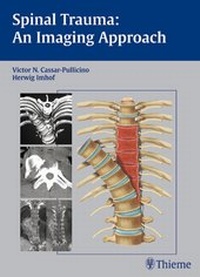
Spinal Trauma - An Imaging Approach
1st Edition
Published on 8. March 2006
Book
Hardback
256 pages
978-3-13-137471-4 (ISBN)
Description
The diagnosis of trauma to the spine -- where the slightest oversight may have catastrophic results -- requires a thorough grasp of the spectrum of resultant pathology as well as the imaging modalities used in making an accurate diagnosis. In Spinal Trauma, the internationally renowned team of experts provides a comprehensive, cutting-edge exposition of the current vital role of imaging in the diagnosis and treatment of injuries to the axial skeleton. Beginning with a valuable clinical perspective of spinal trauma, the book offers the reader a unique overview of the biomechanics underlying the beautifully illustrated pathology of cervical trauma.
Acute trauma topics include:
Optimization of imaging modalities
Malalignment -- signs and significance
Vertebral fractures -- detection and implications
Classification of thoraco-lumbar fractures -- rationale and relevance
Neurovascular injury
Distilling decades of clinical and teaching expertise, the contributors further discuss the current role of imaging in special focus topics, which include:
The pediatric spine
Sports injuries
The rigid spine
Trauma in the elderly
Vertebral collapse, benign and malignant
Spinal trauma therapy
Vertebral fractures and osteoporosis
Neuropathic spine
All throughout the book, the focus is on understanding the injury, and its implications and complications, through "an imaging approach." Complete with hundreds of superb MR images and CT scans, and clear full-color drawings, the authors conclude with a look into the future, defining clinical trends and research directions. Spinal Trauma -- with its broad scope, practical imaging approach, and current focus -- is designed to enhance confidence and accuracy, making it essential reading for clinicians and radiologists at all levels.
Reviews / Votes
One has here a book that addresses both the radiology and clinical aspects of spinal injury. Throughout, the book is well written and appropriately illustrated...Excellent radiographs and diagrams in all chapters...recommended to all radiologists and those clinicians who deal with spine injuries.--American Journal of Neuroradiology"A portable, reasonably complete, and very well-organized resource, review, or primary text.. The inclusion of chapters on neurovascular injury, pediatric spine, and spinal trauma..[are] clinically relevant, but also timely and address a relative deficit on many bookshelves. The book's illustrations vary from excellent to outstanding."--Academic Radiology
"A high-quality, succinct book that will benefit clinicians and radiologists alike."--Doody's Review
More details
Other editions
Additional editions
Victor N. Cassar-Pullicino | Herwig Imhof
Spinal Trauma - An Imaging Approach
E-Book
03/2006
1st Edition
Thieme
€134.99
Available for download
Victor N. Cassar-Pullicino | Herwig Imhof
Spinal Trauma - An Imaging Approach
E-Book
03/2006
1st Edition
Thieme
€134.99
Available for download
Previous edition

Book
03/2006
Thieme Publishers
€177.90
Withdrawn from sale
Persons
Victor N. Cassar-Pullicino, Herwig Imhof
Content
1 Clinical Perspectives on Spinal Injuries
2 Understanding Cervical Spinal Trauma: Biomechanics and Pathophysiology
3 Optimizing the Imaging Options
4 Classification: Rationale and Relevance
5 Malalignment: Signs and Significance
6 Vertebral Injuries: Detection and Implications
7 Neurovascular Injury
8 Trauma to the Pediatric Spine
9.1 Sports Injuries: Spondylolysis
9.2 Sports Injuries: Diskovertebral Overuse Injuries
10 The Rigid Spine
11 Spinal Trauma in the Elderly
12 Therapy-Options and Outcomes
13 Imaging in Chronic Spinal Cord Injury: Indications and Benefits
14 Vertebral Fractures and Osteoporosis
15 Vertebral Collapse-Benign or Malignant
16 Neuropathic Osteo-Arthropathy of the Spine
17 The Future: Trends and Developments in Spinal Cord Regeneration
2 Understanding Cervical Spinal Trauma: Biomechanics and Pathophysiology
3 Optimizing the Imaging Options
4 Classification: Rationale and Relevance
5 Malalignment: Signs and Significance
6 Vertebral Injuries: Detection and Implications
7 Neurovascular Injury
8 Trauma to the Pediatric Spine
9.1 Sports Injuries: Spondylolysis
9.2 Sports Injuries: Diskovertebral Overuse Injuries
10 The Rigid Spine
11 Spinal Trauma in the Elderly
12 Therapy-Options and Outcomes
13 Imaging in Chronic Spinal Cord Injury: Indications and Benefits
14 Vertebral Fractures and Osteoporosis
15 Vertebral Collapse-Benign or Malignant
16 Neuropathic Osteo-Arthropathy of the Spine
17 The Future: Trends and Developments in Spinal Cord Regeneration