

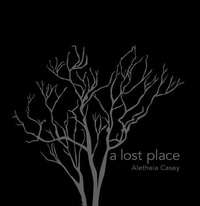
A Lost Place
Will be published approx. on 1. October 2026
Book
Paperback/Softback
98 pages
978-88-6208-863-3 (ISBN)
Description
This project is a personal meditation on the wildfires in Aletheia Casey's home country of Australia that connects its colonial past with its precarious climate future.
Through a series of manipulated and recontextualized images, this work is Casey attempt at coming to terms with the environmental and personal impact of wildfires in New South Wales, Australia, which were the largest ever recorded in the country. Over a three-month period, these fires devastated a land mass larger than the size of mainland England, killing or harming three billion animals and causing a level of environmental destruction described by one commentator as omnicide. As these fires continue to grow in frequency and severity due to escalating global temperatures, the project raises the question of how colonialism and climate change are linked.
Using a variety of methods, the images are manipulated to in an attempt to infuse them with emotional depth. Some are augmented with paint or ink, brushed directly onto the surface of the prints; on others, the paint is scratched away to reveal underlying layers. These altered landscapes serve as potent visual metaphors for both the external devastation wrought by the wildfires and Casey own fear and anger at such devastation. The intervention of her brushstrokes on the prints become a mirror of human intervention in nature, her own hand attempting to control the uncontrollable. This manipulation of the images is a way of implanting into them her personal response at the continual destruction of nature whilst simultaneously attempting to find beauty and hope amid the tragedy of these lost places.
In other instances, the artist juxtapose these altered landscapes with images of preserved specimens, often sourced from zoological museum archives in the UK, of either indigenous animals native to the region, or animals that were introduced to Australia only to become rampant pests. These juxtapositions point towards the often-overlooked historical links between 19th century biology, scientific exhibitions, and colonial logic, underscoring the interconnections between current ecological disasters and Australia's colonial history.
By highlighting the country's scientific-rationalist approach to nature, characterized by the relentless pursuit of control and dominance, the project prompts viewers to confront the enduring legacy of colonialism and its role in exacerbating the environmental challenges facing Australia today.
Through a series of manipulated and recontextualized images, this work is Casey attempt at coming to terms with the environmental and personal impact of wildfires in New South Wales, Australia, which were the largest ever recorded in the country. Over a three-month period, these fires devastated a land mass larger than the size of mainland England, killing or harming three billion animals and causing a level of environmental destruction described by one commentator as omnicide. As these fires continue to grow in frequency and severity due to escalating global temperatures, the project raises the question of how colonialism and climate change are linked.
Using a variety of methods, the images are manipulated to in an attempt to infuse them with emotional depth. Some are augmented with paint or ink, brushed directly onto the surface of the prints; on others, the paint is scratched away to reveal underlying layers. These altered landscapes serve as potent visual metaphors for both the external devastation wrought by the wildfires and Casey own fear and anger at such devastation. The intervention of her brushstrokes on the prints become a mirror of human intervention in nature, her own hand attempting to control the uncontrollable. This manipulation of the images is a way of implanting into them her personal response at the continual destruction of nature whilst simultaneously attempting to find beauty and hope amid the tragedy of these lost places.
In other instances, the artist juxtapose these altered landscapes with images of preserved specimens, often sourced from zoological museum archives in the UK, of either indigenous animals native to the region, or animals that were introduced to Australia only to become rampant pests. These juxtapositions point towards the often-overlooked historical links between 19th century biology, scientific exhibitions, and colonial logic, underscoring the interconnections between current ecological disasters and Australia's colonial history.
By highlighting the country's scientific-rationalist approach to nature, characterized by the relentless pursuit of control and dominance, the project prompts viewers to confront the enduring legacy of colonialism and its role in exacerbating the environmental challenges facing Australia today.
More details
Language
English
Place of publication
Bologna
Italy
Dimensions
Height: 195 mm
Width: 175 mm
ISBN-13
978-88-6208-863-3 (9788862088633)
Copyright in bibliographic data and cover images is held by Nielsen Book Services Limited or by the publishers or by their respective licensors: all rights reserved.
Schweitzer Classification
Persons
Aletheia Casey is an Australian photographic artist based in London. Her work is concerned with environmental issues and post-colonial legacy, alongside personal themes around family and cultural identity.
Aletheia was the winner of the World Press Award for Southeast Asia and Oceania (Open Category) in 2024. In 2025 Aletheia was named a finalist of the Global Focus project in the UAE, and was also a finalist in the Olive Cotton Award (Australia) and the Head On Portrait Award. In 2022 and 2023 Aletheia won a category of the Australian Photography Awards, and in 2021 won the Head On Landscape Award. Aletheia has been nominated for the Prix Pictet award, was shortlisted for the PHMuseum Woman Photographer's Grant, and was named '31 photographers to watch' by the British Journal of Photography. Aletheia won the Judge's Commendation for the Iris Award at the Perth Centre for Photography and was a finalist for the Josephine Ulrick and Win Schubert Award, and has twice been a finalist for the National Photographic Portrait Prize. Aletheia has published with The New Yorker, The Guardian, The Sunday Times Magazine, The Financial Times Magazine, BBC, Australian Associated Press, and various other publications. Aletheia has exhibited at the National Portrait Gallery, The Perth Centre for Photography (Australia), The Royal Shakespeare Company (London), The National Geographic Society (London), The Australian Centre for Photography and The Art Gallery of Ballarat (Australia), and Xposure Festival (UAE) among others.
Aletheia is a senior lecturer and the Course Leader on the Masters of Photojournalism and Documentary Photography at London College of Communication, UAL.
Aletheia was the winner of the World Press Award for Southeast Asia and Oceania (Open Category) in 2024. In 2025 Aletheia was named a finalist of the Global Focus project in the UAE, and was also a finalist in the Olive Cotton Award (Australia) and the Head On Portrait Award. In 2022 and 2023 Aletheia won a category of the Australian Photography Awards, and in 2021 won the Head On Landscape Award. Aletheia has been nominated for the Prix Pictet award, was shortlisted for the PHMuseum Woman Photographer's Grant, and was named '31 photographers to watch' by the British Journal of Photography. Aletheia won the Judge's Commendation for the Iris Award at the Perth Centre for Photography and was a finalist for the Josephine Ulrick and Win Schubert Award, and has twice been a finalist for the National Photographic Portrait Prize. Aletheia has published with The New Yorker, The Guardian, The Sunday Times Magazine, The Financial Times Magazine, BBC, Australian Associated Press, and various other publications. Aletheia has exhibited at the National Portrait Gallery, The Perth Centre for Photography (Australia), The Royal Shakespeare Company (London), The National Geographic Society (London), The Australian Centre for Photography and The Art Gallery of Ballarat (Australia), and Xposure Festival (UAE) among others.
Aletheia is a senior lecturer and the Course Leader on the Masters of Photojournalism and Documentary Photography at London College of Communication, UAL.