

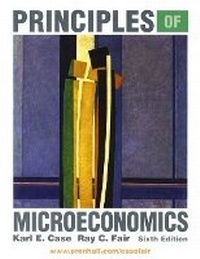
Principles of Microeconomics and ActiveEcon CD Package
6th Edition
Published on 25. July 2001
Book
Mixed media product
451 pages
978-0-13-074643-6 (ISBN)
Description
For undergraduate courses in Principles of Economics.
Written by two highly respected economists and educators, the text uses the "Stories, Graphs, and Equations" approach to make economic concepts accessible and relevant to students with various learning styles. Known for its unified and logical structure, lively writing style, clear explanations and unparalleled supplements package, the text supports both the instructor and the student through this first, often challenging, economics course. Case/Fair is one of the most widely adopted texts in this market, nationwide!
Written by two highly respected economists and educators, the text uses the "Stories, Graphs, and Equations" approach to make economic concepts accessible and relevant to students with various learning styles. Known for its unified and logical structure, lively writing style, clear explanations and unparalleled supplements package, the text supports both the instructor and the student through this first, often challenging, economics course. Case/Fair is one of the most widely adopted texts in this market, nationwide!
More details
Edition
6th edition
Language
English
Place of publication
United States
Publishing group
Pearson Education (US)
Target group
Professional and scholarly
Dimensions
Width: 276 mm
Thickness: 20 mm
Weight
1102 gr
ISBN-13
978-0-13-074643-6 (9780130746436)
Copyright in bibliographic data and cover images is held by Nielsen Book Services Limited or by the publishers or by their respective licensors: all rights reserved.
Schweitzer Classification
Other editions
New editions

Karl E. Case | Ray C. Fair
Principles of Microeconomics
Book
01/2004
7th Edition
Pearson
€90.36
Article exhausted; check for reprint
Previous edition
Karl E. Case | Ray C. Fair
Principles of Microeconomics
Book
05/2001
6th Edition
Pearson
€37.13
Article exhausted; check for reprint
Persons
Karl E. Case is the Katherine Coman and A. Barton Hepburn Professor of Economics at Wellesley College where he has taught for 24 years and is a Visiting Scholar at the Federal Reserve Bank of Boston.
Before coming to Wellesley, he served as Head Tutor (director of undergraduate studies) at Harvard, where he won the Allyn Young Teaching Prize. He has been a member of the AEA's Committee on Economic Education and was Associate Editor of the Journal of Economic Education, responsible for the section on innovations in teaching. He teaches at least one section of the principles course every year.
Professor Case received his B.A. from Miami University in 1968, spent three years on active duty in the Army including a year in Vietnam, and received his Ph.D. in Economics from Harvard University in 1976.
Professor Case's research has been in the areas of real estate, housing, and public finance. He is author or co-author of five books, including Principles of Economics, Economics and Tax Policy, and Property Taxation: The Need for Reform and has published numerous articles in professional journals.
He is also a founding partner in the real estate research firm of Case Shiller Weiss, Inc. and serves as a member of the Boards of Directors of the Mortgage Guaranty Insurance Corporation (MGIC), Century Bank, The Lincoln Institute of Land Policy, and the New England Economic Project.
Ray C. Fair is Professor of Economics at Yale University. He is a member of the Cowles Foundation at Yale and a Fellow of the Econometric Society. He received a B.A. in economics from Fresno State College in 1964 and Ph.D. in economics from M.LT. in 1968. He taught at Princeton University from 1968 to 1974 and has been at Yale since 1974.
Professor Fair's research has primarily been in the areas of macroeconomics and econometrics, with particular emphasis on macroeconometric model building. His publications include Specification, Estimation, and Analysis of Macroeconometric Models (Harvard Press, 1984) and Testing Macroeconometric Models (Harvard Press, 1994).
Professor Fair has taught introductory and intermediate macroeconomics at Yale. He has also taught graduate courses in macroeconomic theory and macroeconometrics.
Professor Fair's United States and multicountry models are available for use on the Internet free of charge. The address is http://fairmodel.econ.yale.edu. Many teachers have found that having students work with the United States model on the Internet is a useful complement to even an introductory macroeconomics course.
Before coming to Wellesley, he served as Head Tutor (director of undergraduate studies) at Harvard, where he won the Allyn Young Teaching Prize. He has been a member of the AEA's Committee on Economic Education and was Associate Editor of the Journal of Economic Education, responsible for the section on innovations in teaching. He teaches at least one section of the principles course every year.
Professor Case received his B.A. from Miami University in 1968, spent three years on active duty in the Army including a year in Vietnam, and received his Ph.D. in Economics from Harvard University in 1976.
Professor Case's research has been in the areas of real estate, housing, and public finance. He is author or co-author of five books, including Principles of Economics, Economics and Tax Policy, and Property Taxation: The Need for Reform and has published numerous articles in professional journals.
He is also a founding partner in the real estate research firm of Case Shiller Weiss, Inc. and serves as a member of the Boards of Directors of the Mortgage Guaranty Insurance Corporation (MGIC), Century Bank, The Lincoln Institute of Land Policy, and the New England Economic Project.
Ray C. Fair is Professor of Economics at Yale University. He is a member of the Cowles Foundation at Yale and a Fellow of the Econometric Society. He received a B.A. in economics from Fresno State College in 1964 and Ph.D. in economics from M.LT. in 1968. He taught at Princeton University from 1968 to 1974 and has been at Yale since 1974.
Professor Fair's research has primarily been in the areas of macroeconomics and econometrics, with particular emphasis on macroeconometric model building. His publications include Specification, Estimation, and Analysis of Macroeconometric Models (Harvard Press, 1984) and Testing Macroeconometric Models (Harvard Press, 1994).
Professor Fair has taught introductory and intermediate macroeconomics at Yale. He has also taught graduate courses in macroeconomic theory and macroeconometrics.
Professor Fair's United States and multicountry models are available for use on the Internet free of charge. The address is http://fairmodel.econ.yale.edu. Many teachers have found that having students work with the United States model on the Internet is a useful complement to even an introductory macroeconomics course.
Content
Most chapters end with a Summary, Review Terms and Concepts, Problem Set, Web Exercises and Mastering Economics CD-Rom.I. INTRODUCTION TO ECONOMICS.
1. The Scope and Method of Economics.
Why Study Economics? The Scope of Economics. The Methods of Economics. An Invitation. Appendix: How to Read and Understand Graphs.
2. The Economic Problem: Scarcity and Choice.
Scarcity, Choice, and Opportunity Cost. Economic Systems. Looking Ahead.
3. Demand, Supply, and Market Equilibrium.
Firms and Households: The Basic Decision-Making Units. Input Markets and Output Markets: The Circular Flow. Demand In Product/Output Markets. Supply In Product/Output Markets. Market Equilibrium. Demand and Supply in Product Markets: A Review. Looking Ahead: Markets and the Allocation of Resources.
4. The Price System, Demand and Supply, and Elasticity.
The Price System: Rationing and Allocating Resources. Supply and Demand Analysis: An Oil Import Fee. Elasticity. Looking Ahead. Appendix: Point Elasticity.
II. FOUNDATIONS OF MICROECONOMICS: CONSUMERS AND FIRMS.
5. Household Behavior and Consumer Choice.
Household Choice in Output Markets. The Basis of Choice: Utility. Income and Substitution Effects. Consumer Surplus. Household Choice in Input Markets. A Review: Households in Output and Input Markets. Appendix: Indifference Curves.
6. The Production Process: The Behavior of Profit Maximizing Firms.
The Behavior of Profit-Maximizing Firms. The Production Process. Choice of Technology. Looking Ahead: Cost and Supply. Appendix: Isoquants and Isocosts.
7. Short-Run Costs and Output Decisions.
Costs in the Short Run. Output Decisions: Revenues, Costs, and Profit Maximization. Looking Ahead.
8. Costs and Output Decisions in the Long Run.
Short-Run Conditions and Long-Run Directions. Long-Run Costs: Economies and Diseconomies of Scale. Long-Run Adjustments to Short-Run Conditions. Output Markets: A Final Word. Appendix: External Economies and Diseconomies and the Long-Run Industry Supply Curve.
9. Input Demand: The Labor and Land Markets.
Input Markets: Basic Concepts. Labor Markets. Land Markets. The Firm's Profit-Maximization Condition in Input Markets. Input Demand Curves. Resource Allocation and the Mix of Output in Competitive Markets.
10. Input Demand: The Capital Market and the Investment Decision.
Capital, Investment, And Depreciation. The Capital Market. The Demand for New Capital and the Investment Decision. A Final Word on Capital. Appendix: Calculating Present Value.
11. General Equilibrium and the Efficiency of Perfect Competition.
General Equilibrium Analysis. Allocative Efficiency and Competitive Equilibrium. The Sources of Market Failure. Evaluating the Market Mechanism.
III. MARKET IMPERFECTIONS AND THE ROLE OF GOVERNMENT.
12. Monopoly and Antitrust Policy.
Imperfect Competition and Market Power: Core Concepts. Price and Output Decisions in Pure Monopoly Markets. The Social Costs of Monopoly. Remedies for Monopoly: Antitrust Policy. The Enforcement of Antitrust Law. A Natural Monopoly. Imperfect Markets: A Review and a Look Ahead.
13. Monopolistic Competition and Oligopoly.
Monopolistic Competition. Oligopoly. The Role of Government.
14. Externalities, Public Goods, Imperfect Information, and Social Choice.
Externalities And Environmental Economics. Public (Social) Goods. Imperfect Information. Social Choice. Government and the Market. Appendix: Government Tax Distortions, Excess Burdens, and the Principle of Neutrality.
15. Income Distribution and Poverty.
The Utility Possibilities Frontier. The Sources of Household Income. The Distribution of Income. The Redistribution Debate. Redistribution Programs and Policies. Government or the Market? A Review. Appendix: Tax Incidence: The Effect of Taxes on Distribution.
IV. THE WORLD ECONOMY.
16. International Trade, Comparative Advantage, and Protectionism.
Trade Surpluses and Deficits. The Economic Basis for Trade: Comparative Advantage. The Sources of Comparative Advantage. Trade Barriers: Tariffs, Export Subsidies, and Quotas. Free Trade or Protection? An Economic Consensus.
17. Economic Growth in Developing and Transitional Economies.
Life in the Developing Nations: Population and Poverty. Economic Development: Sources and Strategies. Issues in Economic Development. Economies in Transition. The End of the Soviet Union. The Transition to a Market Economy.
Glossary of Terms.
Solutions to Even-Numbered Problems.
Index.
1. The Scope and Method of Economics.
Why Study Economics? The Scope of Economics. The Methods of Economics. An Invitation. Appendix: How to Read and Understand Graphs.
2. The Economic Problem: Scarcity and Choice.
Scarcity, Choice, and Opportunity Cost. Economic Systems. Looking Ahead.
3. Demand, Supply, and Market Equilibrium.
Firms and Households: The Basic Decision-Making Units. Input Markets and Output Markets: The Circular Flow. Demand In Product/Output Markets. Supply In Product/Output Markets. Market Equilibrium. Demand and Supply in Product Markets: A Review. Looking Ahead: Markets and the Allocation of Resources.
4. The Price System, Demand and Supply, and Elasticity.
The Price System: Rationing and Allocating Resources. Supply and Demand Analysis: An Oil Import Fee. Elasticity. Looking Ahead. Appendix: Point Elasticity.
II. FOUNDATIONS OF MICROECONOMICS: CONSUMERS AND FIRMS.
5. Household Behavior and Consumer Choice.
Household Choice in Output Markets. The Basis of Choice: Utility. Income and Substitution Effects. Consumer Surplus. Household Choice in Input Markets. A Review: Households in Output and Input Markets. Appendix: Indifference Curves.
6. The Production Process: The Behavior of Profit Maximizing Firms.
The Behavior of Profit-Maximizing Firms. The Production Process. Choice of Technology. Looking Ahead: Cost and Supply. Appendix: Isoquants and Isocosts.
7. Short-Run Costs and Output Decisions.
Costs in the Short Run. Output Decisions: Revenues, Costs, and Profit Maximization. Looking Ahead.
8. Costs and Output Decisions in the Long Run.
Short-Run Conditions and Long-Run Directions. Long-Run Costs: Economies and Diseconomies of Scale. Long-Run Adjustments to Short-Run Conditions. Output Markets: A Final Word. Appendix: External Economies and Diseconomies and the Long-Run Industry Supply Curve.
9. Input Demand: The Labor and Land Markets.
Input Markets: Basic Concepts. Labor Markets. Land Markets. The Firm's Profit-Maximization Condition in Input Markets. Input Demand Curves. Resource Allocation and the Mix of Output in Competitive Markets.
10. Input Demand: The Capital Market and the Investment Decision.
Capital, Investment, And Depreciation. The Capital Market. The Demand for New Capital and the Investment Decision. A Final Word on Capital. Appendix: Calculating Present Value.
11. General Equilibrium and the Efficiency of Perfect Competition.
General Equilibrium Analysis. Allocative Efficiency and Competitive Equilibrium. The Sources of Market Failure. Evaluating the Market Mechanism.
III. MARKET IMPERFECTIONS AND THE ROLE OF GOVERNMENT.
12. Monopoly and Antitrust Policy.
Imperfect Competition and Market Power: Core Concepts. Price and Output Decisions in Pure Monopoly Markets. The Social Costs of Monopoly. Remedies for Monopoly: Antitrust Policy. The Enforcement of Antitrust Law. A Natural Monopoly. Imperfect Markets: A Review and a Look Ahead.
13. Monopolistic Competition and Oligopoly.
Monopolistic Competition. Oligopoly. The Role of Government.
14. Externalities, Public Goods, Imperfect Information, and Social Choice.
Externalities And Environmental Economics. Public (Social) Goods. Imperfect Information. Social Choice. Government and the Market. Appendix: Government Tax Distortions, Excess Burdens, and the Principle of Neutrality.
15. Income Distribution and Poverty.
The Utility Possibilities Frontier. The Sources of Household Income. The Distribution of Income. The Redistribution Debate. Redistribution Programs and Policies. Government or the Market? A Review. Appendix: Tax Incidence: The Effect of Taxes on Distribution.
IV. THE WORLD ECONOMY.
16. International Trade, Comparative Advantage, and Protectionism.
Trade Surpluses and Deficits. The Economic Basis for Trade: Comparative Advantage. The Sources of Comparative Advantage. Trade Barriers: Tariffs, Export Subsidies, and Quotas. Free Trade or Protection? An Economic Consensus.
17. Economic Growth in Developing and Transitional Economies.
Life in the Developing Nations: Population and Poverty. Economic Development: Sources and Strategies. Issues in Economic Development. Economies in Transition. The End of the Soviet Union. The Transition to a Market Economy.
Glossary of Terms.
Solutions to Even-Numbered Problems.
Index.