

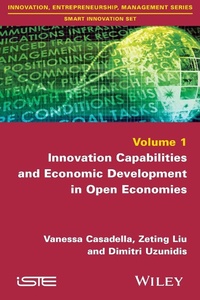
Innovation Capabilities and Economic Development in Open Economies
1st Edition
Published on 6. October 2015
Book
Paperback/Softback
144 pages
978-1-84821-874-1 (ISBN)
Description
The innovation capacity-building can contribute to improve the integration of developing countries in the world economy.
The economic development has been a much discussed subject of the period after the Second World War until the 1990s. After the implementation of a global regulation system for trade and capital flows in the 1990s, the development economics has almost disappeared in favor of different theories on globalization, on finance and on international trade. The purpose of this book is to show that the innovation capacity building in developing countries is necessary to improve their weight in the world economy and to facilitate their economic ties with northern countries. However, there are important difficulties due to the lack of proactive economic policies.
Our aim is to contribute to the revival of the development economics. The issue of improving the well-being of the world population as a whole is highly topical. However, studies neglect the need to give economic, financial, technological and political resources to developing countries to promote their own development. One of the most important means is to strengthen their innovation capabilities that allow them to better integrate into the world economy.
The economic development has been a much discussed subject of the period after the Second World War until the 1990s. After the implementation of a global regulation system for trade and capital flows in the 1990s, the development economics has almost disappeared in favor of different theories on globalization, on finance and on international trade. The purpose of this book is to show that the innovation capacity building in developing countries is necessary to improve their weight in the world economy and to facilitate their economic ties with northern countries. However, there are important difficulties due to the lack of proactive economic policies.
Our aim is to contribute to the revival of the development economics. The issue of improving the well-being of the world population as a whole is highly topical. However, studies neglect the need to give economic, financial, technological and political resources to developing countries to promote their own development. One of the most important means is to strengthen their innovation capabilities that allow them to better integrate into the world economy.
More details
Language
English
Place of publication
London
United Kingdom
Target group
Professional and scholarly
Product notice
Paperback (trade)
Unsewn / adhesive bound
Dimensions
Height: 234 mm
Width: 156 mm
Thickness: 8 mm
Weight
231 gr
ISBN-13
978-1-84821-874-1 (9781848218741)
Copyright in bibliographic data and cover images is held by Nielsen Book Services Limited or by the publishers or by their respective licensors: all rights reserved.
Schweitzer Classification
Other editions
Additional editions
Vanessa Casadella | Zeting Liu | Dimitri Uzunidis
Innovation Capabilities and Economic Development in Open Economies
E-Book
10/2015
Wiley-ISTE
€139.99
Available for download
Vanessa Casadella | Zeting Liu | Dimitri Uzunidis
Innovation Capabilities and Economic Development in Open Economies
E-Book
10/2015
Wiley-ISTE
€139.99
Available for download
Persons
Vanessa Casadella is a researcher at CRIISEA and a member of the Research Network on Innovation (RNI). She is an Associate Professor and head of department at IUT de l'Oise in France.
Zeting Liu is a researcher at Clerse-CNRS, University of Lille in France. She is an economist and general secretary of the Research Network on Innovation (RNI) and a member of the international Jean-Baptiste Say society.
Dimitri Uzunidis is a researcher at Clerse-CNRS, University of Lille in France. He is president of the Research Network on Innovation (RNI) and the international Jean-Baptiste Say society. He teaches in both Greece and the US.
Zeting Liu is a researcher at Clerse-CNRS, University of Lille in France. She is an economist and general secretary of the Research Network on Innovation (RNI) and a member of the international Jean-Baptiste Say society.
Dimitri Uzunidis is a researcher at Clerse-CNRS, University of Lille in France. He is president of the Research Network on Innovation (RNI) and the international Jean-Baptiste Say society. He teaches in both Greece and the US.
Content
Preface vii Introduction ix
Chapter 1. Theories and Policies of Economic Development 1
1.1. The era of economic interventionism 3
1.1.1. Impasses of economic take-off theories 4
1.1.2. The crisis of the interventionist State 9
1.2. The era of liberalism 11
1.2.1. Structural adjustment programs 12
1.2.2. Failure of the "minimum State" 17
1.3. The era of "good governance" 21
1.3.1. Institutions, "good governance" and development 22
1.3.2. "Development" in global governance 26
1.4. The system of "global governance" under scrutiny 30
1.4.1. Global governance as a substitute for economic voluntarism 31
1.4.2. Toward an alternative model of economic growth? 38
Chapter 2. Innovative Capacities and Systems of the South in Globalization 47
2.1. Innovation for economic development 48
2.1.1. Understanding globalization through technology transfer 50
2.1.2. Innovation for development 55
2.2. Innovation systems and integration into the world economy 60
2.2.1. Innovation capacity and learning process 61
2.2.2. About national innovation systems 64
2.2.3. Measuring the performance of innovation systems in developing countries 70
2.2.4. Location strategies of multinational firms and the role of NIS 76
2.3. The difficulties of implementing innovation policies in developing countries 80
2.3.1. Asymmetries and endemic blockages 81
2.3.2. The North/South and South/South technology gap 86
2.3.3. The structural problems of innovation policies 97
Conclusion 105
Bibliography 111
Index 125
Chapter 1. Theories and Policies of Economic Development 1
1.1. The era of economic interventionism 3
1.1.1. Impasses of economic take-off theories 4
1.1.2. The crisis of the interventionist State 9
1.2. The era of liberalism 11
1.2.1. Structural adjustment programs 12
1.2.2. Failure of the "minimum State" 17
1.3. The era of "good governance" 21
1.3.1. Institutions, "good governance" and development 22
1.3.2. "Development" in global governance 26
1.4. The system of "global governance" under scrutiny 30
1.4.1. Global governance as a substitute for economic voluntarism 31
1.4.2. Toward an alternative model of economic growth? 38
Chapter 2. Innovative Capacities and Systems of the South in Globalization 47
2.1. Innovation for economic development 48
2.1.1. Understanding globalization through technology transfer 50
2.1.2. Innovation for development 55
2.2. Innovation systems and integration into the world economy 60
2.2.1. Innovation capacity and learning process 61
2.2.2. About national innovation systems 64
2.2.3. Measuring the performance of innovation systems in developing countries 70
2.2.4. Location strategies of multinational firms and the role of NIS 76
2.3. The difficulties of implementing innovation policies in developing countries 80
2.3.1. Asymmetries and endemic blockages 81
2.3.2. The North/South and South/South technology gap 86
2.3.3. The structural problems of innovation policies 97
Conclusion 105
Bibliography 111
Index 125