

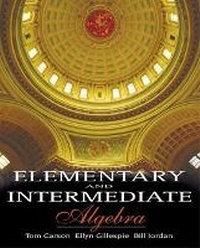
Elementary and Intermediate Algebra
Published on 11. March 2004
Book
Hardback
1272 pages
978-0-201-72962-7 (ISBN)
Description
Elementary and Intermediate Algebra is a book for the student. The authors' goal is to help build students' confidence, their understanding and appreciation of math, and their basic skills by presenting an extremely user-friendly text that models a framework in which students can succeed. Unfortunately, students who place into developmental math courses often struggle with math anxiety due to bad experiences in past math courses. Developmental students often have never developed nor applied a study system in mathematics. To address these needs, the authors have framed three goals for Elementary and Intermediate Algebra: 1) reduce math anxiety, 2) teach for understanding, and 3) foster critical thinking and enthusiasm.
The authors' writing style is extremely student friendly. They talk to students in their own language and walk them through the concepts, explaining not only how to do the math, but also why it works and where it comes from, rather than using the "monkey-see, monkey-do" approach that some books take.
The authors' writing style is extremely student friendly. They talk to students in their own language and walk them through the concepts, explaining not only how to do the math, but also why it works and where it comes from, rather than using the "monkey-see, monkey-do" approach that some books take.
More details
Language
English
Place of publication
United States
Publishing group
Pearson Education (US)
Target group
College/higher education
Dimensions
Height: 262 mm
Width: 222 mm
Thickness: 41 mm
Weight
2531 gr
ISBN-13
978-0-201-72962-7 (9780201729627)
Copyright in bibliographic data and cover images is held by Nielsen Book Services Limited or by the publishers or by their respective licensors: all rights reserved.
Schweitzer Classification
Other editions
New editions
Tom Carson | Bill E. Jordan
Elementary and Intermediate Algebra
Book
04/2006
2nd Edition
Pearson
€69.32
Article exhausted; check for reprint
Content
(Note: Each Chapter ends with a Summary, Review Exercises and Practice Test. Chapters 3, 6, 9, and 13 also end with a Cumulative Review.).
1. Foundations of Algebra.
Number Sets and the Structure of Algebra.
Fractions.
Adding and Subtracting Real Numbers; Properties of Real Numbers.
Multiplying and Dividing Real Numbers; Properties of Real Numbers.
Exponents, Roots, and Order of Operations.
Translating Word Phrases to Expressions.
Evaluating and Rewriting Expressions.
2. Solving Linear Equations and Inequalities.
Equations, Formulas, and the Problem-Solving Process.
The Addition Principle.
The Multiplication Principle.
Applying the Principles to Formulas.
Translating Word Sentences to Equations.
Solving Linear Inequalities.
3. Problem Solving.
Ratios and Proportions.
Percents.
Problems with Two or More Unknowns.
Rates.
Investment and Mixture.
4. Graphing Linear Equations and Inequalities.
The Rectangular Coordinate System.
Graphing Linear Equations.
Graphing Using Intercepts.
Slope-Intercept Form.
Point-Slope Form.
Graphing Linear Inequalities.
Introduction to Functions and Function Notation.
5. Polynomials.
Exponents and Scientific Notation.
Introduction to Polynomials.
Adding and Subtracting Polynomials.
Exponent Rules and Multiplying Monomials.
Multiplying Polynomials; Special Products.
Exponent Rules and Dividing Polynomials.
6. Factoring.
Greatest Common Factor and Factoring by Grouping.
Factoring Trinomials of the Form x (2) + bx + c.
Factoring Trinomials of the Form ax (2) + bx + c, where a ` 1.
Factoring Special Products.
Strategies for Factoring.
Solving Quadratic Equations by Factoring.
Graphs of Quadratic Equations and Functions.
7. Rational Expressions and Equations.
Simplifying Rational Expressions.
Multiplying and Dividing Rational Expressions.
Adding and Subtracting Rational Expressions with the Same Denominator.
Adding and Subtracting Rational Expressions with Different Denominators.
Complex Rational Expressions.
Solving Equations Containing Rational Expressions.
Applications with Rational Expressions.
8. More on Inequalities, Absolute Value, and Functions.
Compound Inequalities.
Equations Involving Absolute Value.
Inequalities Involving Absolute Value.
Functions and Graphing.
Function Operations.
9. Systems of Equations.
Solving Systems of Linear Equations Graphically.
Solving Systems of Linear Equations by Substitution.
Solving Systems of Linear Equations by Elimination.
Solving Systems of Linear Equations in Three Variables.
Solving Systems of Linear Equations Using Matrices.
Cramer's Rule.
Solving Systems of Linear Inequalities.
10. Rational Exponents, Radicals, and Complex Numbers.
Radical Expressions and Functions.
Rational Exponents.
Multiplying, Dividing, and Simplifying Radicals.
Adding, Subtracting, and Multiplying Radical Expressions.
Rationalizing Numerators and Denominators of Radical Expressions.
Radical Equations and Problem Solving.
Complex Numbers.
11. Quadratic Equations.
Completing the Square.
Solving Quadratic Equations Using the Quadratic Formula.
Solving Equations That Are Quadratic in Form.
Graphing Quadratic Functions.
Solving Nonlinear Inequalities.
12. Exponential and Logarithmic Functions.
Composite and Inverse Functions.
Exponential Functions.
Logarithmic Functions.
Properties of Logarithms.
Common and Natural Logarithms.
Exponential and Logarithmic Equations with Applications.
13. Conic Sections.
The Parabola and the Circle.
Ellipses and Hyperbolas.
Nonlinear Systems of Equations.
Nonlinear Inequalities and Systems of Inequalities.
Appendix A.
Arithmetic Sequences and Series.
Appendix B.
Geometric Sequences and Series.
Appendix C.
The Binomial Theorem.
Appendix D.
Permutations and Combinations.
Appendix E.
Probability.
1. Foundations of Algebra.
Number Sets and the Structure of Algebra.
Fractions.
Adding and Subtracting Real Numbers; Properties of Real Numbers.
Multiplying and Dividing Real Numbers; Properties of Real Numbers.
Exponents, Roots, and Order of Operations.
Translating Word Phrases to Expressions.
Evaluating and Rewriting Expressions.
2. Solving Linear Equations and Inequalities.
Equations, Formulas, and the Problem-Solving Process.
The Addition Principle.
The Multiplication Principle.
Applying the Principles to Formulas.
Translating Word Sentences to Equations.
Solving Linear Inequalities.
3. Problem Solving.
Ratios and Proportions.
Percents.
Problems with Two or More Unknowns.
Rates.
Investment and Mixture.
4. Graphing Linear Equations and Inequalities.
The Rectangular Coordinate System.
Graphing Linear Equations.
Graphing Using Intercepts.
Slope-Intercept Form.
Point-Slope Form.
Graphing Linear Inequalities.
Introduction to Functions and Function Notation.
5. Polynomials.
Exponents and Scientific Notation.
Introduction to Polynomials.
Adding and Subtracting Polynomials.
Exponent Rules and Multiplying Monomials.
Multiplying Polynomials; Special Products.
Exponent Rules and Dividing Polynomials.
6. Factoring.
Greatest Common Factor and Factoring by Grouping.
Factoring Trinomials of the Form x (2) + bx + c.
Factoring Trinomials of the Form ax (2) + bx + c, where a ` 1.
Factoring Special Products.
Strategies for Factoring.
Solving Quadratic Equations by Factoring.
Graphs of Quadratic Equations and Functions.
7. Rational Expressions and Equations.
Simplifying Rational Expressions.
Multiplying and Dividing Rational Expressions.
Adding and Subtracting Rational Expressions with the Same Denominator.
Adding and Subtracting Rational Expressions with Different Denominators.
Complex Rational Expressions.
Solving Equations Containing Rational Expressions.
Applications with Rational Expressions.
8. More on Inequalities, Absolute Value, and Functions.
Compound Inequalities.
Equations Involving Absolute Value.
Inequalities Involving Absolute Value.
Functions and Graphing.
Function Operations.
9. Systems of Equations.
Solving Systems of Linear Equations Graphically.
Solving Systems of Linear Equations by Substitution.
Solving Systems of Linear Equations by Elimination.
Solving Systems of Linear Equations in Three Variables.
Solving Systems of Linear Equations Using Matrices.
Cramer's Rule.
Solving Systems of Linear Inequalities.
10. Rational Exponents, Radicals, and Complex Numbers.
Radical Expressions and Functions.
Rational Exponents.
Multiplying, Dividing, and Simplifying Radicals.
Adding, Subtracting, and Multiplying Radical Expressions.
Rationalizing Numerators and Denominators of Radical Expressions.
Radical Equations and Problem Solving.
Complex Numbers.
11. Quadratic Equations.
Completing the Square.
Solving Quadratic Equations Using the Quadratic Formula.
Solving Equations That Are Quadratic in Form.
Graphing Quadratic Functions.
Solving Nonlinear Inequalities.
12. Exponential and Logarithmic Functions.
Composite and Inverse Functions.
Exponential Functions.
Logarithmic Functions.
Properties of Logarithms.
Common and Natural Logarithms.
Exponential and Logarithmic Equations with Applications.
13. Conic Sections.
The Parabola and the Circle.
Ellipses and Hyperbolas.
Nonlinear Systems of Equations.
Nonlinear Inequalities and Systems of Inequalities.
Appendix A.
Arithmetic Sequences and Series.
Appendix B.
Geometric Sequences and Series.
Appendix C.
The Binomial Theorem.
Appendix D.
Permutations and Combinations.
Appendix E.
Probability.