

Books of the Body
Anatomical Ritual and Renaissance Learning
Published on 15. December 1999
Book
Hardback
272 pages
978-0-226-09287-4 (ISBN)
Description
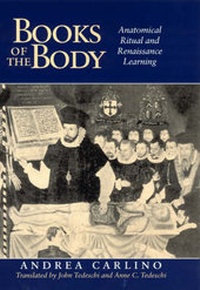
One usually sees the Renaissance as a marked departure from older traditions, but Renaissance scholars often continued to cling to the teachings of the past. For instance, despite the evidence of their own dissections, which contradicted ancient and medieval texts, Renaissance anatomists continued to teach those outdated views for nearly two centuries. In "Books of the Body", Andrea Carlino explores the nature and causes of this intellectual inertia. On the one hand, anatomical practice was constrained by a reverence for classical texts and the belief that the study of anatomy was more properly part of natural philosophy than of medicine. On the other hand, cultural resistance to dissection and dismemberment of the human body, as well as moral and social norms that governed access to cadavers and the ritual of their public display in the anatomy theatre, also delayed anatomy's development. A history of both Renaissance anatomists and the bodies they dissected, this book should interest anyone studying Renaissance science, medicine, art, religion and society.
More details
Language
English
Place of publication
Chicago
United States
Publishing group
The University of Chicago Press
Target group
College/higher education
Professional and scholarly
Illustrations
38 halftones
Dimensions
Height: 236 mm
Width: 160 mm
Weight
580 gr
ISBN-13
978-0-226-09287-4 (9780226092874)
Copyright in bibliographic data and cover images is held by Nielsen Book Services Limited or by the publishers or by their respective licensors: all rights reserved.
Schweitzer Classification
Persons
Content
Contents List of Illustrations Acknowledgments Abbreviations Introduction 1. Representations: The Dissection Scene--An Iconographic Investigation The Quodlibetarian Model: The Title Pages of Mondino dei Liuzzi's "Anatomia" The Persistence of a Model: Berengario da Carpi A Transitional Iconography? The Shift: The Title Page of Andreas Vesalius's "De humani corporis fabrica" Images of Dissection in the Vesalian "Manner" 2. Practices: Norms and Behavior at the Public Anatomy Lesson--The Studium Urbis in the Sixteenth Century Between the Curia and the College: A Portrait of the Physician Preliminary Procedures and Public Control The Anatomy Lesson and a Bit of History The Selection of the Cadaver: Explicit Criteria and Implicit Caution Around the Cadaver: Before and after the Anatomy Masses and Alms: Dissection and the Afterlife Between Saying and Doing 3. Tradition: An Archeology of Anatomical Knowledge and of Dissecting Practices Physicians and Philosophers Working on the Discovery of the Body, or the Uses of Anatomy Unveiling: Dissecting Animals, Dissecting Humans A Paradigm for a Millennium Unease, Disgust, Contempt: Aristotle, the Empiricists and Christians on the Dissection of the Human Body The Rebirth of Anatomy 4. Bodies and Texts: Renaissance Anatomy: Dissection and Anatomical Knowledge in the Fifteenth and Sixteenth Centuries The Dismemberment of Cadavers Authority and Evidence Limitations of Belief: Vesalius, Galen, the Galenists Revulsion and Unease Epilogue Appendix Notes Bibliography Index