

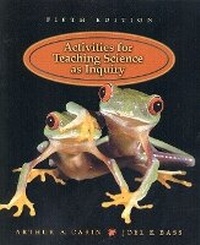
Activities for Teaching Science as Inquiry
5th Edition
Published on 24. August 2001
Book
Paperback/Softback
277 pages
978-0-13-021281-8 (ISBN)
Description
For courses in Science Methods in Elementary School.
This is the quintessential science text designed to introduce future teachers to science instruction through inquiry. Infused with the philosophical intent of the National Science Education Standards, it includes the theory behind knowledge construction, the how-tos of knowledge acquisition, and questioning strategies that promote inquiry. It is overflowing with practical and meaningful activities, information, inquiries, strategies, and lessons. A major innovation of this edition is the majority of chapters that feature at least one activity based on a video that accompanies the text.
This is the quintessential science text designed to introduce future teachers to science instruction through inquiry. Infused with the philosophical intent of the National Science Education Standards, it includes the theory behind knowledge construction, the how-tos of knowledge acquisition, and questioning strategies that promote inquiry. It is overflowing with practical and meaningful activities, information, inquiries, strategies, and lessons. A major innovation of this edition is the majority of chapters that feature at least one activity based on a video that accompanies the text.
More details
Edition
5th edition
Language
English
Place of publication
United States
Publishing group
Pearson Education (US)
Target group
Professional and scholarly
Dimensions
Height: 235 mm
Width: 191 mm
Weight
458 gr
ISBN-13
978-0-13-021281-8 (9780130212818)
Copyright in bibliographic data and cover images is held by Nielsen Book Services Limited or by the publishers or by their respective licensors: all rights reserved.
Schweitzer Classification
Other editions
New editions
Arthur A. Carin | Joel L. Bass | Terry L. Contant
Activities for Teaching Science as Inquiry
Book
06/2004
6th Edition
Pearson
€34.65
Article exhausted; check for reprint
Content
(NOTE: Each section in Chs. 2-4 include Engagement Activities and Exploration Activities.)
1. Using Activities for Inquiry.
Engaging Students in Inquiry. Use Well-Designed and Proven Activities. Sequencing Science Instruction and Inquiry. Lesson Plan: An Inquiry into Pendulums. Cooperative Learning. How Text Activities Are Organized. References.
2. Physical Science Activities.
Matter and Energy. Thermal Energy (Heat). Air Pressure. Sound Energy. Simple Machines (Mechanics). Magnetic and Electrical Energies and Interactions. Light Energy, Shadows, Lenses, and Color.
3. Life, Ecology, and Environmental Science Activities.
Plant Anatomy and Physiology. Animal Anatomy and Physiology. Human Anatomy, Physiology, Nutrition, and Health. Ecology and the Environment.
4. Earth and Space Science Activities.
Astronomy (Earth in Space). Meteorology (Weather). Geology (Earth's Changing Surface).
5. Inquiry Science Activities for Students with Special Needs.
Students with Blindness or Vision Impairments. Students with Developmental Delays. Students with Visual Perception Problems. Students with Emotional Disorders. Students with Deafness or Hearing Impairments.
1. Using Activities for Inquiry.
Engaging Students in Inquiry. Use Well-Designed and Proven Activities. Sequencing Science Instruction and Inquiry. Lesson Plan: An Inquiry into Pendulums. Cooperative Learning. How Text Activities Are Organized. References.
2. Physical Science Activities.
Matter and Energy. Thermal Energy (Heat). Air Pressure. Sound Energy. Simple Machines (Mechanics). Magnetic and Electrical Energies and Interactions. Light Energy, Shadows, Lenses, and Color.
3. Life, Ecology, and Environmental Science Activities.
Plant Anatomy and Physiology. Animal Anatomy and Physiology. Human Anatomy, Physiology, Nutrition, and Health. Ecology and the Environment.
4. Earth and Space Science Activities.
Astronomy (Earth in Space). Meteorology (Weather). Geology (Earth's Changing Surface).
5. Inquiry Science Activities for Students with Special Needs.
Students with Blindness or Vision Impairments. Students with Developmental Delays. Students with Visual Perception Problems. Students with Emotional Disorders. Students with Deafness or Hearing Impairments.