

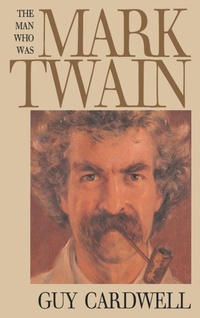
The Man Who Was Mark Twain
Images and Ideologies
Will be published approx. on 4. June 1991
Book
Hardback
286 pages
978-0-300-04950-3 (ISBN)
Description
"Americans have cherished and magnified versions of an idealized Mark Twain. We admire and are amused by the celebrity, who sold his pseudonym and his carefully composed face to advertise pipe tobacco, cigarettes, whiskey, and postcards. The extent to which the received images are authentic or inauthentic is, however, in doubt. Common images must be modified when we examine the thoughts and emotions important to the mind and heart of Samuel L. Clemens, the private man."-from the Introduction
No writer has been more frequently identified with America than Mark Twain, an emblematic figure often supposed to represent the essential qualities that make America most admirably American. In a fresh appraisal, supported by evidence from both the life and the writings, Guy Cardwell convincingly revises our images of this cultural icon. He portrays an exceptionally complex man who experienced debilitating tensions and neuroses.
Caldwell finds that even before the comedian from the West met and married Olivia Langdon, the heiress from Elmira, New York, he was ambitious to join and conquer the world of Eastern affluence and gentility. Yet Clemens's jokes (in his private notebooks) aggressing against women and blacks suggest that his acculturation to gentility was never complete. This book throws new light on Clemens's relations with his wife and her family and on his attitudes toward business, money, art, sex, and the little girls whose company he sought compulsively during his later years. It argues persuasively that in the end Twain was hardly the robust and genial representative of America's mythic frontier past. Alienated from society and from his own writings, he was much more the prototype of the overstrung, exploitatively individualistic modern American.
No writer has been more frequently identified with America than Mark Twain, an emblematic figure often supposed to represent the essential qualities that make America most admirably American. In a fresh appraisal, supported by evidence from both the life and the writings, Guy Cardwell convincingly revises our images of this cultural icon. He portrays an exceptionally complex man who experienced debilitating tensions and neuroses.
Caldwell finds that even before the comedian from the West met and married Olivia Langdon, the heiress from Elmira, New York, he was ambitious to join and conquer the world of Eastern affluence and gentility. Yet Clemens's jokes (in his private notebooks) aggressing against women and blacks suggest that his acculturation to gentility was never complete. This book throws new light on Clemens's relations with his wife and her family and on his attitudes toward business, money, art, sex, and the little girls whose company he sought compulsively during his later years. It argues persuasively that in the end Twain was hardly the robust and genial representative of America's mythic frontier past. Alienated from society and from his own writings, he was much more the prototype of the overstrung, exploitatively individualistic modern American.
More details
Language
English
Place of publication
United States
Target group
College/higher education
Professional and scholarly
Product notice
Cloth over boards
Dimensions
Height: 229 mm
Width: 152 mm
Thickness: 21 mm
Weight
606 gr
ISBN-13
978-0-300-04950-3 (9780300049503)
Copyright in bibliographic data and cover images is held by Nielsen Book Services Limited or by the publishers or by their respective licensors: all rights reserved.
Schweitzer Classification
Content
The critical battleground; an Adam from the western garden; affines and business; art and money; Olivia, gender and taste; sexuality and the Clemenses; impotence and paedophilia; tendentious jokes; racism and "Huckleberry Finn"; a world turned upside down; myths, paradoxes and the bourgeois hero.