

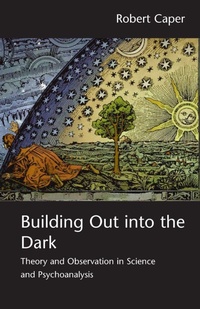
Building Out into the Dark
Theory and Observation in Science and Psychoanalysis
1st Edition
Published on 28. November 2008
Book
Paperback/Softback
120 pages
978-0-415-46681-3 (ISBN)
Description
In this book, Robert Caper provides the reader with an introduction to psychoanalysis focusing explicitly on whether psychoanalysis is part of the sciences, and if not, where it belongs.
Many psychoanalysts, beginning with Freud, have considered their discipline a science. In this book, Caper examines this claim and investigates the relationship of theory to observation in both philosophy and the experimental sciences and explores how these observations differ from those made in psychoanalytic interpretation. Building Out into the Dark also explores topics including:
the origins of psychoanalysis in the art of medicine
the therapeutic effect of psychoanalysis
the archaic superego
psychoanalysis with the individual and groups
what makes psychoanalytic work unique.
Building Out into the Dark offers a thoughtful consideration of the nature of psychoanalytic knowledge and how it is gained. The book's accessible and concise style makes it a useful introductory resource for students studying psychoanalysis, for psychotherapists who are curious about the distinction between psychoanalysis and other forms of therapy as well as those interested in placing psychoanalysis in the context of current cultural and intellectual developments.
Many psychoanalysts, beginning with Freud, have considered their discipline a science. In this book, Caper examines this claim and investigates the relationship of theory to observation in both philosophy and the experimental sciences and explores how these observations differ from those made in psychoanalytic interpretation. Building Out into the Dark also explores topics including:
the origins of psychoanalysis in the art of medicine
the therapeutic effect of psychoanalysis
the archaic superego
psychoanalysis with the individual and groups
what makes psychoanalytic work unique.
Building Out into the Dark offers a thoughtful consideration of the nature of psychoanalytic knowledge and how it is gained. The book's accessible and concise style makes it a useful introductory resource for students studying psychoanalysis, for psychotherapists who are curious about the distinction between psychoanalysis and other forms of therapy as well as those interested in placing psychoanalysis in the context of current cultural and intellectual developments.
More details
Language
English
Place of publication
London
United Kingdom
Publishing group
Taylor & Francis Ltd
Target group
College/higher education
Postgraduate, Professional, and Professional Practice & Development
Dimensions
Height: 216 mm
Width: 140 mm
Thickness: 7 mm
Weight
162 gr
ISBN-13
978-0-415-46681-3 (9780415466813)
Copyright in bibliographic data and cover images is held by Nielsen Book Services Limited or by the publishers or by their respective licensors: all rights reserved.
Schweitzer Classification
Other editions
Additional editions
E-Book
12/2013
1st Edition
Routledge
€48.49
Available for download
E-Book
12/2013
1st Edition
Routledge
€48.49
Available for download
Book
11/2008
1st Edition
Routledge
€141.35
Withdrawn from sale
Person
Robert Caper is Assistant Clinical Professor, University of California at Los Angeles School of Medicine. He is the author of numerous psychoanalytic and scientific research papers and of two books, Immaterial Facts: Freud's Discovery of Psychic Reality and Klein's Development of His Work and A Mind of One's Own. He has served on the editorial boards of the Journal of the American Psychoanalytic Association and the International Journal of Psychoanalysis.
Content
Introduction. Psychoanalysis and Science. Psychoanalysis and Science: Rules and Games. The Origins of Psychoanalysis in the Art of Medicine. Psychoanalytic Observation. Room for Doubt. Psychoanalytic Reasoning: Finding the Context. Terror and the Archaic Superego. Psychoanalysis, the Individual and the Group. Psychoanalytic Work.