


British Sociability in the Long Eighteenth Century
Challenging the Anglo-French Connection
Published on 18. June 2024
Book
Paperback/Softback
320 pages
978-1-83765-128-3 (ISBN)
Description
This innovative collection explores how a distinctively British model of sociability developed in the period from the Restoration of Charles II to the early nineteenth century through a complex process of appropriation, emulation and resistance to what was happening in France and other parts of Europe.
The study of sociability in the long eighteenth century has long been dominated by the example of France. In this innovative collection, we see how a distinctively British model of sociability developed in the period from the Restoration of Charles II to the early nineteenth century through a complex process of appropriation, emulation and resistance to what was happening in France and other parts of Europe.
The contributors use a wide range of sources - from city plans to letter-writing manuals, from the writings of Edmund Burke to poems and essays about the social practices of the tea table, and a variety of methodological approaches to explore philosophical, political and social aspects of the emergence of British sociability in this period. They create a rounded picture of sociability as it happened in public, private and domestic settings - in Masonic lodges and radical clubs, in painting academies and private houses - and compare specific examples and settings with equivalents in France, bringing out for instance the distinctively homo-social and predominantly masculine form of British sociability, the role of sociabilitywithin a wider national identity still finding its way after the upheaval of civil war and revolution in the seventeenth century, and the almost unique capacity of the British model of sociability to benefit from its own apparent tensions and contradictions.
The study of sociability in the long eighteenth century has long been dominated by the example of France. In this innovative collection, we see how a distinctively British model of sociability developed in the period from the Restoration of Charles II to the early nineteenth century through a complex process of appropriation, emulation and resistance to what was happening in France and other parts of Europe.
The contributors use a wide range of sources - from city plans to letter-writing manuals, from the writings of Edmund Burke to poems and essays about the social practices of the tea table, and a variety of methodological approaches to explore philosophical, political and social aspects of the emergence of British sociability in this period. They create a rounded picture of sociability as it happened in public, private and domestic settings - in Masonic lodges and radical clubs, in painting academies and private houses - and compare specific examples and settings with equivalents in France, bringing out for instance the distinctively homo-social and predominantly masculine form of British sociability, the role of sociabilitywithin a wider national identity still finding its way after the upheaval of civil war and revolution in the seventeenth century, and the almost unique capacity of the British model of sociability to benefit from its own apparent tensions and contradictions.
Reviews / Votes
This volume is a great tribute to the exciting and vibrant research taking place in the history of eighteenth-century British sociability. . . . Wide-ranging and eclectic in its methodological and thematic approach, it is clear that this volume will appeal to a wide range of scholars, whether approaching this from a historical, literary, philosophical, political, or social perspective. * H-NET * [...] it is impossible to miss the relevance and significance of this publication's exploration of the limits, paradoxes, and conditions of eighteen-century sociability. -- James Harriman-Smith * Eighteen-Century Studies * This wide-ranging collection illuminates the development of national social and political formations. * FAMILY AND COMMUNITY HISTORICAL RESEARCH SOCIETY (FACHRS) NEWSLETTER *More details
Series
Language
English
Place of publication
Woodbridge
United Kingdom
Publishing group
Boydell & Brewer Ltd
Target group
Professional and scholarly
Product notice
Paperback (trade)
Illustrations
10 b/w illus.
Dimensions
Height: 234 mm
Width: 156 mm
Thickness: 17 mm
Weight
491 gr
ISBN-13
978-1-83765-128-3 (9781837651283)
Copyright in bibliographic data and cover images is held by Nielsen Book Services Limited or by the publishers or by their respective licensors: all rights reserved.
Schweitzer Classification
Other editions
Additional editions
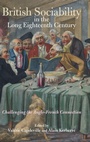
Valerie Capdeville | Alain Kerherve
British Sociability in the Long Eighteenth Century
Challenging the Anglo-French Connection
Book
06/2019
Boydell Press
€120.20
Shipment within 3-4 weeks
Valérie Capdeville | Alain Kerhervé
British Sociability in the Long Eighteenth Century
Challenging the Anglo-French Connection
E-Book
06/2019
1st Edition
De Gruyter
€48.99
Available for download
Persons
VALERIE CAPDEVILLE is Professor of British History and Civilisation at the University of Rennes 2. ALAIN KERHERVE is Professor of British Studies at the Faculte des Lettres et Sciences Humaines Victor Segalan, University of West Brittany (UBO Brest). VALERIE CAPDEVILLE is Professor of British History and Civilisation at the University of Rennes 2. MICHELE COHEN is emeritus Professor of Humanities, Richmond, American International University in London, UK. BRIAN COWAN is an Associate Professor of History at McGill University. MARKMAN ELLIS is Professor of Eighteenth-Century Studies at Queen Mary University of London. ALAIN KERHERVE is Professor of British Studies at the Faculte des Lettres et Sciences Humaines Victor Segalan, University of West Brittany (UBO Brest). JANE RENDALL is an Honorary Fellow of the Centre for Eighteenth Studies and the History Department at the University of York. She has published widely on women's and gender history in the eighteenth and nineteenth centuries, focusing on Scotland.
Content
Foreword - Michele Cohen
Introduction - Valerie Capdeville and Alain Kerherve
'Restoration' England and the History of Sociability - Brian Cowan
Mapping Sociability on Restoration Townscapes - Marie-Madeleine Martinet
Club Sociability and the Emergence of New 'Sociable' Practices - Valerie Capdeville
The Tea-table, Women, and Gossip in Early Eighteenth-Century Britain - Markman Ellis
'Amateurs' vs. Connoisseurs in French and English Academies of Painting - Elisabeth Martichou
Masonic Connections and Rivalries between France and Britain - Pierre-Yves Beaurepaire
Competing Models of Sociability: Smollett's Repossession of an Ailing British Body - Annick Cossic
A Theory of British Epistolary Sociability? - Alain Kerherve
Gender and the Practices of Polite Sociability in Late Eighteenth-Century Edinburgh - Jane Rendall
In Company and Out: The Public/Private Selves of Johnson and Boswell - Allan Ingram
Friendship and Unsociable Sociability in Eighteenth-Century Literature - Emrys Jones
The Anti-social Convivialist: Toasting and Resistance to Sociability - Ian Newman
Sociability and the Glorious Revolution: A Dubious Connection in Burke's Philosophy - Norbert Col
Respectability vs Political Agency: A Dilemma for British Radical Societies - Remy Duthille
Conclusion - Valerie Capdeville
Introduction - Valerie Capdeville and Alain Kerherve
'Restoration' England and the History of Sociability - Brian Cowan
Mapping Sociability on Restoration Townscapes - Marie-Madeleine Martinet
Club Sociability and the Emergence of New 'Sociable' Practices - Valerie Capdeville
The Tea-table, Women, and Gossip in Early Eighteenth-Century Britain - Markman Ellis
'Amateurs' vs. Connoisseurs in French and English Academies of Painting - Elisabeth Martichou
Masonic Connections and Rivalries between France and Britain - Pierre-Yves Beaurepaire
Competing Models of Sociability: Smollett's Repossession of an Ailing British Body - Annick Cossic
A Theory of British Epistolary Sociability? - Alain Kerherve
Gender and the Practices of Polite Sociability in Late Eighteenth-Century Edinburgh - Jane Rendall
In Company and Out: The Public/Private Selves of Johnson and Boswell - Allan Ingram
Friendship and Unsociable Sociability in Eighteenth-Century Literature - Emrys Jones
The Anti-social Convivialist: Toasting and Resistance to Sociability - Ian Newman
Sociability and the Glorious Revolution: A Dubious Connection in Burke's Philosophy - Norbert Col
Respectability vs Political Agency: A Dilemma for British Radical Societies - Remy Duthille
Conclusion - Valerie Capdeville