

Pyramidal Architectures for Computer Vision
Published on 23. October 2012
Book
Paperback/Softback
XVII, 335 pages
978-1-4613-6023-0 (ISBN)
Description
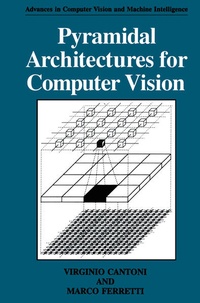
Computer vision deals with the problem of manipulating information contained in large quantities of sensory data, where raw data emerge from the transducing 6 7 sensors at rates between 10 to 10 pixels per second. Conventional general purpose computers are unable to achieve the computation rates required to op erate in real time or even in near real time, so massively parallel systems have been used since their conception in this important practical application area. The development of massively parallel computers was initially character ized by efforts to reach a speedup factor equal to the number of processing elements (linear scaling assumption). This behavior pattern can nearly be achieved only when there is a perfect match between the computational struc ture or data structure and the system architecture. The theory of hierarchical modular systems (HMSs) has shown that even a small number of hierarchical levels can sizably increase the effectiveness of very large systems. In fact, in the last decade several hierarchical architectures that support capabilities which can overcome performances gained with the assumption of linear scaling have been proposed. Of these architectures, the most commonly considered in com puter vision is the one based on a very large number of processing elements (PEs) embedded in a pyramidal structure. Pyramidal architectures supply the same image at different resolution lev els, thus ensuring the use of the most appropriate resolution for the operation, task, and image at hand.
More details
Series
Edition
Softcover reprint of the original 1st ed. 1994
Language
English
Place of publication
New York
United States
Target group
Professional and scholarly
Research
Illustrations
XVII, 335 p.
Dimensions
Height: 229 mm
Width: 152 mm
Thickness: 20 mm
Weight
516 gr
ISBN-13
978-1-4613-6023-0 (9781461360230)
DOI
10.1007/978-1-4615-2413-7
Schweitzer Classification
Other editions
Additional editions
Virginio Cantoni | Marco Ferretti
Pyramidal Architectures for Computer Vision
Book
03/1994
1st Edition
Kluwer Academic / Plenum Publishers
€96.00
Article exhausted; check different version
Content
1. Hierarchical Architectures.- 1.1. Introduction.- 1.2. Theory of Hierarchical Modular Systems.- 1.3. Self-Organizing Hierarchical Modular Systems.- 1.4. Hierarchical Architectures for Parallel Processing Machines.- References.- 2. Hierarchical Strategies in Computer Vision Systems.- 2.1. Introduction.- 2.2. Allocation of Attention in Computer Vision Systems.- 2.3. Multiresolution Matching.- 2.4. Fine-to-Coarse Feature Generation.- 2.5. Coarse-to-Fine Searches.- 2.6. Image Flow Diagrams.- 2.7. General Planning Strategies.- References.- 3. Hierarchical Homogeneous Topologies.- 3.1. Introduction.- 3.2. Hierarchical Paradigm.- 3.3. Comparison Parameters and Evaluation Criteria.- 3.4. Bus-Oriented Architectures.- 3.5. Link-Oriented Architectures.- 3.6. Performance Measures.- 3.7. Applicability.- 3.8. Conclusions.- References.- 4. A Taxonomy of Hierarchical Machines for Computer Vision.- 4.1. Paradigm for Computer Vision.- 4.2. Taxonomy of Hierarchical Machines.- 4.3. Conclusions.- References.- 5. Compact and Distributed Pyramids.- 5.1. Introduction.- 5.2. Compact Pyramids.- 5.3. Distributed Pyramids.- 5.4. Conclusions.- References.- 6. Pipeline Multiresolution Systems.- 6.1. Introduction.- 6.2. Pyramid Vision Machine System.- 6.3. PIPE System.- 6.4. Conclusions.- References.- 7. Simulation of Pyramids on Flat Arrays and Hypercubes.- 7.1. Introduction.- 7.2. Pyramids and Meshes.- 7.3. Pyramids and Hypercubes.- 7.4. Conclusions.- References.- 8. Heterogeneous Hierarchical Systems.- 8.1. Introduction.- 8.2. Warwick Pyramid System.- 8.3. Image Understanding Architecture.- 8.4. The PASM.- 8.5. Array/Net Project.- 8.6. Conclusions.- References.- 9. Programming a Hierarchical Structure.- 9.1. Languages: An Introduction.- 9.2. Control Environment.- 9.3. Conclusions.- References.-10. Pyramidal Tools and Applications.- 10.1. Introduction.- 10.2. Complexity of Some Basic Algorithms.- 10.3. Special Pyramids.- 10.4. Pyramidal Techniques.- 10.5. Conclusions.- References.