

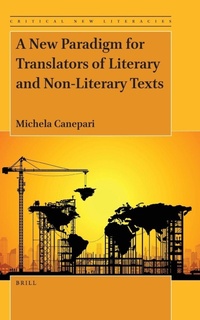
A New Paradigm for Translators of Literary and Non-Literary Texts
Published on 21. July 2022
Book
Hardback
404 pages
978-90-04-52620-4 (ISBN)
Description
Over the years, translation has increasingly become a necessary tool to function in contemporary society. Based on years of research and teaching activity within the field, this book offers a useful and effective paradigm for the translation of different types of texts, guiding readers towards the realisation of effective translation projects. The several contrastive analyses presented and the suggestions offered throughout will help readers appreciate the implications and consequences of every translation choice, encouraging them to develop reading and translating skills applicable to the variety of texts they face in everyday life, from novels to comic books, films, and television series.
More details
Series
Language
English
Place of publication
Leiden
Netherlands
Target group
Professional and scholarly
Product notice
sewn/stitched
Cloth over boards
Dimensions
Height: 236 mm
Width: 160 mm
Thickness: 28 mm
Weight
680 gr
ISBN-13
978-90-04-52620-4 (9789004526204)
Copyright in bibliographic data and cover images is held by Nielsen Book Services Limited or by the publishers or by their respective licensors: all rights reserved.
Schweitzer Classification
Other editions
Additional editions
Michela Canepari
A New Paradigm for Translators of Literary and Non-Literary Texts
Book
07/2022
Brill
€81.00
Shipment within 10-20 days
Person
Michela Canepari works as an Associate Professor of English linguistics and translation at the University of Parma, Italy. She has published several monographs and articles on different aspects of translation, addresssing issues of interlingual, intralingual and intersemiotic translation.
Content
Preface
Acknowledgments
Introduction: Introducing a New Paradigm for Translation and
Translators
?1 Pre-Translation Phase
?2 Translation Phase
?3 Post-Translation Phase
1 Interlingual Translation
?1 Translating Experimental Literature Interlingually: The Case
of Christine Brooke-Rose's Between
?2 Translating Other Cultures Interlingually: The Case of Monica
Ali's Brick Lane
?3 Translating and Retranslating Interlingually
?4 Translating the Creative Potential of Language
Interlingually
?5 The Tools at the Disposal of the Interlingual Translator
?6 Translating Cohesion in Graphic and Audio-Visual Products:
The Case of Sit-Coms
2 Intersemiotic Translation
?1 Translating for the Big Screen: The Issue of Cinematographic
Adaptations
?2 Translating for the Small Screen: The Case of Television
Series
?3 Translating and Retranslating Intrasemiotically: The Case of
Remakes
?4 Translating and Retranslating Intersemiotically: Graphic
Representations of the (Female) Vampire
?5 Translating Graphic Art into Audio-Visual Products: The Case
of Dr Seuss' Horton Hears a Who
3 Intralingual Translation
?1 Rewriting for Educational Purposes
?2 Intralingual Translation and the Notion of Intertextuality
?3 Translating and Rewriting the Other
Conclusion
Index
Acknowledgments
Introduction: Introducing a New Paradigm for Translation and
Translators
?1 Pre-Translation Phase
?2 Translation Phase
?3 Post-Translation Phase
1 Interlingual Translation
?1 Translating Experimental Literature Interlingually: The Case
of Christine Brooke-Rose's Between
?2 Translating Other Cultures Interlingually: The Case of Monica
Ali's Brick Lane
?3 Translating and Retranslating Interlingually
?4 Translating the Creative Potential of Language
Interlingually
?5 The Tools at the Disposal of the Interlingual Translator
?6 Translating Cohesion in Graphic and Audio-Visual Products:
The Case of Sit-Coms
2 Intersemiotic Translation
?1 Translating for the Big Screen: The Issue of Cinematographic
Adaptations
?2 Translating for the Small Screen: The Case of Television
Series
?3 Translating and Retranslating Intrasemiotically: The Case of
Remakes
?4 Translating and Retranslating Intersemiotically: Graphic
Representations of the (Female) Vampire
?5 Translating Graphic Art into Audio-Visual Products: The Case
of Dr Seuss' Horton Hears a Who
3 Intralingual Translation
?1 Rewriting for Educational Purposes
?2 Intralingual Translation and the Notion of Intertextuality
?3 Translating and Rewriting the Other
Conclusion
Index