

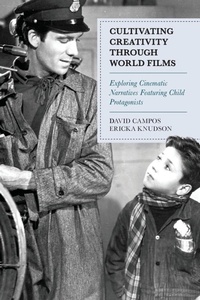
Cultivating Creativity through World Films
Exploring Cinematic Narratives Featuring Child Protagonists
Published on 25. October 2019
Book
Paperback/Softback
226 pages
978-1-4758-5174-8 (ISBN)
Description
With the aim to help teachers design and deliver instruction around world films featuring child protagonists, Cultivating Creativity through World Films guides readers to understand the importance of fostering creativity in the lives of youth. It is expected that by teaching students about world films through the eyes of characters that resemble them, they will gain insight into cultures that might be otherwise unknown to them and learn to analyze what they see. Teachers can use these films to examine and reflect on differences and commonalities rooted in culture, social class, gender, language, religion, etc., through guided questions for class discussion.
The framework of this book is conceived to help teachers develop students' ability to evaluate, analyze, synthesize and interpret. The proposed activities seek to incite reflection and creativity in students, and can be used as a model for teachers in designing future lessons on other films.
The framework of this book is conceived to help teachers develop students' ability to evaluate, analyze, synthesize and interpret. The proposed activities seek to incite reflection and creativity in students, and can be used as a model for teachers in designing future lessons on other films.
Reviews / Votes
Showing films in school that promote tolerance, respect of others, and diversity can only be an asset in opening the minds of young generations, which is the central purpose of this book by David Campos and Ericka Knudson. Readers will find how film can be instrumental in helping young viewers reflect on these important issues, appreciate other cultures, and develop their own creativity. -- Alain Berliner, Golden Globe winning director of "Ma vie en rose" Well-crafted film and visual media have become centrally important learning tools in our lives. They act as teachers, cultural guides, historical texts, spiritual gurus and creative inspiration, while being, perhaps most importantly, entertainment. David Campos and Ericka Knudson, through their love of film and their life long quest to become better, more insightful teachers, remind us how films communicate the world to youth with a strong influence that is felt from first days to last days in actually everyone's lives. Journey with them through analyses of films and exploration of pedagogical tools to gain insights both about the ways of the world and about ourselves. -- Mari E. Koerner, Alice Wiley Snell Professor in Education, Mary Lou Fulton Teachers College, Arizona State University Cultivating Creativity through World Films: Exploring Cinematic Narratives Featuring Child Protagonists helps teachers bring world film to the classroom. The narrative and easy-to-follow activities guide learners in developing critical analytical thinking and habits of mind that place them advantageously in a world market screaming for innovation. -- Teri Evans-Palmer, Visual Arts Teacher Educator, Texas State UniversityMore details
Language
English
Place of publication
United States
Publishing group
Bloomsbury Publishing Plc
Target group
Professional and scholarly
Illustrations
11 b/w illustrations; 1 table; 5 textboxes
Dimensions
Height: 229 mm
Width: 152 mm
Thickness: 13 mm
Weight
374 gr
ISBN-13
978-1-4758-5174-8 (9781475851748)
Copyright in bibliographic data and cover images is held by Nielsen Book Services Limited or by the publishers or by their respective licensors: all rights reserved.
Schweitzer Classification
Other editions
Additional editions
David Campos | Ericka Knudson
Cultivating Creativity through World Films
Exploring Cinematic Narratives Featuring Child Protagonists
E-Book
11/2019
1st Edition
Rowman & Littlefield Publishers
€42.49
Available for download
Persons
David Campos,Ph.D., is a professor of education at University of the Incarnate Word in San Antonio, Texas where he teaches undergraduate and graduate courses in special education, multicultural education, and instructional design and delivery.
Ericka Knudson, Ph.D., is a preceptor of French at Harvard University where she teaches classes on French media, culture and film, including French New Wave cinema.
Ericka Knudson, Ph.D., is a preceptor of French at Harvard University where she teaches classes on French media, culture and film, including French New Wave cinema.
Content
Author's Note
Preface
Part I. The Role of Film in Cultivating Creativity
Introduction
Benefits of Creativity
Target Audience
Why These Films
Structure of the Book
Chapter 1: The Case for Teaching Film in the Classroom
Films Are a Familiar Outlet for Youth
Young People Can Make Powerful Connections with Films
Youth Rarely Have Opportunities to Study Films in School
Chapter 2: Film as a Visual Textbook
Films Can Be Used to Teach a Wide Range of Concepts
Films Can Be Used to Spark Critical Thinking
Films Can Be Used to Encourage Youth to Be Informed Consumers
Chapter 3: Creativity in Young People's Lives
Definition of Creativity
The Creativity Gap in the Classroom
The Need for Creative Practices in the Classroom
Chapter 4: Instructional Considerations When Using Films
Copyright Issues and Other Caveats
Design and Delivery of Lessons About Films
Part II. Eight World Films
Chapter 5- The Bicycle Thieves (1948)
Chapter 6- The 400 Blows (1959)
Chapter 7- Kes (1969)
Chapter 8- Children of Heaven (1997)
Chapter 9- Ma vie en rose(1997)
Chapter 10- Central Station (1998)
Chapter 11- Wadjda (2012)
Chapter 12- Theeb (2015)
References
About the Authors
Index
Preface
Part I. The Role of Film in Cultivating Creativity
Introduction
Benefits of Creativity
Target Audience
Why These Films
Structure of the Book
Chapter 1: The Case for Teaching Film in the Classroom
Films Are a Familiar Outlet for Youth
Young People Can Make Powerful Connections with Films
Youth Rarely Have Opportunities to Study Films in School
Chapter 2: Film as a Visual Textbook
Films Can Be Used to Teach a Wide Range of Concepts
Films Can Be Used to Spark Critical Thinking
Films Can Be Used to Encourage Youth to Be Informed Consumers
Chapter 3: Creativity in Young People's Lives
Definition of Creativity
The Creativity Gap in the Classroom
The Need for Creative Practices in the Classroom
Chapter 4: Instructional Considerations When Using Films
Copyright Issues and Other Caveats
Design and Delivery of Lessons About Films
Part II. Eight World Films
Chapter 5- The Bicycle Thieves (1948)
Chapter 6- The 400 Blows (1959)
Chapter 7- Kes (1969)
Chapter 8- Children of Heaven (1997)
Chapter 9- Ma vie en rose(1997)
Chapter 10- Central Station (1998)
Chapter 11- Wadjda (2012)
Chapter 12- Theeb (2015)
References
About the Authors
Index