

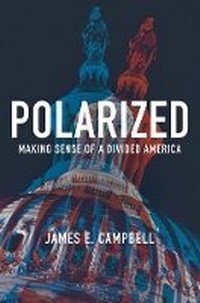
Polarized
Making Sense of a Divided America
Published on 26. July 2016
Book
Hardback
336 pages
978-0-691-17216-3 (ISBN)
Description
Many continue to believe that the United States is a nation of political moderates. In fact, it is a nation divided. It has been so for some time and has grown more so. This book provides a new and historically grounded perspective on the polarization of America, systematically documenting how and why it happened. Polarized presents commonsense benchmarks to measure polarization, draws data from a wide range of historical sources, and carefully assesses the quality of the evidence. Through an innovative and insightful use of circumstantial evidence, it provides a much-needed reality check to claims about polarization. This rigorous yet engaging and accessible book examines how polarization displaced pluralism and how this affected American democracy and civil society. Polarized challenges the widely held belief that polarization is the product of party and media elites, revealing instead how the American public in the 1960s set in motion the increase of polarization. American politics became highly polarized from the bottom up, not the top down, and this began much earlier than often thought.
The Democrats and the Republicans are now ideologically distant from each other and about equally distant from the political center. Polarized also explains why the parties are polarized at all, despite their battle for the decisive median voter. No subject is more central to understanding American politics than political polarization, and no other book offers a more in-depth and comprehensive analysis of the subject than this one.
The Democrats and the Republicans are now ideologically distant from each other and about equally distant from the political center. Polarized also explains why the parties are polarized at all, despite their battle for the decisive median voter. No subject is more central to understanding American politics than political polarization, and no other book offers a more in-depth and comprehensive analysis of the subject than this one.
Reviews / Votes
One of Choice's Outstanding Academic Titles for 2016 "An excellent book on this contested and ... polarizing ... topic."--Tyler Cowen, Marginal Revolution "Campbell has written a well-researched, highly provocative volume on American political polarization, which challenges a great deal of conventional wisdom on the subject."--ChoiceMore details
Language
English
Place of publication
New Jersey
United States
Target group
College/higher education
Professional and scholarly
Product notice
Trade binding
Illustrations
9 line illus. 23 tables.
Dimensions
Height: 235 mm
Width: 152 mm
Weight
595 gr
ISBN-13
978-0-691-17216-3 (9780691172163)
Copyright in bibliographic data and cover images is held by Nielsen Book Services Limited or by the publishers or by their respective licensors: all rights reserved.
Schweitzer Classification
Other editions
Additional editions
E-Book
07/2016
1st Edition
Princeton University Press
€36.99
Available for download
Person
James E. Campbell is UB Distinguished Professor of Political Science at the University at Buffalo, State University of New York. His books include The American Campaign: U.S. Presidential Campaigns and the National Vote and The Presidential Pulse of Congressional Elections.
Content
List of Figures and Tables ix Acknowledgments xi Introduction 1 Part One. Preparing the Foundation 13 Chapter 1. Knowns and Unknowns 15 Chapter 2. History and Theories 39 Part Two. The Polarized Electorate 59 Chapter 3. Ideology and Polarization 61 Chapter 4. Issues and Polarization 91 Chapter 5. Circumstantial Evidence 117 Part Three. The Polarized Parties 143 Chapter 6. Why Are the Parties More Polarized? 145 Chapter 7. One-Sided Party Polarization? 173 Chapter 8. Why Are the Parties Polarized at All? 197 Chapter 9. Polarization and Democracy 221 Appendix A. Five Ideological Series 247 Appendix B. Regression Analyses of Ideological Orientations 249 Notes 253 References 281 Index 309